We have all been there. You walk into your bedroom, and instead of a wave of relaxation washing over you, all you feel is the walls closing in. In the rush of daily life, the smallest room in the house often becomes the dumping ground for laundry, books, and “miscellaneous” items that have nowhere else to go. But here is the truth that design experts have known for years. Square footage does not dictate style.
Having a small bedroom isn’t a limitation; it is an invitation to get creative. Whether you are dealing with a studio apartment, a tiny guest room, or just a master bedroom that feels more like a shoebox, the principles of small-space design can turn your sleeping area into a luxurious, functional, and deeply personal sanctuary.
This guide explores ten professional small bedroom decor ideas that go beyond just “making it work.” These are research-backed, designer-approved strategies to maximize every inch while keeping the vibe warm and inviting. We aren’t just talking about storage; we are talking about transforming the energy of your room entirely.
1. Hack the Vertical: Why You Should Look Up (Not Out)
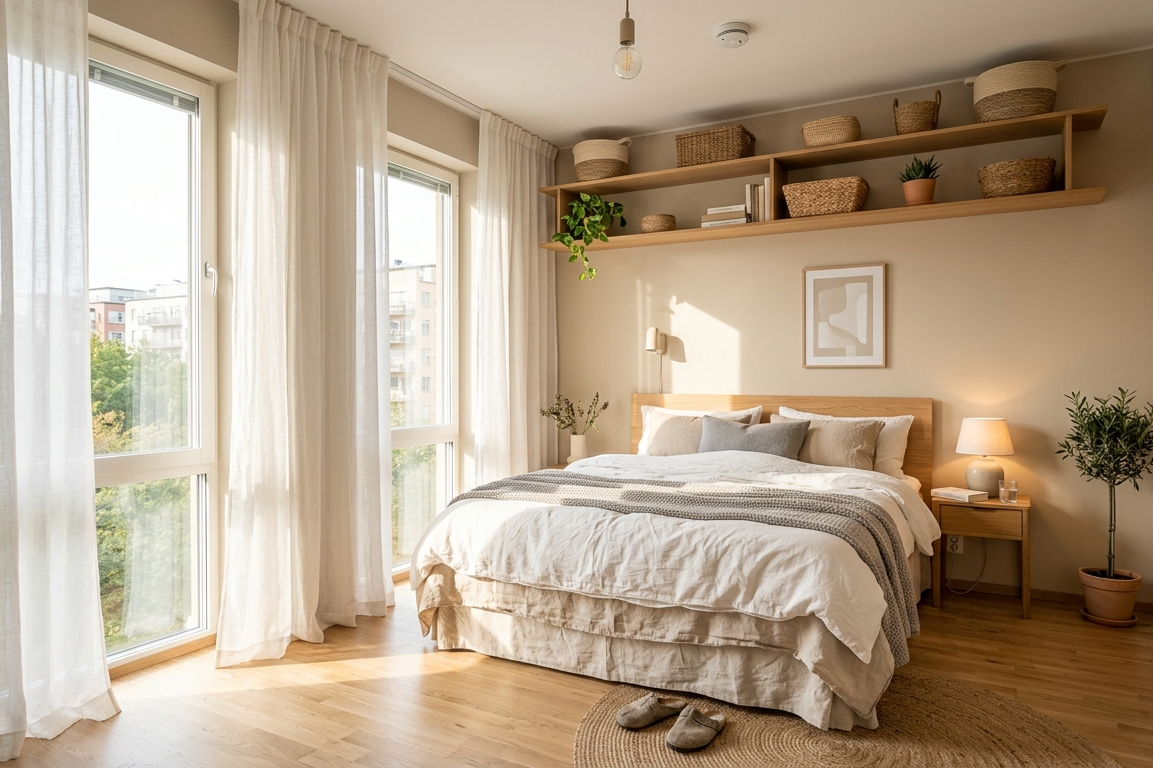
When floor space is at a premium, the most common mistake is trying to cram furniture against every wall. Instead, designers advise shifting your perspective upward. Vertical storage is arguably the most powerful concept in small bedroom decor.
The High Shelf Strategy
Traditional bookcases and dressers take up valuable floor real estate. By installing floating shelves high up on the walls near the ceiling, you draw the eye up, making the ceiling appear higher and the room more spacious. Use these high shelves for items you don’t need daily access to, such as seasonal decor, extra linens in baskets, or your collection of paperbacks.
Floor-to-Ceiling Curtains
A specific vertical hack involves your window treatments. To create the illusion of height, mount your curtain rod as close to the ceiling as possible, rather than directly above the window frame. Ensure your drapes or curtains reach all the way to the floor. This tricks the brain into thinking the window (and by extension, the room) is much taller than it actually is. Opt for light, airy fabrics to keep the look feeling fresh rather than heavy.
2. The “Invisible” Bed: Murphy Beds and Lofted Sleeping
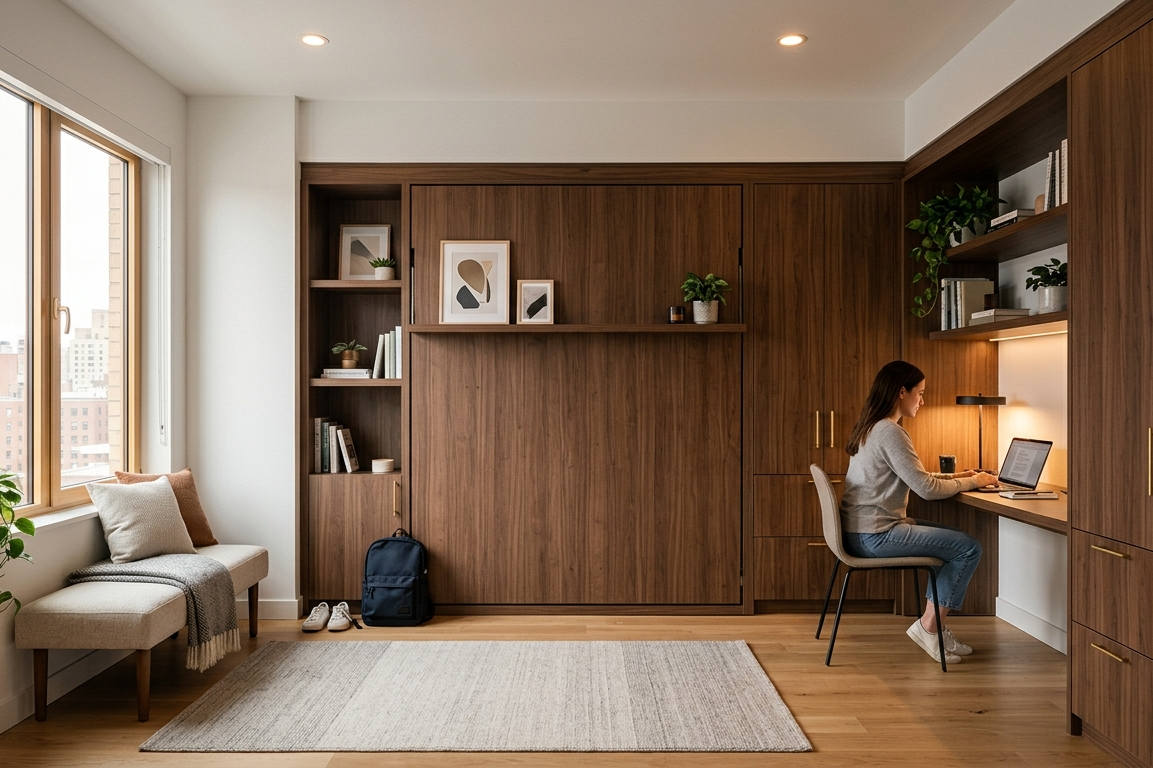
We have to address the elephant, or rather the mattress, in the room. Beds are large, and in a small compact bedroom, they often eat up 60 to 70 percent of the usable space. While a standard bed is necessary, its form does not have to be static.
The Wall Bed Revolution
According to design experts, the most transformative change you can make in a studio or tiny home is installing a Murphy bed, which is a bed that folds up into the wall. Modern Murphy beds are no longer the clunky, ugly pieces of furniture from the 1980s. Today, they come integrated with shelving, lighting, and desks. When the bed is folded up, the room is free to function as a home office, living room, or yoga studio.
Lofted Living
If you have standard ceiling height (8 feet or more), consider a loft bed. Raising the mattress off the ground frees up the space underneath for a closet, desk, or cozy seating nook. This approach frees up the entire floor space underneath, giving you a bonus room in your tiny bedroom.
3. The Mood Shift: Embracing Dark and Deep Colors
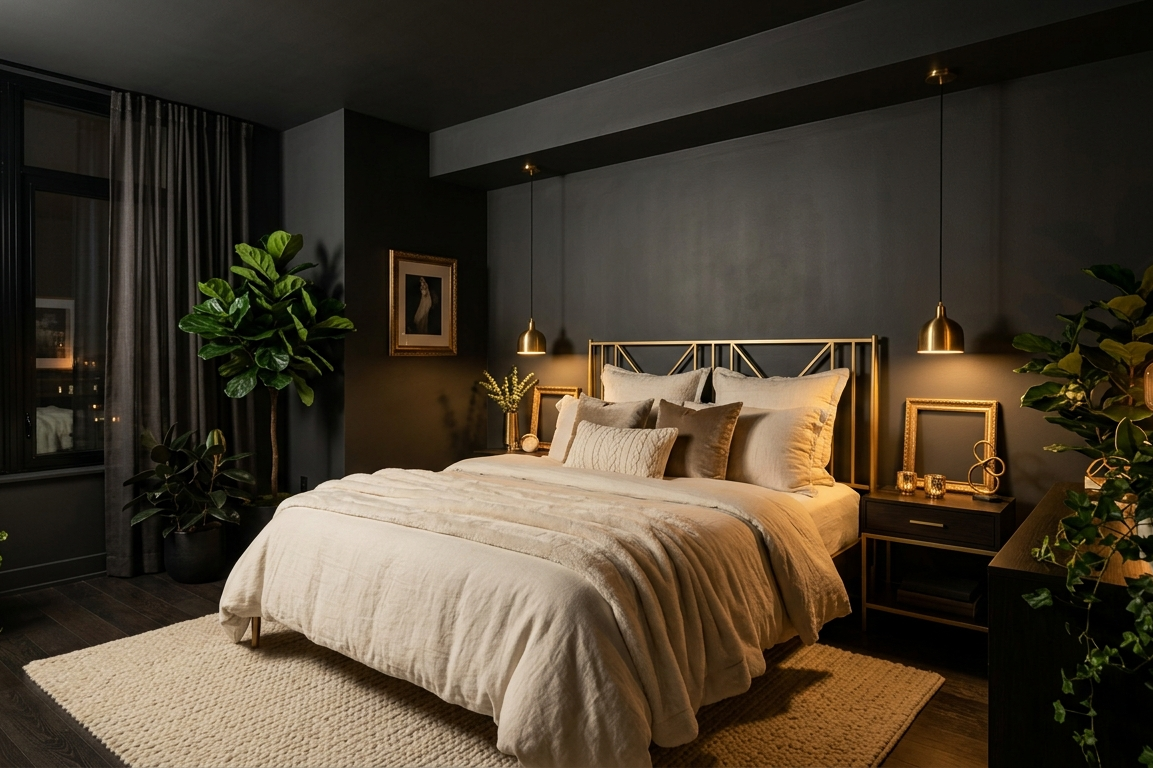
For years, the conventional wisdom for small rooms was strictly “white paint only.” The logic was solid: white reflects light, making the room feel bigger. However, contemporary research into color psychology and design suggests a different, cozier path.
The “Cocooning” Effect
Designers are increasingly recommending dark color palettes for small bedrooms. Think charcoal, navy, deep forest green, or even matte black. Why? Because in a small room, stark white walls can sometimes highlight the limits of the space, specifically the shadows in the corners. Dark colors blur the edges of the room, creating a “cocooning” effect that feels intimate and safe rather than cavernous.
How to Execute Dark Tones
You do not have to paint every wall. A dark accent wall behind the bed adds depth and dimension. If you go full dark mode, balance it with warm lighting, metallic accents like brass or gold, and light-colored bedding to keep the room from feeling like a cave. This strategy turns your limited space into a feature, making it feel like a high-end luxury hotel suite rather than a cramped box.
4. Smart Lighting: Layering for Depth
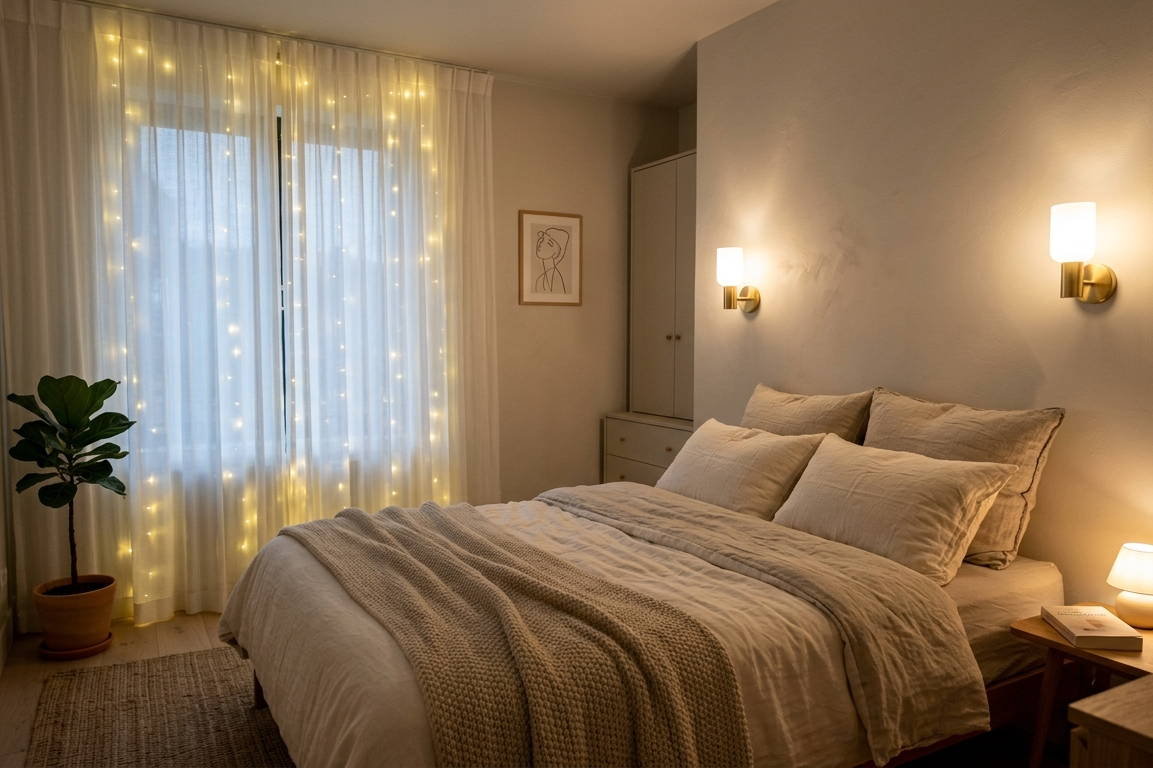
A small bedroom cannot thrive on a single overhead light source, often called “the big light.” Overhead lighting casts harsh shadows, which can make a room feel smaller and less inviting.
Wall Sconces and Swing-Arm Lamps
Free up your nightstand space by installing wall-mounted lighting. Wall sconces flanking the bed or swing-arm lamps mounted above the headboard provide task lighting for reading without taking up precious surface area. This keeps surfaces clear for a glass of water or a book, reducing visual clutter.
The Magic of Fairy Lights and LEDs
It might sound juvenile, but when done correctly, string lights add an unmatched level of warmth. Designers suggest using warm white LED fairy lights behind a sheer curtain or under a bed frame to create a soft, diffused glow. Unlike a harsh lamp, this ambient lighting eliminates sharp shadows, making the room feel soft and expansive. Pairing these with a dimmer switch allows you to adjust the “cozy factor” from bright to romantic instantly.
5. Mirror Placement: Creating Fake Windows
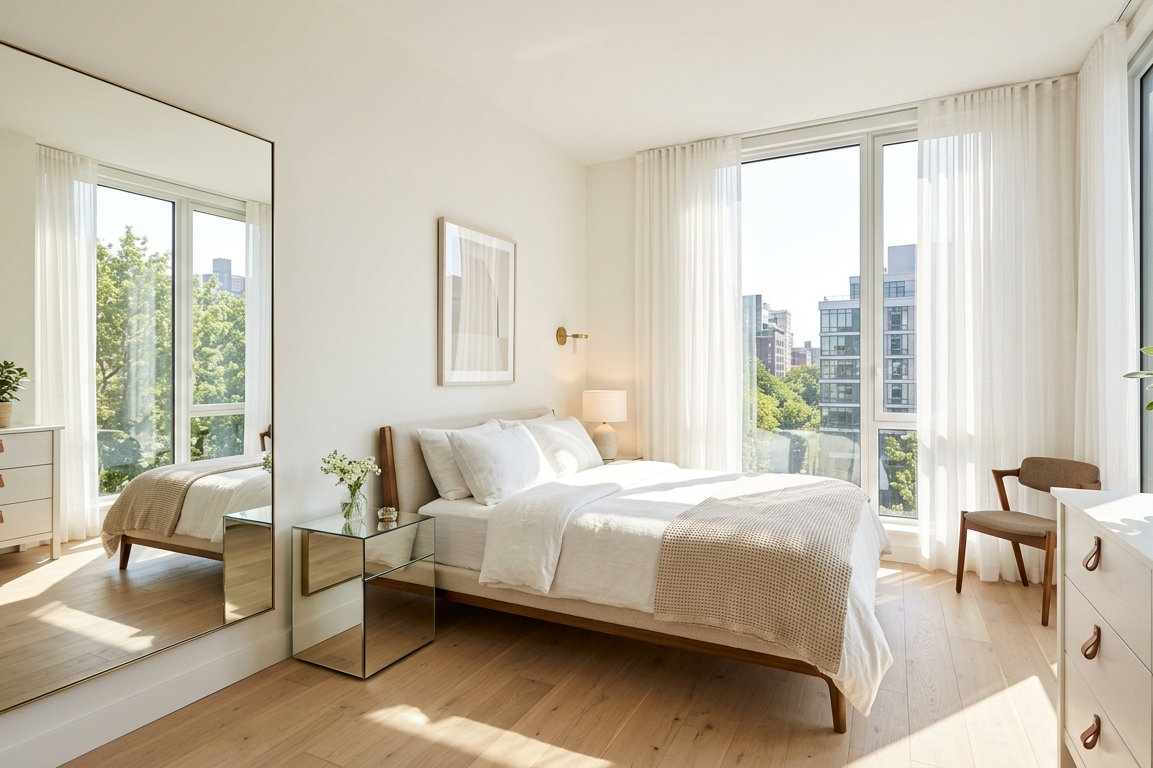
You have likely heard that mirrors make a room look bigger, but the placement is the secret sauce that many people get wrong. A mirror’s job in a small bedroom is to act as a second window.
Strategic Reflection
The number one rule, according to interior experts, is to place a large mirror directly across from a window. This bounces the natural light around the room, doubling the brightness and creating a view of the outdoors that doesn’t actually exist. If you cannot put a mirror opposite the window, place it perpendicular to the window so it catches the light as it streams in.
Mirrored Furniture
Another trick for the contemporary space is mirrored furniture. A mirrored wardrobe door or mirrored nightstands reflect light and the room around them, making them visually “disappear” into the space. This reduces the visual weight of bulky furniture.
6. Multifunctional Heroes: Furniture That Works Twice
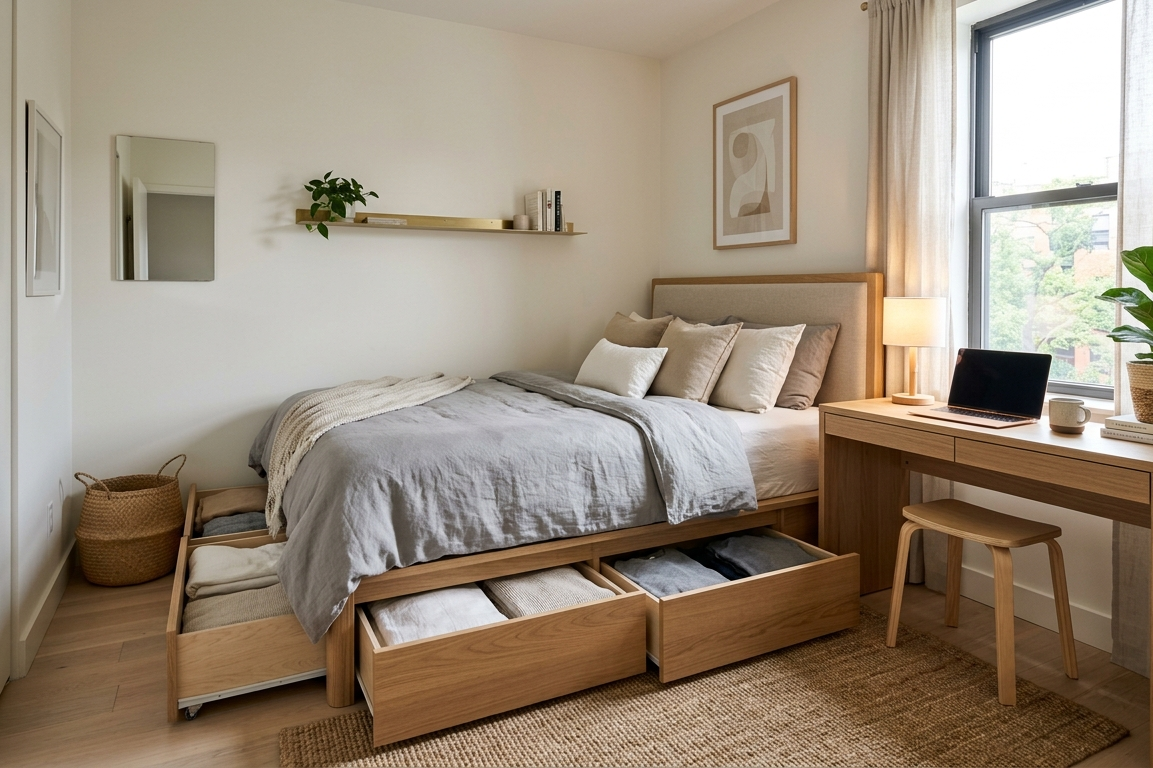
In a space-saving small bedroom, every piece of furniture must earn its keep. Single-use items are a luxury you cannot afford.
The Storage Bed
Your bed is the largest object in the room. If it isn’t storing something, it is wasting potential. Opt for a bed frame with built-in hydraulic storage or deep drawers underneath. Use this space for out-of-season clothing, extra shoes, or spare linens. If you cannot afford a new frame, use rolling storage bins that slide neatly under the existing bed frame.
The Combined Desk and Nightstand
If you work from home, you might not have room for a separate desk. Consider a narrow console table that sits behind the sofa, if the bed is against the wall, or a floating shelf that pulls out. Some designers suggest using a desk that also functions as a nightstand, with drawers on one side for sleeping essentials and the top for a laptop.
7. The Illusion of Width: The Headboard Hack (Designers Swear By This)
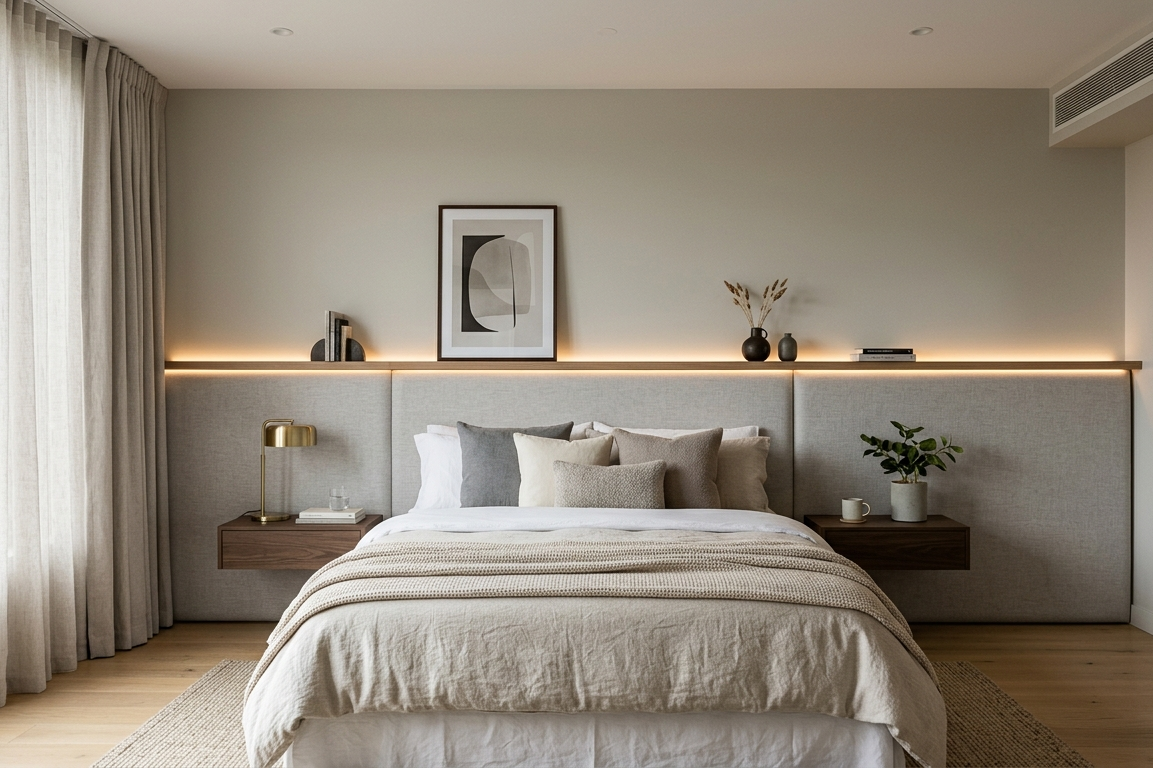
This is the tip referenced in the title, and it is a game-changer for oblong or narrow rooms. If your bedroom is long and narrow, you may feel like you are sleeping in a hallway.
The Extended Headboard
To combat this, extend your headboard to span the entire length of the wall. Instead of a headboard that is only as wide as your bed, install a long, low shelf or padded board that runs from one end of the room to the other.
Why It Works
This trick widens the visual perspective. By drawing the eye horizontally across the room, the space feels wider and less like a tunnel. You can utilize this extended board as a shelf for alarm clocks, phones, and small plants, eliminating the need for bulky side tables altogether. It provides a streamlined, custom-built look that screams high-end design.
8. Rethinking the Closet: Removal and Repurposing
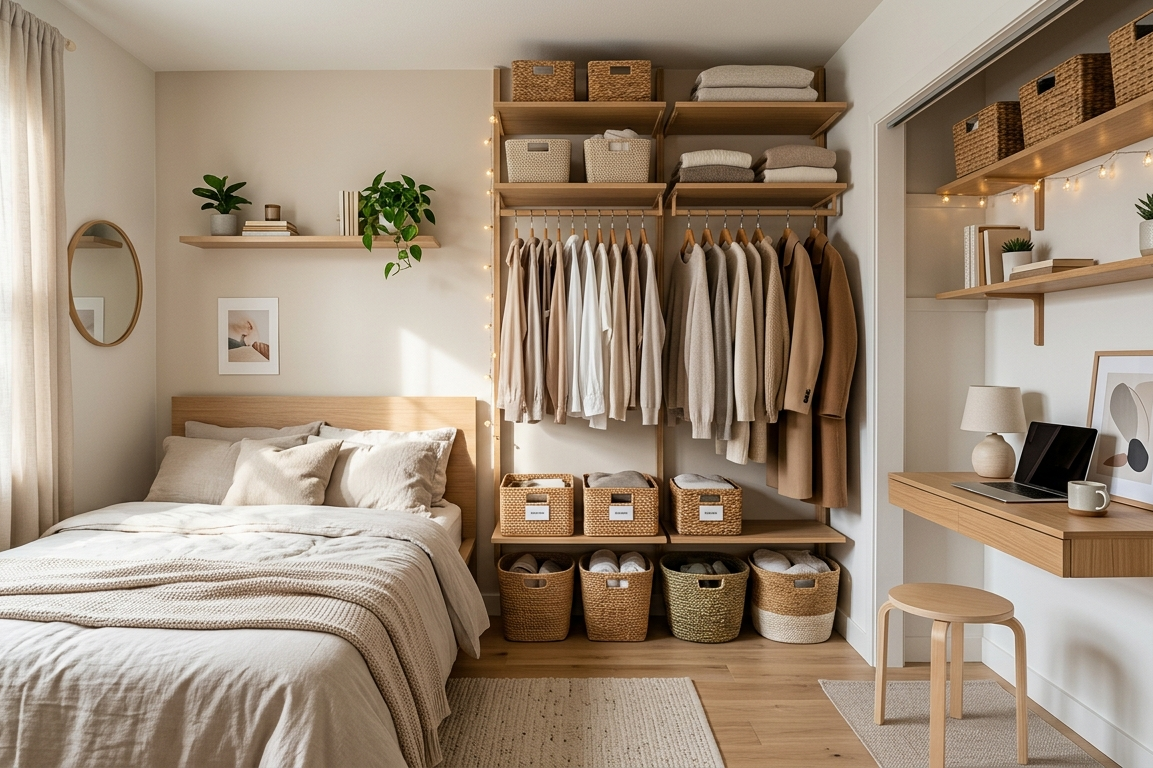
Sometimes, the physical structure of a closet takes up more space than the storage it provides. If your small bedroom has a shallow, reach-in closet with sliding doors that always fall off the track, consider an alternative.
Removing the Doors
One of the most freeing small bedroom decor ideas is simply removing the closet doors. By opening up the closet, the depth of the closet becomes part of the room’s depth, instantly making the room feel larger. Inside, use uniform hangers and organized shelves so the contents look intentional, like a curated boutique display.
The “Cloffice”
If you have a closet but do not need a ton of hanging space, convert that nook into a home office, sometimes called a “cloffice.” Remove the rod, install a desk at standing height, add a shelf for a printer, and you have a hidden workspace that can be closed off with a curtain or door when the workday ends.
9. Decluttering with “Visual Weight”
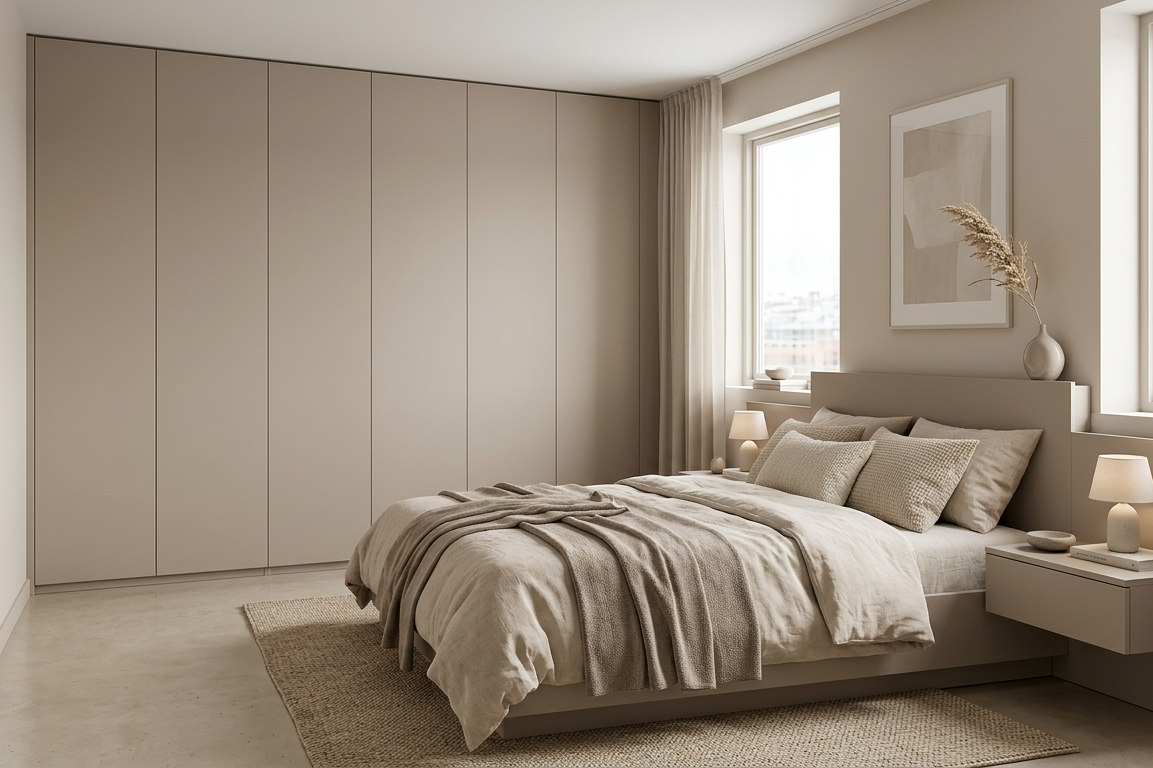
Small bedroom organization isn’t just about hiding mess; it is about managing visual weight. Visual weight refers to how much an object draws the eye.
Open vs. Closed Storage
In a tiny room, too many open shelves filled with trinkets create visual static. Designers recommend using closed storage as much as possible. Dressers with doors, baskets on shelves, and storage ottomans hide the “clutter” of daily life. When your eye scans a closed cabinet, it sees a flat surface. When it scans an open shelf, it sees 50 different objects. By reducing visual clutter, the physical space feels bigger.
The “One Texture” Rule
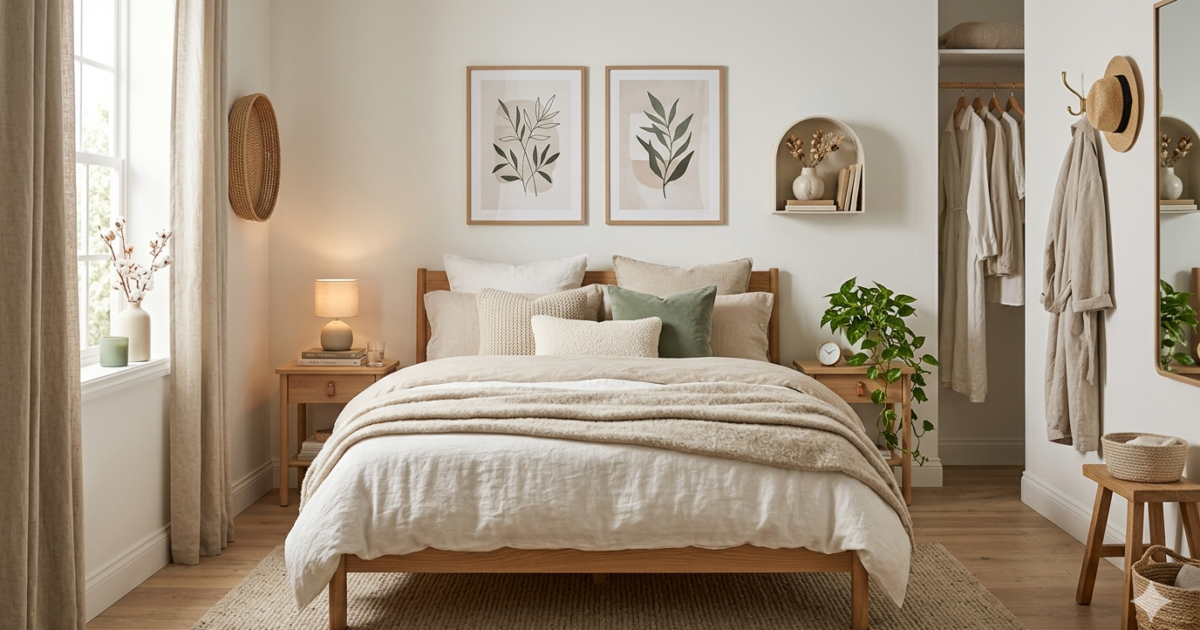
When selecting decor, try to stick to a cohesive color palette and similar textures. Instead of having 10 different colored pillows, stick to three tones within the same color family, such as cream, beige, and taupe. This creates a monochromatic flow that is soothing to the eye.
10. Bringing the Outdoors In
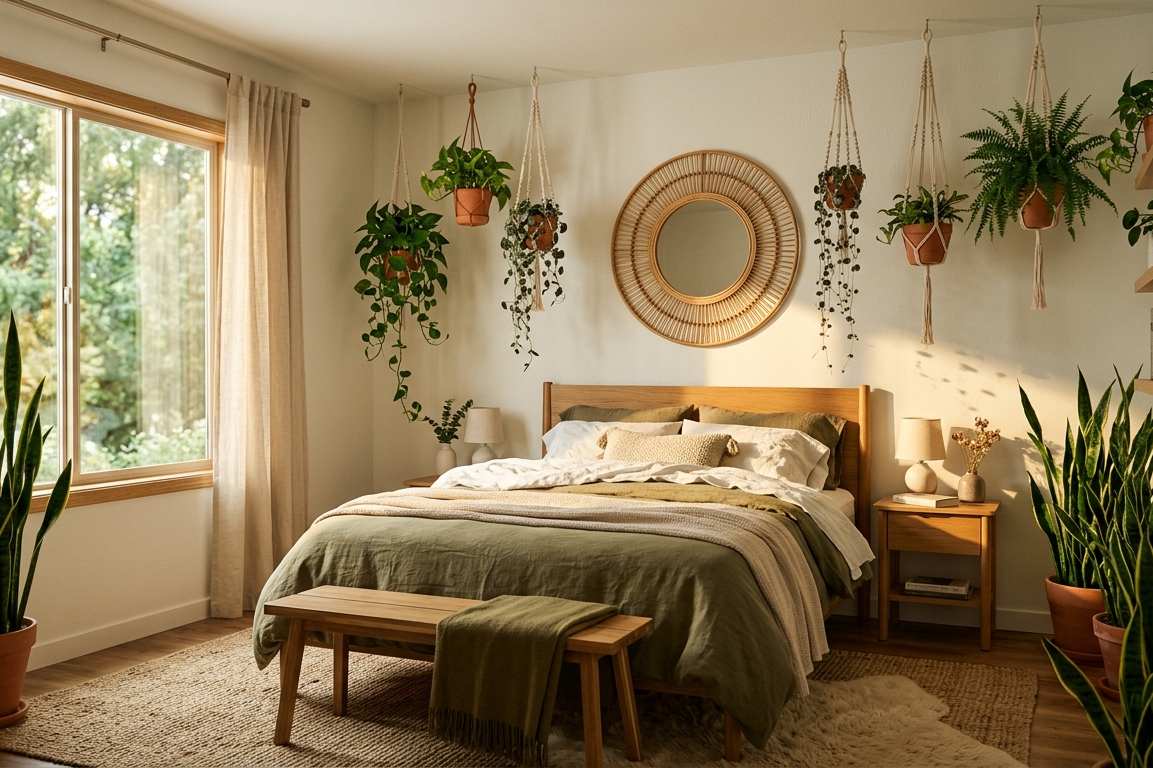
Finally, a nature-inspired bedroom brings life into a small space. Organic elements prevent a room from feeling sterile or claustrophobic.
Plants for Air and Aesthetics
According to multiple design sources, incorporating greenery is essential for a revitalizing atmosphere. Plants like snake plants or succulents are low-maintenance and thrive in small spaces. Hanging plants from the ceiling or placing a tall potted plant in the corner draws the eye up and fills empty corners that might otherwise collect dust.
Natural Materials
Beyond plants, use natural materials like rattan, bamboo, and wood. A rattan mirror or a jute rug adds texture without adding bulk. Research on biophilic design suggests that natural elements lower stress levels, which is exactly what a sanctuary should do. If you are worried about floor space, use wall-mounted planters to keep the greenery off the ground.
Conclusion: Design for the Feeling, Not the Footage
It is easy to get frustrated when you cannot fit a king-sized bed or a massive dresser into your room. However, the goal of a bedroom is not to fit the most furniture; it is to provide the best rest.
By implementing these small bedroom decor ideas from vertical storage and strategic mirrors to dark paint colors and hidden beds, you stop fighting the square footage and start working with it. The key takeaway from top interior designers is that constraints breed creativity. A small room forces you to curate, to choose only what you love, and to design with intention.
Start small. Maybe you just rearrange the lighting today, or perhaps you order a few high shelves to clear the floor. One change creates a ripple effect. Before you know it, your cramped space will transform into the cozy, functional, and stylish sanctuary you deserve to come home to every night.