Introduction: Why Small Kitchens Deserve Big Design
Why do we assume that “luxury” has to come with a massive square footage price tag? In the world of interior design, the opposite is often true. Some of the most expensive looking, bespoke interiors exist in compact city apartments and tiny galley spaces. The truth is, when space is limited, every material and every detail is amplified. You cannot hide a mistake in a small room. Conversely, a single high-impact choice like a backlit onyx slab or a geometric terrazzo countertop can define the entire atmosphere.
For the savvy homeowner or renter, achieving this level of sophistication does not require a gut renovation budget of $50,000 or more. It requires strategic thinking: spending money where you touch (hardware and lighting) and saving money where you look (paint and clever hacks).
According to industry experts, a luxury small kitchen is defined not by its size but by its refined materials, clean lines, and layered lighting. Whether you are styling a narrow galley or a micro-apartment nook, these 21 ideas bridge the gap between Architectural Digest aspiration and “I can actually afford this.”
The Philosophy of Compact Luxury
Before we dive into the specific hacks, it is vital to understand the mindset shift required to make a small space feel lavish. Trying to cram a 10-pound kitchen into a 5-pound bag is a recipe for disaster. Instead of fighting the size, we must embrace it.
Luxury in a small space requires restraint. It is the absence of clutter rather than the presence of objects. High-gloss finishes, continuous surfaces, and maximum-height cabinets create a vertical lift that mimics the proportions of a grand estate. This section will explore the foundational rules of small-space luxury.
The Vertical Advantage
In compact kitchens, the floor is your enemy (it takes up space), and the ceiling is your friend. Extending cabinetry all the way to the ceiling is the number one rule of design professionals. This eliminates the dust-collecting gap above typical cabinets and draws the eye upward, creating the illusion of higher ceilings and a more generous volume.
If custom cabinetry is out of your current price range, consider painting the upper wall space the exact same color as your cabinets. This “color drenching” technique blurs the lines between the cabinet and the wall, making the boundary of the room less defined and the space feel larger.
The Art of the Statement Piece
In a large kitchen, a statement piece can get lost. In a small kitchen, it becomes the hero. You need one “wow” element, whether it is a book-matched marble backsplash, a stunning aged brass faucet, or a vintage Turkish runner. This singular focal point distracts from the room’s size limitations and elevates everything else around it. If you splurge on only one thing, make it the central visual anchor.
Budget-Friendly Material Hacks for a High-End Look
You do not need a slab yard budget to get the look of Calacatta marble or custom terrazzo. The material science of 2025 has produced incredibly realistic alternatives that are often indistinguishable from the real thing to the untrained eye. Here is how to fake the finish without faking the quality.
1. The “IKEA + Custom Fronts” Hack
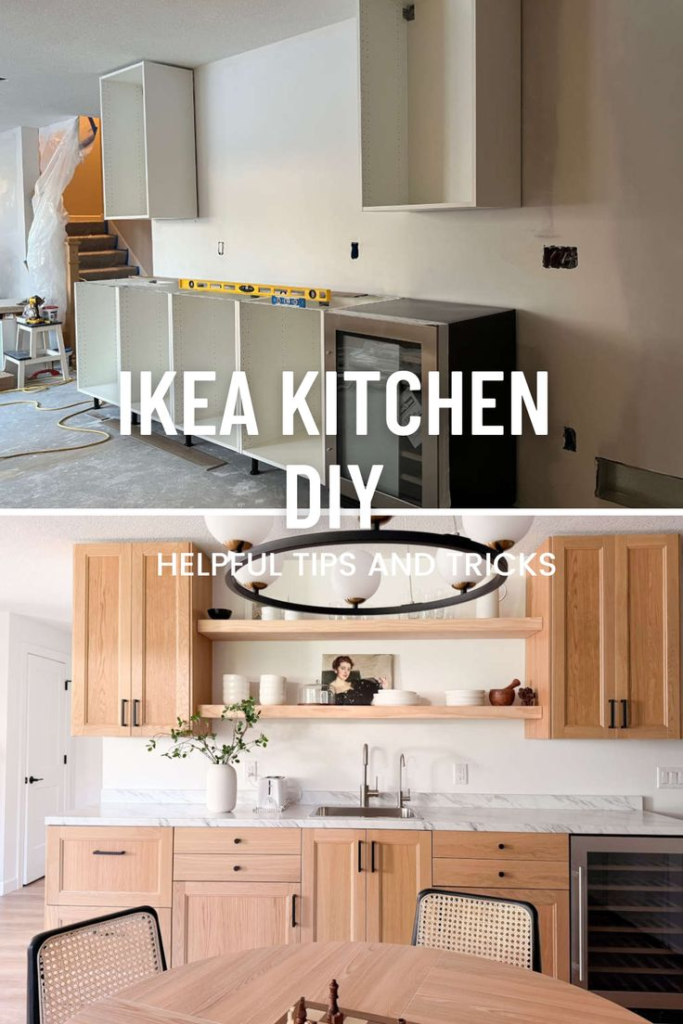
Food stylist Pearl Jones famously built a kitchen that would have cost 45,000forjust12,700 using a simple hack: IKEA cabinetry. The secret is using IKEA boxes (the frames and soft-close mechanisms) but ordering custom fronts from third-party vendors (like Semihandmade or Dunsmuir Cabinets). You get the high-end look of custom rift-cut oak or lacquered slabs for a fraction of the price of a full custom shop. Total cost for cabinets: approximately $4,100.
2. Stick-On Countertops Are No Longer Tacky
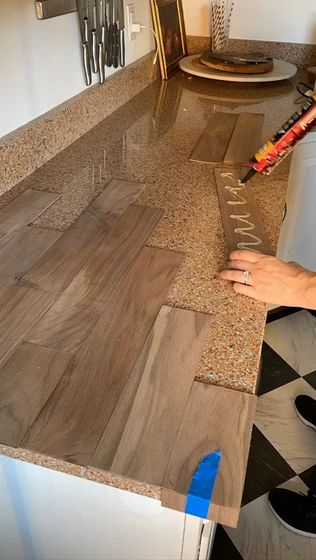
Gone are the days of cheap, shiny plastic stickers. Modern peel-and-stick countertop films utilize high-resolution texture mapping that mimics honed marble, matte concrete, or soapstone. For a renter or a homeowner wanting to save $5,000 on stone, a high-quality vinyl wrap on the perimeter counters, paired with a real wood butcher block on an island, creates a curated, high-low mix that feels intentional.
3. Direct-from-Yard Stone Slabs
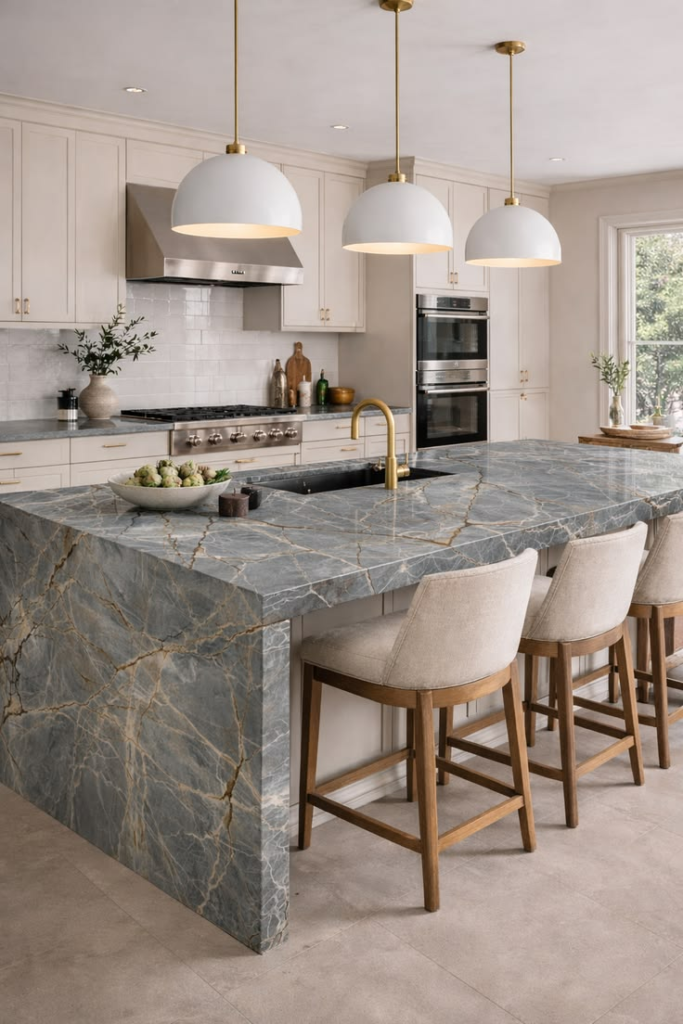
If you must have real stone, skip the high-end design showrooms. Go directly to the stone fabricator’s yard and ask for “remnants” or “off-cuts.” These are pieces left over from massive mansion projects. You can often get a premium marble or quartzite slab for a third of the retail price simply because the fabricator needs to clear warehouse space. This allows you to afford that waterfall edge even in a small galley.
4. High-Gloss Paint vs. Tile Backsplash
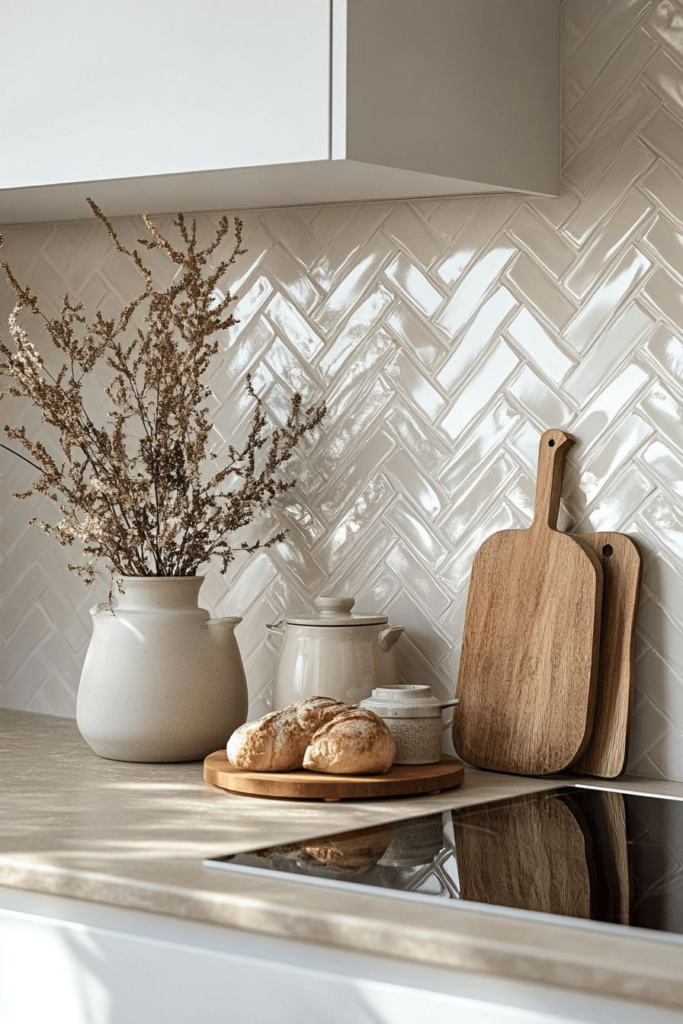
Tile installation is expensive, primarily because of the labor. A trending alternative in luxury design is the high-gloss painted backsplash. By using a marine-grade, high-gloss enamel paint on the wall behind the cooktop, you achieve a glass-like, reflective surface that is easy to wipe clean and costs pennies compared to subway tile. Pair this with a simple metal shelf for spices to break up the expanse of color.
Cabinetry and Storage: The Illusion of Space
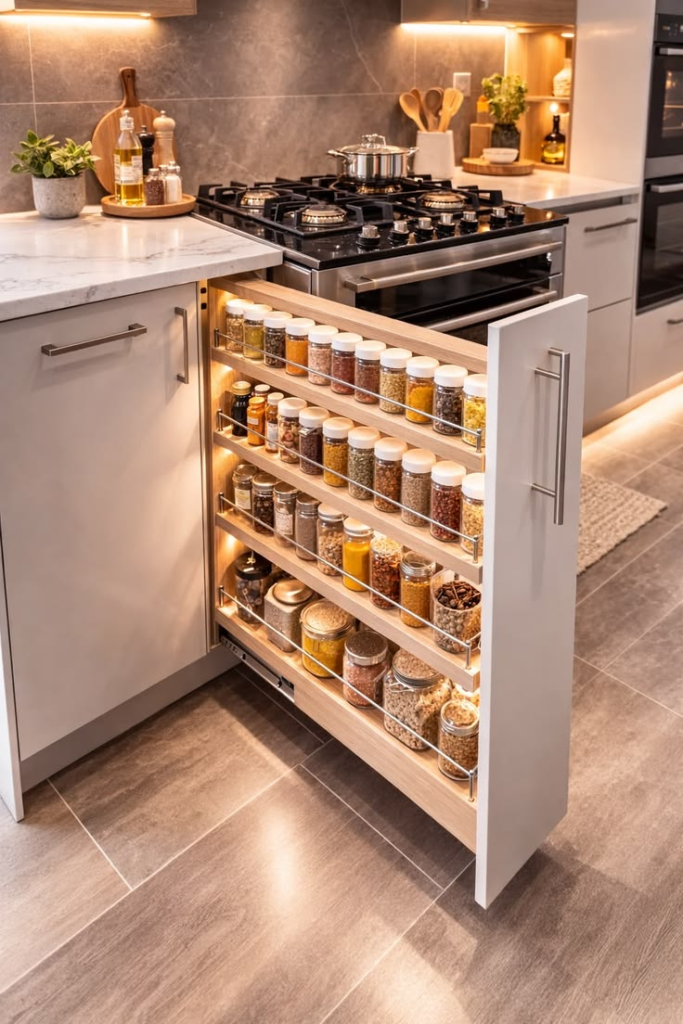
Storage is the backbone of any kitchen, but in a luxury small kitchen, storage must be invisible. Clutter is the enemy of opulence. These ideas focus on hiding the tools while showcasing the beauty.
5. The “70/30” Display Rule
Designers recommend a strict 70/30 split: 70% of your storage should be behind closed doors, and 30% should be curated open shelving. The closed cabinets hide the mismatched Tupperware and cereal boxes. The open shelves display the beautiful Le Creuset pots, ceramic bowls, and vintage cookbooks. This ratio keeps the room from feeling cluttered while still showing off your personality.
6. The Toe-Kick Drawer
That little sliver of space at the bottom of your base cabinets is usually dead air. Transforming this into a toe-kick drawer is a hallmark of luxury yacht design. It is the perfect place to store baking sheets, trays, or even flat cat food bowls. Because it is hidden at floor level, it disappears visually, yet it adds a surprising amount of storage.
7. Glass Fronts for Depth
If you cannot extend to the ceiling or add an architectural feature, swap out a few solid upper cabinet doors for ribbed or fluted glass. A glass-front cabinet breaks up the monotony of a wall of wood and creates a sense of depth. However, keep these cabinets organized; luxury glass fronts reveal all. Stick to matching white dishware or a single color of glassware.
8. Unify with “Color Drenching”
Oliver Furth, a celebrated Los Angeles designer, uses “color drenching” to make kitchens feel instantly larger. This involves painting the walls, trim, ceiling, and the cabinetry the exact same color (often a mint green or deep taupe). By removing the visual contrast between the cabinets and the wall, the room loses its hard edges and feels like a cohesive, enveloping jewel box rather than a series of boxes crammed into a corner.
Lighting: The Jewelry of the Kitchen
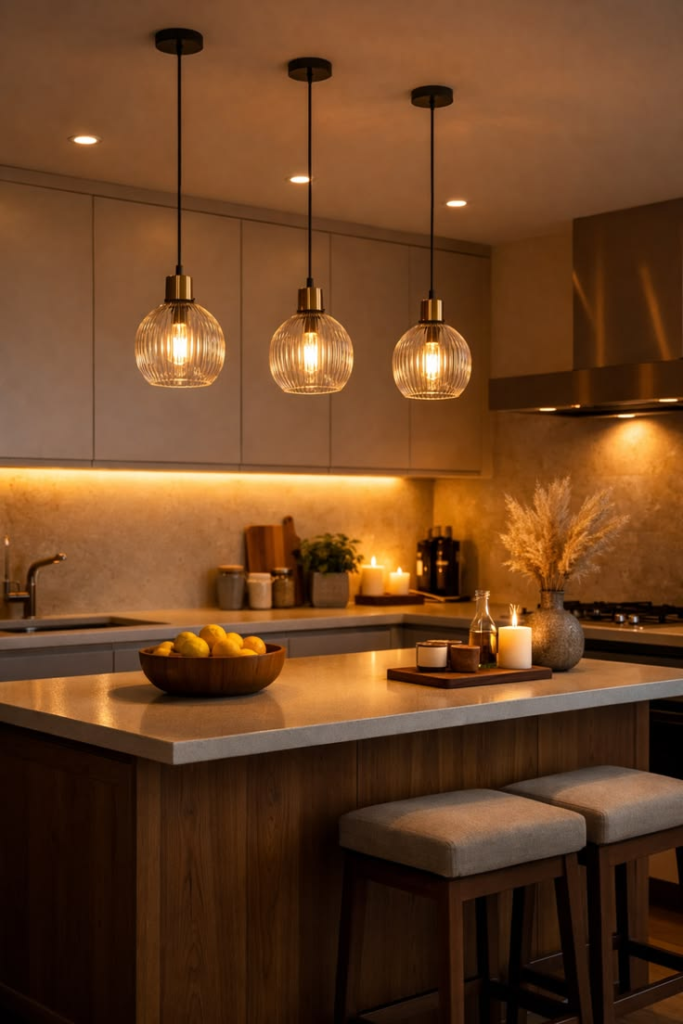
If cabinets are the clothing, lighting is the jewelry. It is the single most impactful upgrade you can make for under $200. A dim, shadowy kitchen will always look cheap, no matter how expensive the faucet is.
9. Under-Cabinet Illumination (The Non-Negotiable)
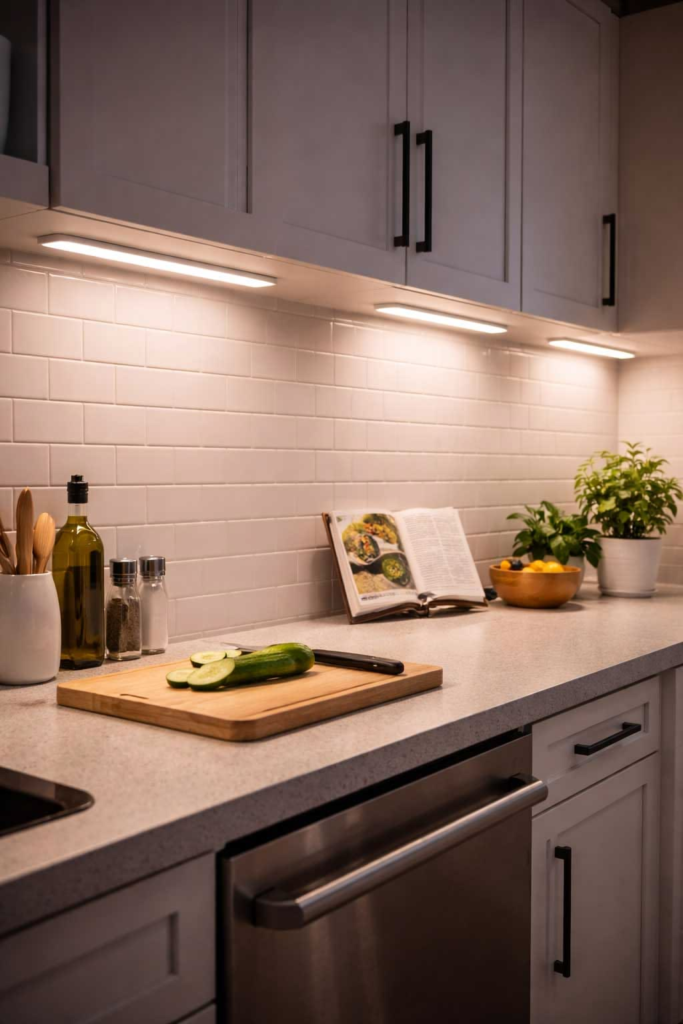
According to the Illuminating Engineering Society (IES), a kitchen counter requires around 50 foot-candles of light for safe food prep. If you rely solely on an overhead ceiling light, you will cast shadows on your workspace. Stick-on, rechargeable LED strip lights mounted under the upper cabinets are a game-changer. They illuminate the counters, create a warm glow, and make the stone or wood surface look like it is glowing from within.
10. The Skinny Shade or Chandelier
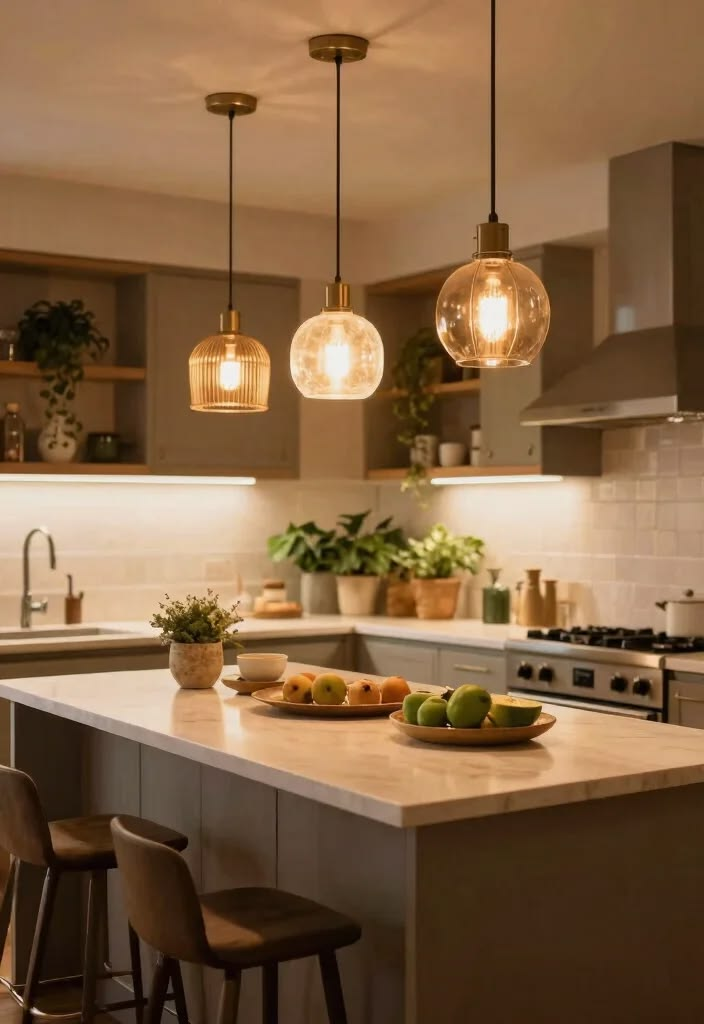
Never underestimate the power of a focal point light fixture. In a tiny kitchen, a large, dramatic pendant light or a modest chandelier creates irony and scale. It tricks the brain: “This room has a chandelier, therefore it must be a special room.” Keep the light fixture narrow (skinny) to avoid bumping your head, but let it drop down visually to fill the vertical space.
11. Mirrors as Backsplashes
To double the depth of a narrow galley kitchen, install a mirrored backsplash. While a full glass backsplash is great for reflecting light, a mirror adds infinite visual depth. It reflects the opposite window or wall, making the room feel twice as wide. For a budget approach, have a piece of mirror cut to size at a hardware store and mount it behind the stove or sink.
12. Cabinet Lighting (Inside and Under)
For those with glass-front cabinets, adding a tiny LED puck light inside the cabinet turns your dishware into a museum exhibit. Furthermore, adding a very subtle LED strip under the toe-kick (the bottom overhang of the cabinets) makes the cabinets appear to float slightly off the floor, a trick that eliminates visual heaviness.
The Details: Hardware, Fixtures, and Finishes
This is where the “budget” meets the “luxury.” You can have cheap cabinets, but you cannot have cheap knobs. The tactile sensation of a heavy, well-machined handle is how we physically experience quality.
13. The Anthropologie Knockoff Hack
You do not need to buy $50-a-pop designer pulls. Look for vintage brass or ceramic knobs on Etsy or eBay. Mixing metals (e.g., aged brass knobs with a matte black faucet) is a high-end design strategy that looks collected over time rather than bought-in-a-box. Swapping out handles is a one-hour, no-drill (if the hole spacing matches) project that yields instant gratification.
14. The Faucet is the Anchor
Think of your faucet as the wristwatch of the kitchen. It tells the “time” of the room’s style. If you have $300 to spend, spend it on the faucet. A high-arc, gooseneck faucet in a finish like brushed brass, champagne bronze, or polished nickel immediately signals luxury. It sits in the center of the room and is used constantly; its weight and feel define the user experience.
15. Butcher Block vs. Marble
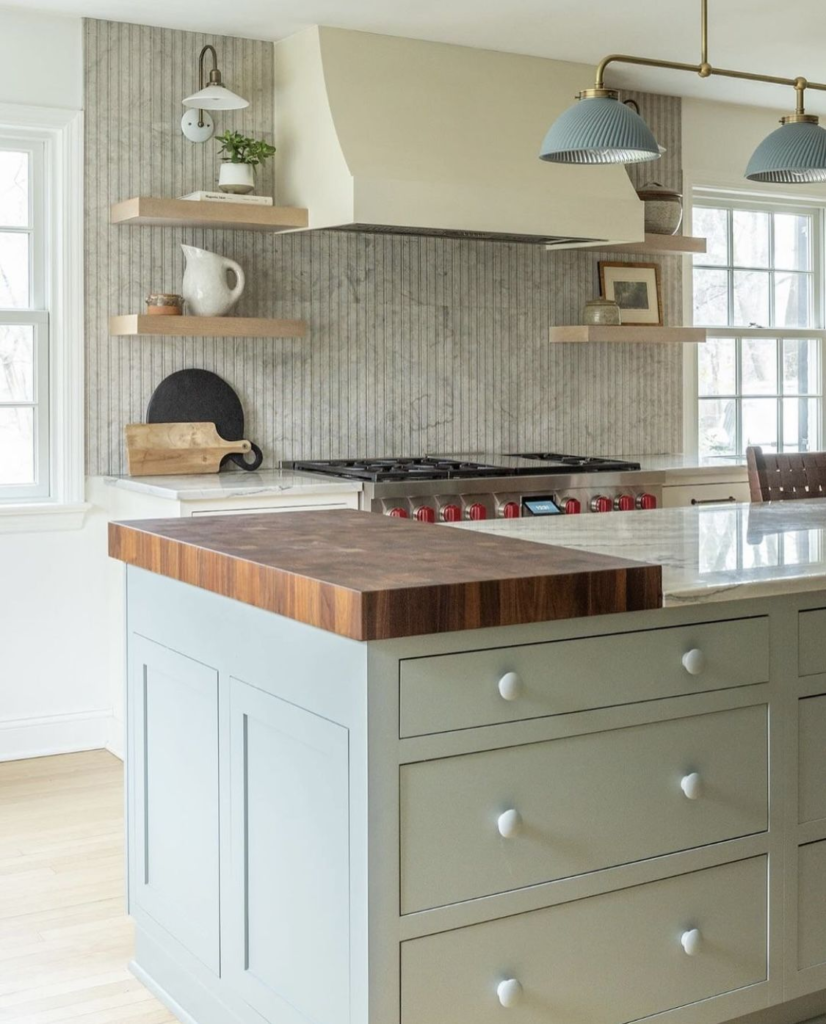
Butcher block is cheap, but raw wood can look rustic. To make butcher block look luxurious, treat it like a piece of furniture. Sand it down and seal it with a matte, hard-wax oil (like Rubio Monocoat). This gives it a “cerused” (white-waxed grain) look similar to the expensive oak floors found in Parisian apartments. This costs a fraction of marble but provides the same organic, natural texture that defines “quiet luxury.”
Layout and Spatial Illusions
Even if you cannot move your sink or knock down a wall, you can change how the eye perceives the room.
16. The L-Shape Workflow
If your room is a strict rectangle, resist the urge to line everything up on two walls in a “hallway” layout (unless it is very wide). A compact L-shaped layout uses a corner to create a triangle between the sink, stove, and fridge. According to NKBA (National Kitchen & Bath Association) guidelines, this maximizes the continuous counter space and keeps the “work triangle” tight, which is essential for efficiency in a small space. It also opens up the center of the floor for movement.
17. Ditching the Upper Cabinets
If you have another storage solution (like a pantry nearby), consider removing the upper cabinets entirely on one wall. Replacing them with two or three thick, floating wood shelves opens up the wall completely. This exposes more wall color and draws the eye horizontally, making the room feel wider. It forces you to be minimal, which is the essence of luxury.
18. The Curtain Instead of Doors
Under-sink areas are ugly and hard to access. Replacing the cabinet doors under the sink with a custom fabric skirt (a sink skirt) is a soft, romantic detail often seen in English country houses and French apartments. It hides trash cans and cleaning supplies instantly, adds texture (linen or velvet), and costs less than new custom cabinet doors.
19. Open Air and Breathing Room
In a small luxury kitchen, the trash can cannot be visible. Neither can the sponge. The “Clear Counter” rule is strict: only three items should live on the counter permanently (coffee maker, knife block, utensil crock). Everything else, toaster, mixer, blender, must go into a “hidden appliance garage” or a cabinet. A cluttered counter is the fastest way to destroy an expensive look.
The Finishing Touches: Styling on a Budget
This is the layer that takes a “nice apartment” and makes it look like an editorial spread.
20. Gallery Walls and Textiles
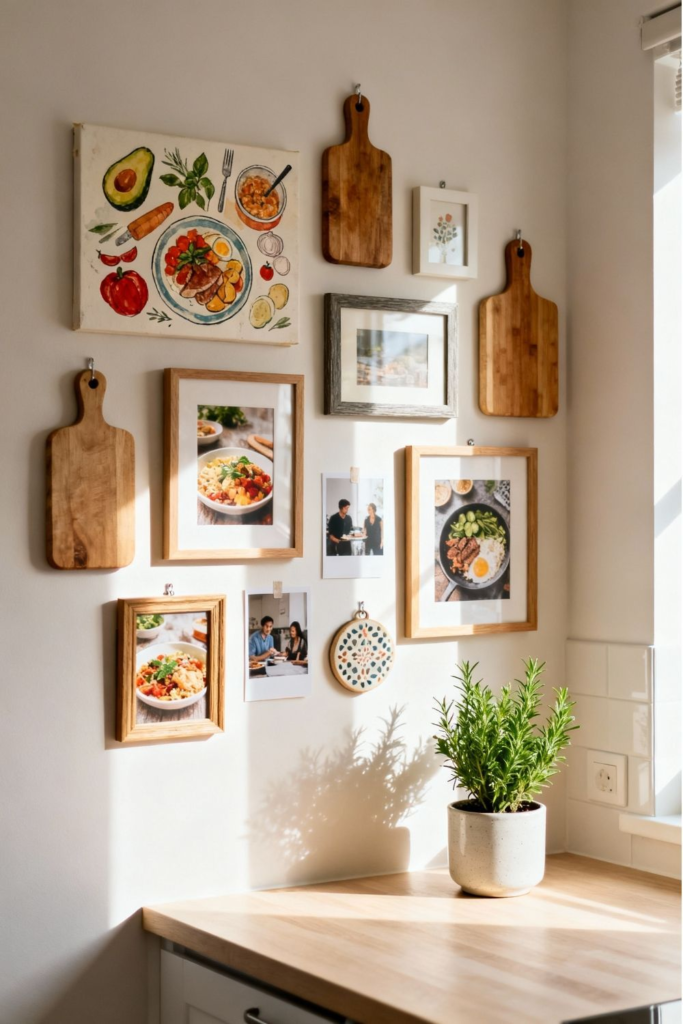
Do not neglect the walls or the floor. A vintage runner rug adds color, hides dirt, and defines the walking path. Hanging a piece of framed art or a gallery wall of plates above the open shelving adds personality. In a small space, these purely aesthetic choices signal that the homeowner cares about design, not just utility.
21. The Greenery and Glass
Finally, bring life into the space. A collection of fresh herbs in terracotta pots (basil, rosemary, mint) looks like a garden installation and smells amazing. Use glass jars (repurposed pasta sauce jars work perfectly) to store dry goods like pasta and coffee beans. The transparency of glass reinforces a clean, organized aesthetic, while the green of the plants adds a splash of natural, organic luxury that no amount of marble can replace.
Conclusion: The Takeaway for Your Dream Kitchen
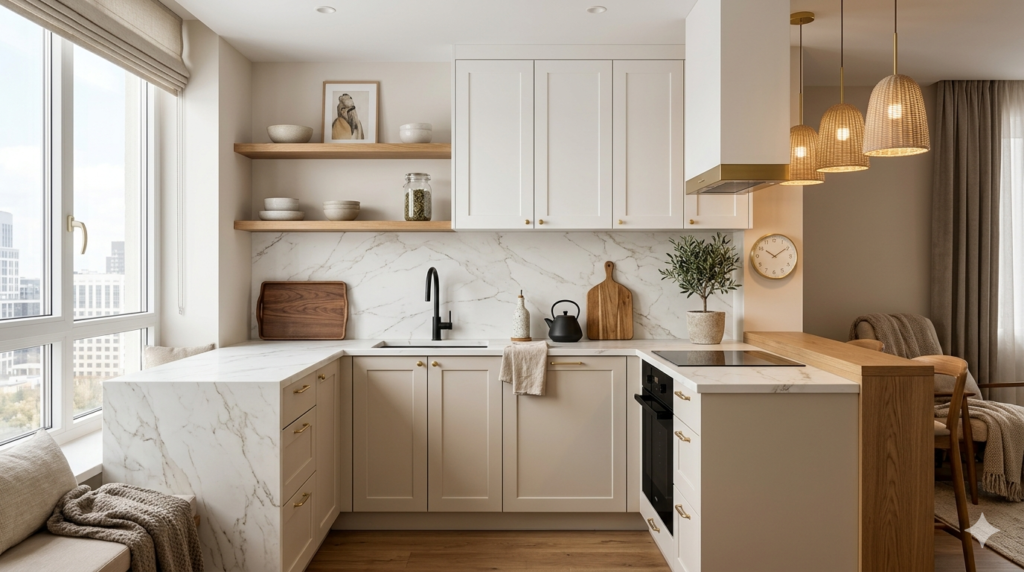
Creating a luxury small kitchen on a budget is not about finding cheap copies of expensive things; it is about strategic allocation of resources. Spend your hard cash on the things you touch (faucets and hardware) and the things that hold weight (countertops). Save your money by using paint, lighting, and styling tricks to manipulate the eye.
The most luxurious kitchen is not the largest one; it is the one that functions perfectly while making you feel good standing in it. Whether you are painting your old cabinets a rich, moody charcoal or simply adding a brass faucet and a runner, these changes are accessible, actionable, and overwhelmingly effective. You do not need a mansion to design a masterpiece; you just need 21 good ideas.
Frequently Asked Questions
1. What is the single most effective way to make a small kitchen look expensive without renovation?
Lighting. Specifically, adding under-cabinet LED strip lighting and swapping a generic boob light for a dramatic, skinny pendant light. Light quality changes the perception of shadow and depth, instantly upgrading the mood.
2. Can I mix wood tones and metal finishes in a small kitchen?
Yes, and you should. A “quiet luxury” aesthetic thrives on mixed textures. Pair white oak (warm wood) with brushed nickel (cool metal) or walnut with aged brass. The variety prevents the room from feeling flat or sterile.
3. Is a backsplash necessary, or can I paint the wall?
You can definitely paint the wall, but use a high-gloss, washable paint specifically designed for wet areas (like a kitchen or bathroom enamel). This creates a glass-like finish that is easy to clean and looks very modern.
4. How do I choose the right size rug for a small galley kitchen?
You want a runner that leaves about 6 to 12 inches of bare floor on either side. It should not trip you up when you open the oven. A vintage, low-pile wool rug is best because it is durable and hides stains.
5. What is the “70/30 rule” in kitchen design?
It refers to the balance between closed and open storage. Approximately 70% of your storage should be hidden behind cabinet doors to hide mess, while 30% should be open shelving to display your beautiful dishes and glassware.