The bedroom is the only room in the house that is truly yours. Guests don’t tour it. Dinner parties don’t spill into it. Yet, for years, we have treated this private sanctuary as an afterthought. A dumping ground for laundry. A second office. Or a dark cave where we scroll on our phones until we fall asleep.
In 2026, that changes.
Designers across the globe are reporting a radical shift in how homeowners want to feel in their bedrooms. Gone are the requests for stark minimalism or cold, gallery-like finishes. Instead, a new trio of trends has emerged to rescue the small bedroom. These are Color Drenching, The Cocoon Bedroom, and the most talked-about movement, The Analog Bedroom.
Whether you are working with a cramped studio or a compact primary suite, these 39 small bedroom ideas for 2026 prove that you do not need square footage to have a sanctuary. You just need intention.
1. The Analog Bedroom: Rejecting the Digital Glow
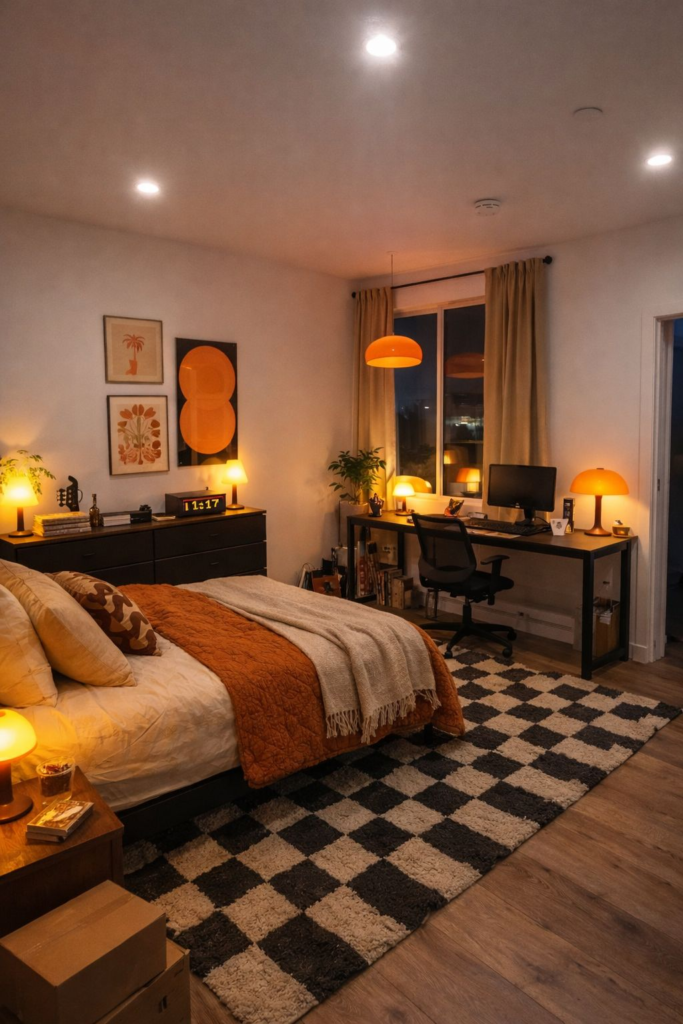
Perhaps the most surprising trend for 2026 is the demand for dead zones. Designers like Lissette Fernandez of Together Home Design Studio are reporting a surge in requests for primary suites without WiFi. “Less TVs and no WiFi is having a moment,” Fernandez told publications. “People want to disconnect and recharge.”
Hide the Screen, Save the Space
In a small bedroom, a black rectangle of a television dominates the wall and the psychology of the room.
- Idea 1: If you must have a screen, follow the lead of luxury hotels. Hide the TV behind sliding artwork or inside a console cabinet. When the screen is out of sight, your mind stops associating the bedroom with binge-watching.
- Idea 2: Create a “charging drawer.” Convert the top drawer of your nightstand into a docking station. Your phone gets stored out of sight at night, removing the visual clutter and the temptation to scroll.
Tactile Stimulation Over Digital Noise
The analog trend relies on texture to provide sensory satisfaction instead of pixels.
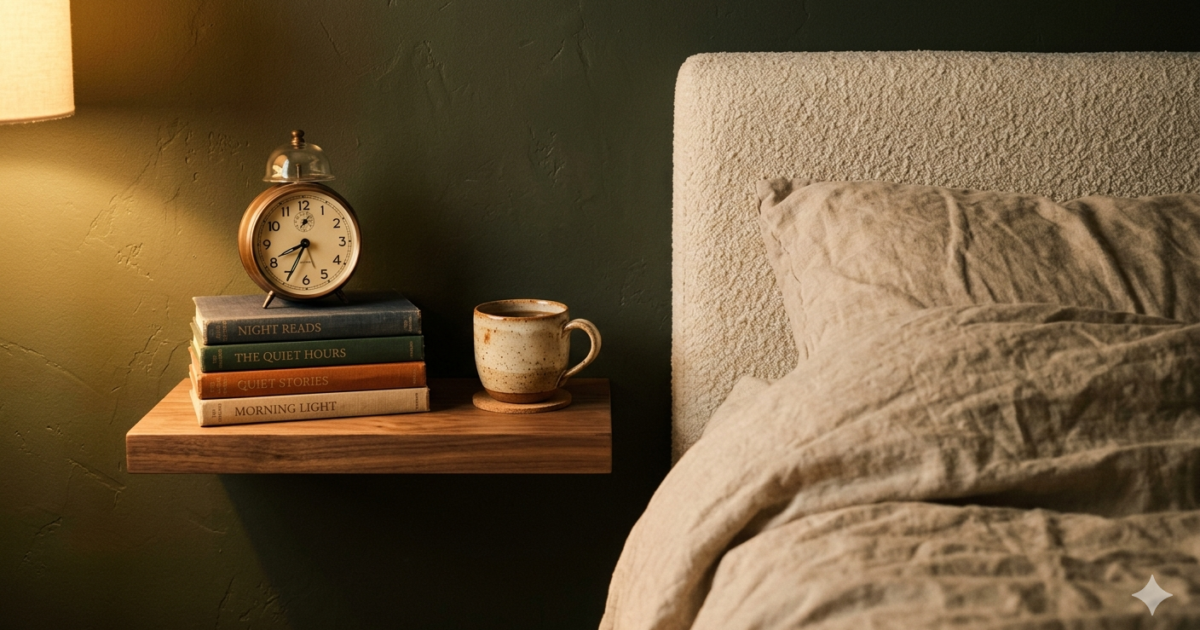
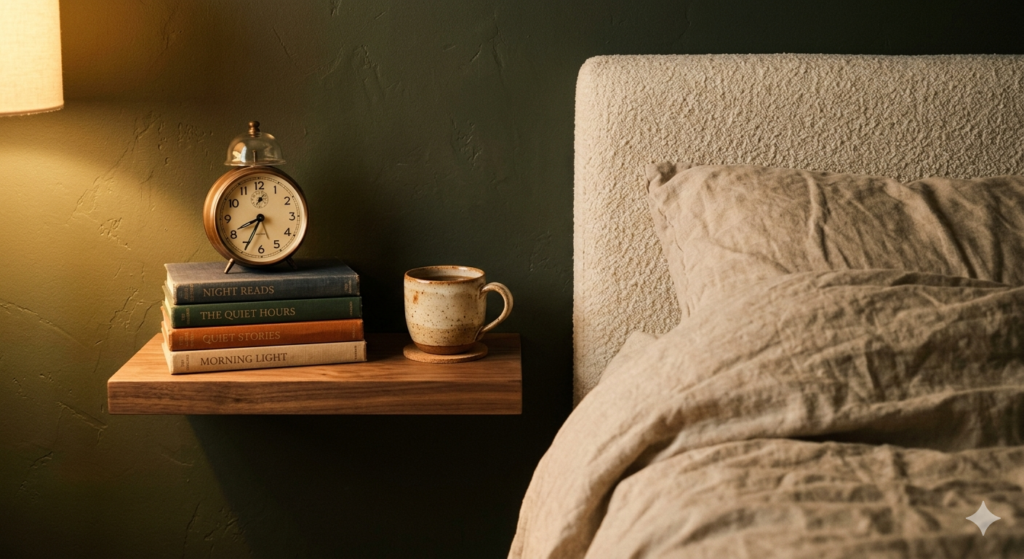
- Idea 3: Replace a digital alarm clock with a classic analog version. The physical presence of moving hands adds a warmth that glowing blue numbers cannot replicate.
- Idea 4: Invest in a small record player. Even if space is tight, a compact turntable and a shelf of vinyl records adds a nostalgic, tactile ritual to your evening wind-down.
2. Color Drenching: The Illusion of Expansion
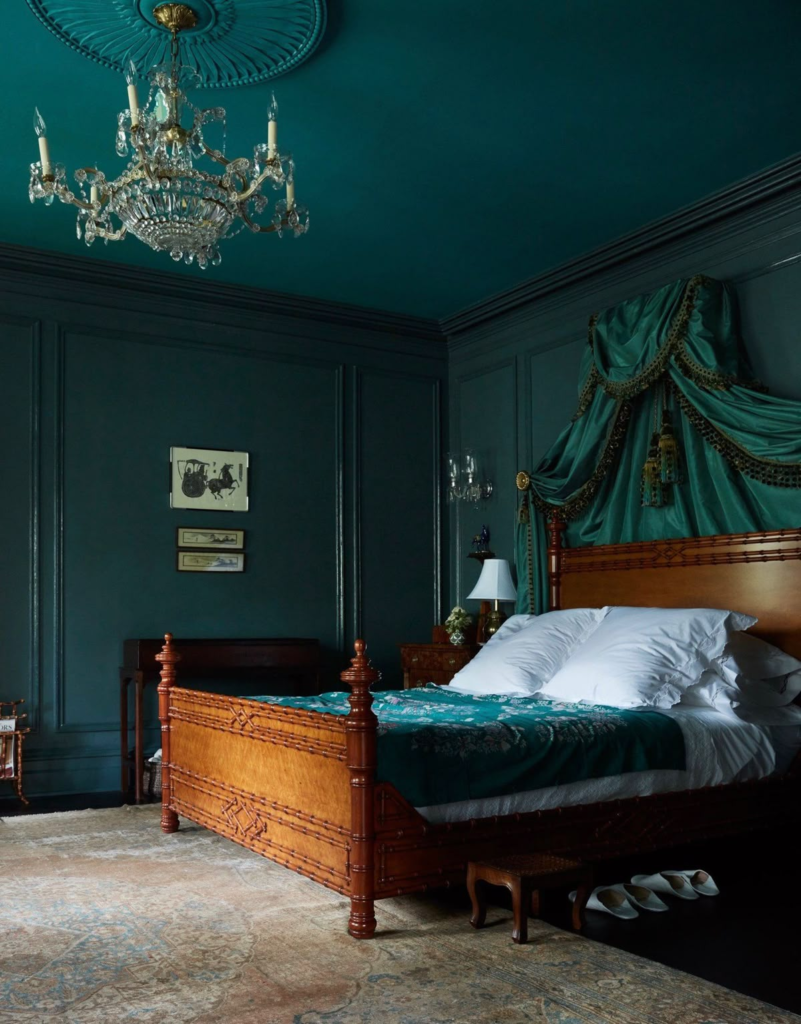
If you have a tiny bedroom, your instinct might be to paint everything white. While safe, white often feels cold or unfinished. The 2026 solution is Color Drenching. This means painting every surface (walls, trim, ceiling, doors, and skirting boards) the exact same hue.
Why It Works for Small Spaces
According to designers like Zoë Feldman, painting the entire room in “deep blue-gray or smoky olive green” eliminates visual breaks. When your eye doesn’t stop at the ceiling line or the window trim, the walls recede. The boundaries of the room soften, making the space feel larger, not smaller.
- Idea 5: Choose a mid-tone color. You don’t have to go pitch black. Muted sage, warm terracotta, or mushroom taupe are accessible entry points for 2026.
- Idea 6: Paint the ceiling. This is the cardinal rule of drenching. A white ceiling in a colored room stops the eye. A colored ceiling creates a “cocoon” that feels protective and intimate.
3. The “Cocoon” Bedroom: Soft, Padded, and Quiet
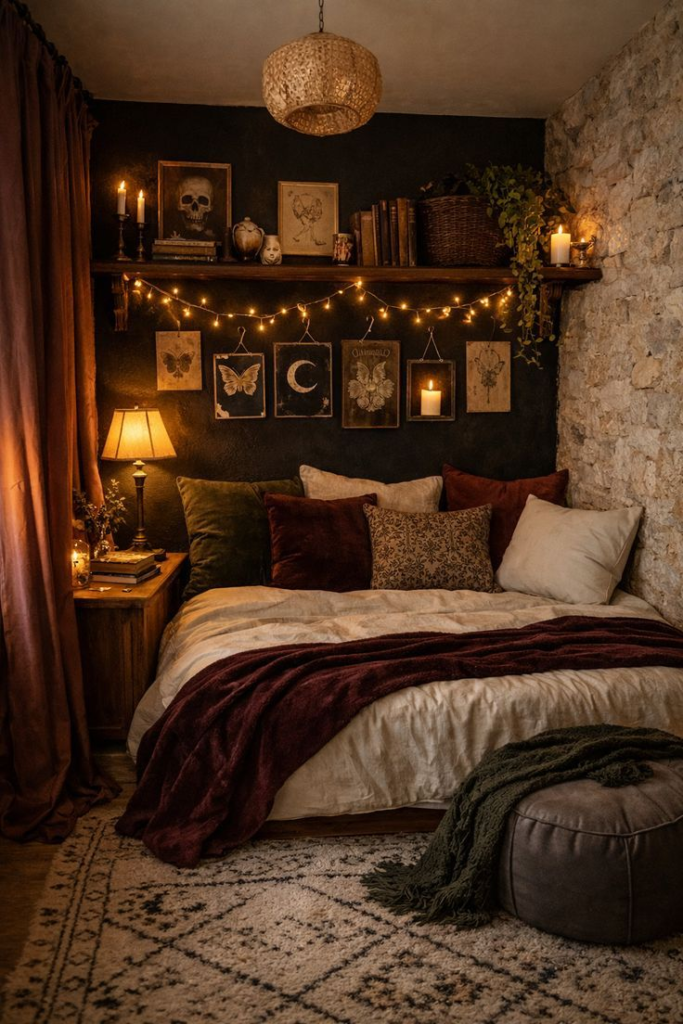
The third pillar of 2026 design is the sensory experience of quiet. As cities get louder and screens get brighter, the bedroom must absorb noise.
- Idea 7: Upholstered walls. While this sounds expensive, you can achieve the look with large, textile-covered panels or even a massive velvet headboard that spans the entire wall.
- Idea 8: Layer your linens. Designers are moving away from sterile, flat hotel sheets. Mix linen duvets with chunky knit throws and quilted coverlets.
- Idea 9: Use blackout curtains in a natural fabric. Lined linen curtains block light and muffle outside sound better than cheap polyester blinds.
4. The Rise of Japandi and Warm Minimalism
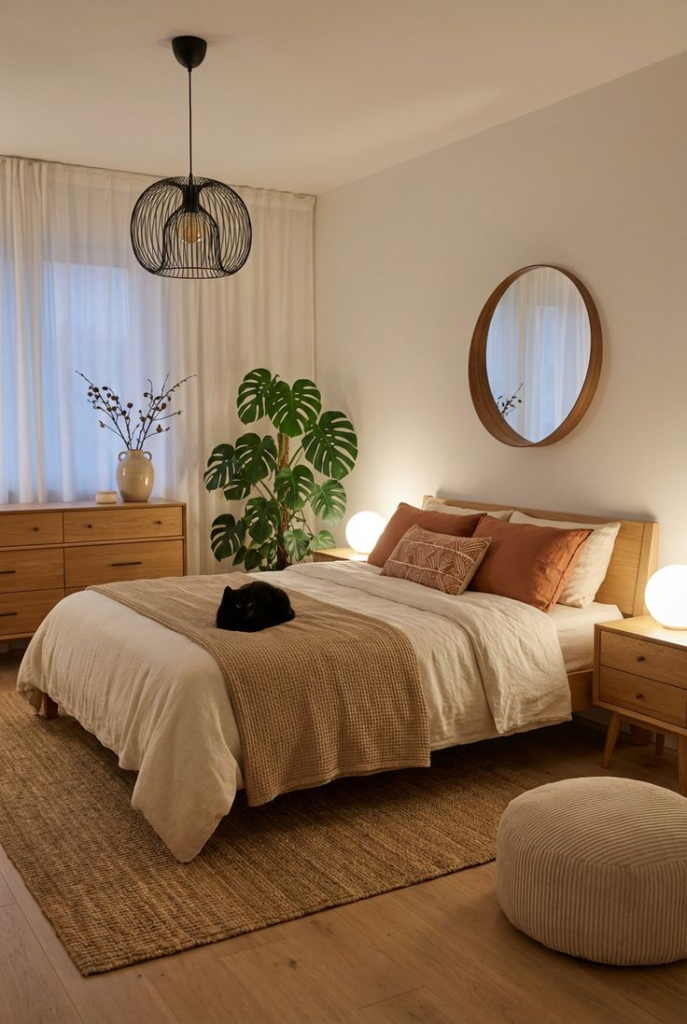
In global design hubs, “Japandi” (Japanese and Scandinavian) remains the dominant aesthetic for small spaces in 2026. It combines the minimalist lines of Nordic design with the warmth and natural materials of Japanese wabi-sabi.
- Idea 10: Stick to a low-contrast palette. Instead of black and white, use cream and charcoal.
- Idea 11: Bring in raw wood. A single solid wood bench or headboard adds a tactile, organic element that technology cannot replicate.
- Idea 12: Declutter aggressively. Warm minimalism requires empty surfaces. If a surface is covered, it creates visual noise that shrinks the room.
5. Space-Saving Furniture Strategies
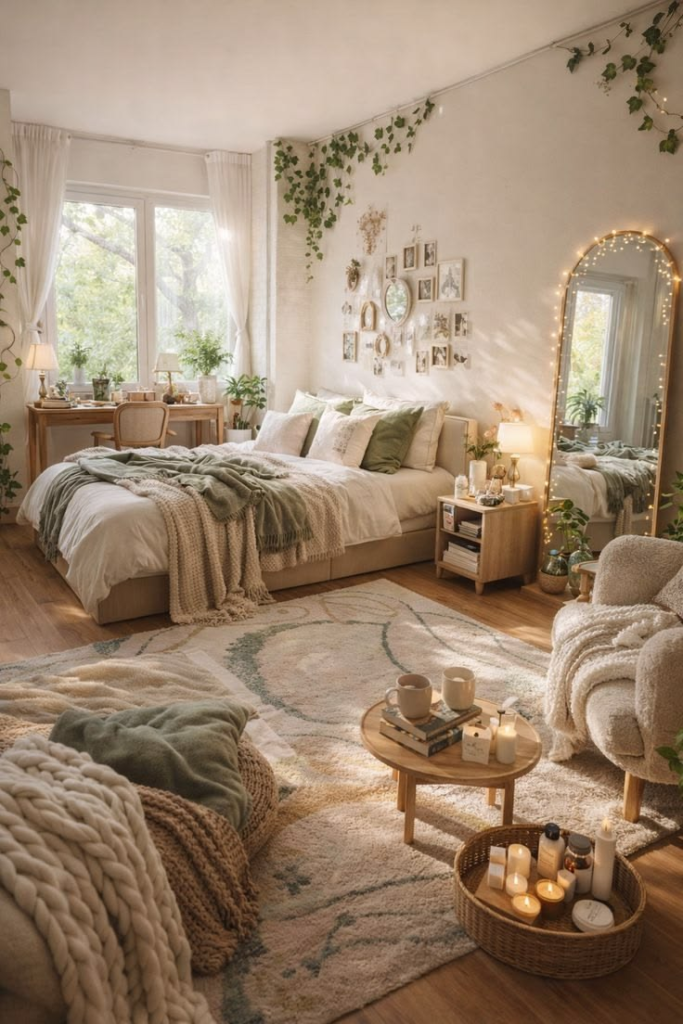
You cannot break the laws of physics, but you can cheat them with smart joinery.
The Magic of Verticality
- Idea 13: Go high with your curtains. Mount the rod just a few inches below the ceiling rather than directly above the window. This draws the eye up, making the ceiling feel higher.
- Idea 14: Tall, narrow bookshelves. A wide dresser takes up precious floor space. A tall bookcase uses vertical air space to add storage without stealing walking room.
Multi-Functional Heroes
- Idea 15: Storage beds are non-negotiable in 2026. Ottomans or drawers built into the base of the bed are the most efficient way to hide bulky bedding.
- Idea 16: The “Cloffice.” If you work from home, don’t put a desk in the corner. Install a wall-mounted floating desk that folds flat against the wall when you clock out.
- Idea 17: Floating bedside shelves. Ditch the bulky nightstand. A simple wooden shelf mounted to the wall holds a book and a glass of water without the visual weight of table legs.
6. Visual Trickery: Zoning and Mirrors
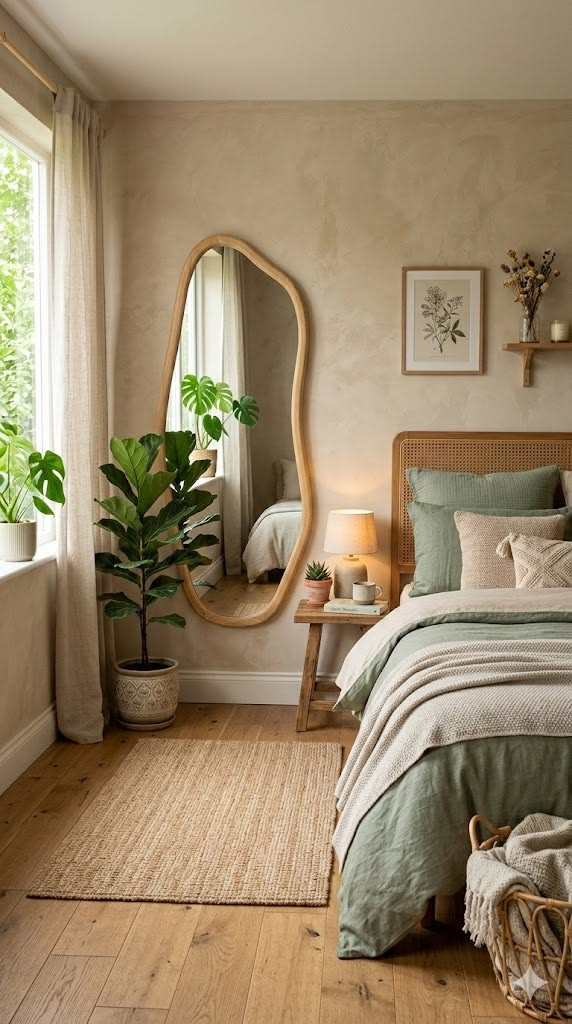
- Idea 18: Zone without walls. Use a rug to define the sleeping area. Even in a 10×10 room, a rug under the bed creates a “zone” that organizes the space mentally.
- Idea 19: The oversized mirror trick. Leaning a large, floor-to-almost-ceiling mirror against the wall doubles the perceived light and space instantly.
- Idea 20: Use low-profile furniture. A low platform bed makes the ceiling look higher. Tall dressers make the walls look taller. Avoid mid-height bulky pieces.
7. 39 Specific Actionable Ideas (The Master List)
Here is the complete breakdown of the 39 ways to transform your small bedroom in 2026, synthesizing all expert advice.
Lighting and Ambience
- Idea 21: Install dimmer switches. Bright light is the enemy of a cozy small room.
- Idea 22: Use 2700K bulbs. Avoid cool white light which feels clinical.
- Idea 23: Wall sconces instead of table lamps save nightstand space.
- Idea 24: Under-bed LED strips. If you wake up at night, a soft glow on the floor prevents stubbed toes without waking you up fully.
Color and Paint
- Idea 25: Try “Sand” or “Warm Beige” instead of stark white for a cozier feel.
- Idea 26: Paint the window trim the same color as the wall to make the window look larger.
- Idea 27: Use matte paint. Glossy finishes reflect light in harsh ways that highlight imperfections in small rooms.
- Idea 28: Carry the wall color into the closet. Paint the inside of your open closet the same color as the room so clothes don’t look like clutter.
Storage Hacks
- Idea 29: Over-the-door organizers. They are not just for shoes. Use them for cleaning supplies, accessories, or pantry overflow.
- Idea 30: Corner shelving. The 90-degree corner is the most underutilized real estate in a bedroom.
- Idea 31: Under-bed vacuum seal bags. Store off-season clothing flat under the mattress.
- Idea 32: Hanging closet dividers. Double your vertical hanging space instantly.
Textiles and Comfort
- Idea 33: The “Low Scale” bed. Low headboards and coverlets that match the headboard create a uniform, color-blocked look.
- Idea 34: Organic cotton percale sheets. Breathable and crisp, these are recommended for hot sleepers in small, stuffy rooms.
- Idea 35: A single large rug. Multiple small rugs break up the floor and make the room look choppy. One big rug unifies the space.
Layout and Architecture
- Idea 36: Float the bed. If the room is square, try pulling the bed just 6 inches off the wall to allow airflow and make the room feel deeper.
- Idea 37: Sliding barn doors for closets. Traditional swinging doors eat up floor space in a tiny room.
- Idea 38: Remove the closet doors entirely. If the closet interior is organized and painted nicely, removing the doors makes the room feel like a studio apartment rather than a box.
- Idea 39: Declutter seasonally. In 2026, the “less is more” rule applies strictly to small bedrooms. If you haven’t used it in 6 months, it leaves the room.
Conclusion: Comfort is the New Luxury
In 2026, the design of a small bedroom is no longer about how much you can fit into it. It is about how much you can take out of it. We are removing the WiFi signals, removing the harsh contrasts, and removing the visual clutter.
The goal is “intentional disconnection.” Whether it is through the immersive color of a drenched wall or the soft tick of an analog clock, your small bedroom should be the one place where the outside world cannot reach you.
Start with just one of these strategies. Perhaps hiding the TV or switching to a warmer lightbulb. Watch how quickly your cramped quarters transform into a 2026 sanctuary.