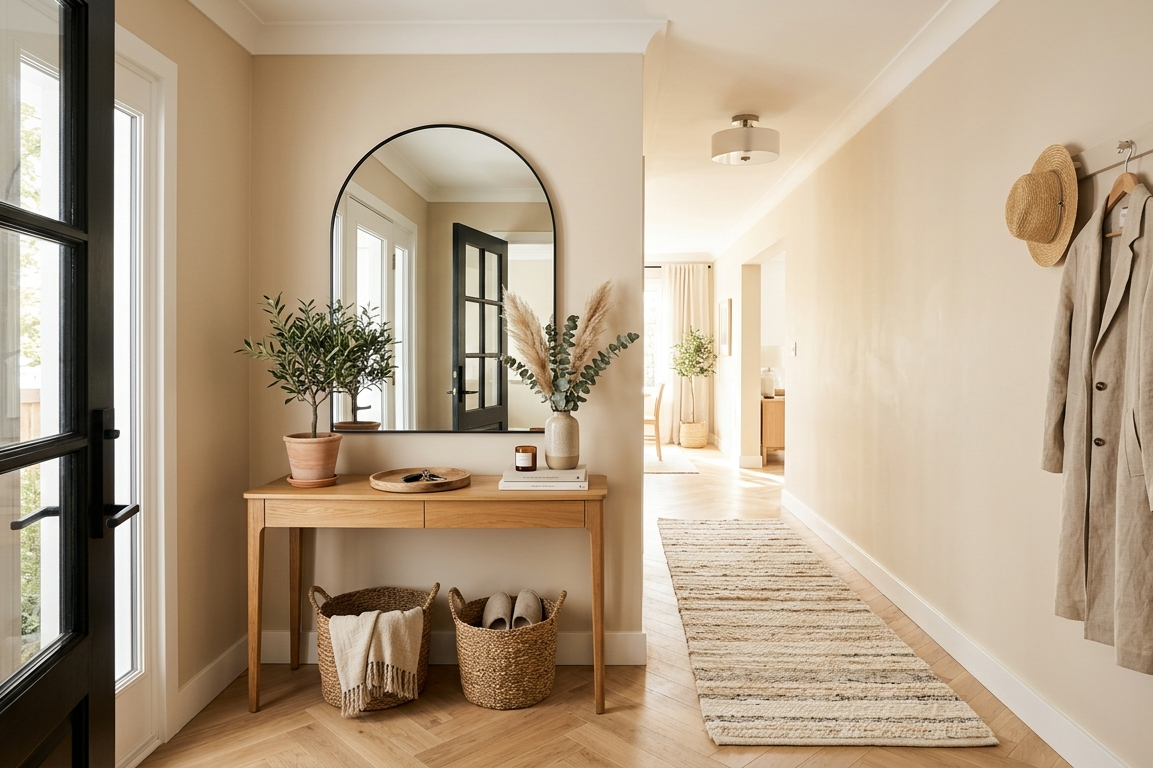
Your entryway is a promise. It is the first exhale after a long commute, the first visual handshake you offer to guests, and often, the hardest-working space in your home. For those of us living with compact foyers, narrow corridors, or “apartment-sized” entrances, the challenge isn’t just about storage. It is about creating breathing room. You want a space that feels curated, not cluttered; calming, not chaotic. The good news? You don’t need a sprawling mansion to achieve a magazine-worthy entrance.
According to interior design experts, small spaces actually spark the most creativity. By focusing on scale, texture, and multi-functional pieces, you can turn a tight squeeze into a stunning statement. We have analyzed the latest expert advice from top designers to bring you the definitive guide to the aesthetic small entryway.
Whether you are a renter looking for non-permanent hacks or a homeowner planning a full refresh, these ten ideas will help you master the art of the small entryway.
1. Harness the Illusion: The Power of the Large Mirror
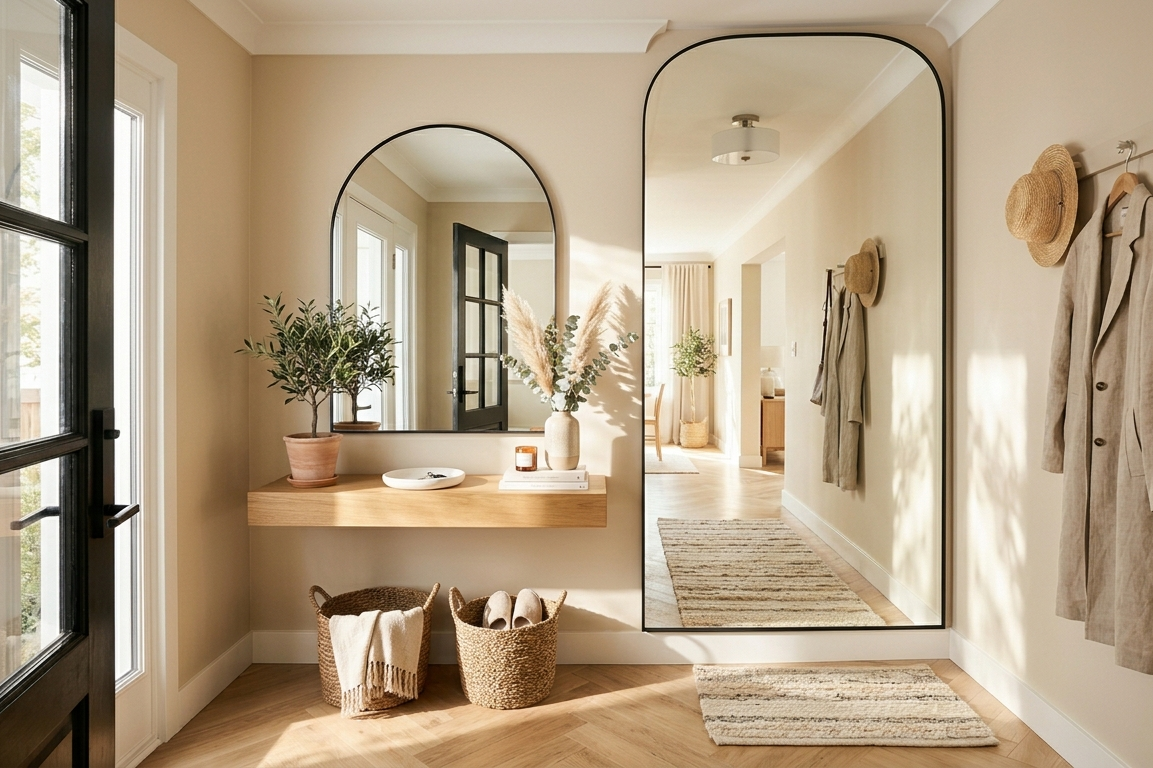
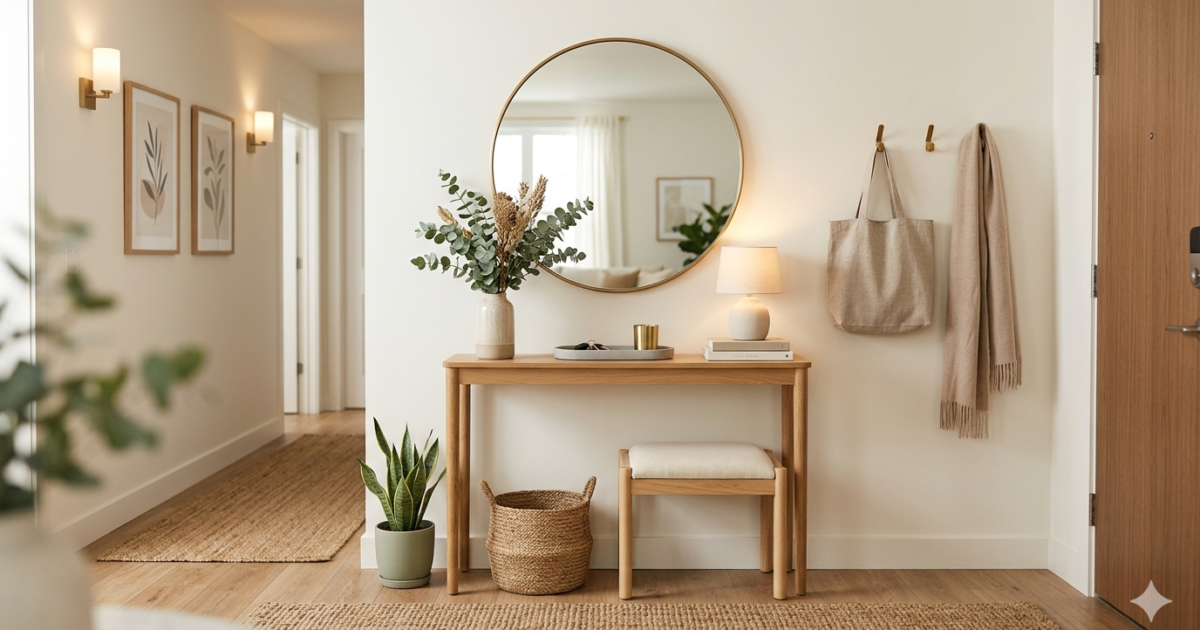
When it comes to aesthetic small entryway ideas, the mirror is your absolute best friend. But not just any mirror. Scale matters here. While it might seem counterintuitive to put a large piece of furniture or decor in a small space, a single, oversized mirror defies logic by visually doubling your square footage.
Why It Works
A mirror acts as a window, reflecting light from adjacent rooms or fixtures. In a narrow foyer, it creates a sense of depth that tricks the eye into seeing a larger, more open area. Adding a mirror to your entryway will aesthetically add a piece of wall décor while functionally allowing you and your guests to check your looks before you leave the house.
How to Execute the Look
- Go Big: Lean a large, full-length mirror against the wall or hang a wide statement piece. Avoid tiny mirrors, which can get lost and emphasize the smallness of the wall.
- The Lean: Leaning a mirror creates a relaxed, casual vibe. Ensure it is securely anchored to the wall to prevent accidents, especially in high-traffic zones.
- Placement: For safety and functionality, ensure the mirror is placed at a height where most people can see their face. Placing it too high or too low results in an immediately awkward interaction.
2. The “Just Right” Console: Depth and Proportion
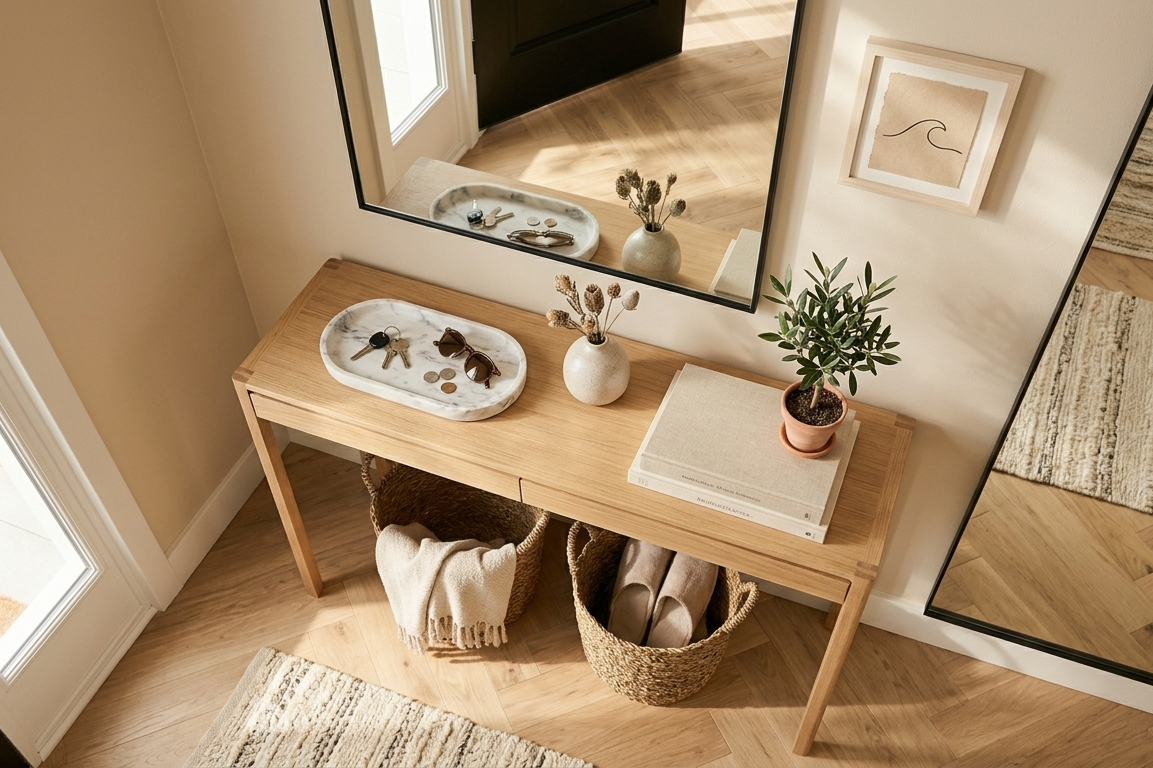
In a tiny entryway, the worst mistake is choosing furniture that is too bulky. A standard 18-inch deep console will likely block your path and become a hip-bruising hazard. The secret to an aesthetic small entryway is the slim console.
Finding the Perfect Fit
Designers universally recommend looking for consoles that are between 8 and 14 inches deep. This is shallow enough to keep your walkway clear but deep enough to hold a catchall tray for keys or a small lamp.
In narrow corridors, keeping a minimum clear path of 36 inches is essential for comfortable traffic flow. The long low table is also effective. Don’t be afraid of length. A longer, low table can actually make a small entryway look bigger by stretching the eye horizontally.
Styling the Surface
Once you have the right table, keep the styling minimal. Choose one decorative object (like a sculptural vase), one functional object (a tray for keys), and one organic element (a small plant). This “rule of three” prevents visual clutter.
3. High-Impact Wallpaper: The Punchy Accent
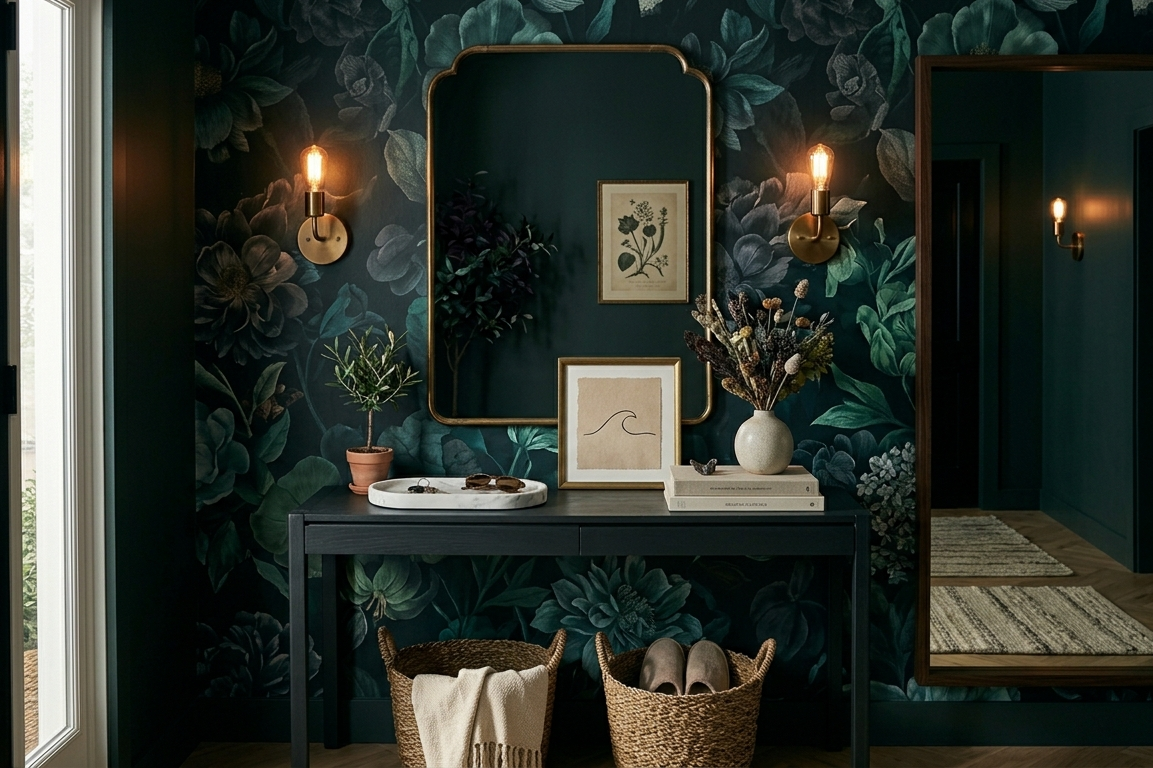
Small spaces are the perfect testing ground for bold design risks. While you might hesitate to paint a large living room neon pink or cover it in giant palm leaves, a compact entryway craves this intensity. Statement wallpaper is a dominant trend for 2025 and 2026, transforming awkward nooks into intentional jewel boxes.
Texture and Pattern
Small spaces can pack a punch, especially with wallpaper. Feel free to go for it. The most fun results are when you take chances.
- Moody Hues: Deep greens, navy blues, or charcoal wallpapers create a “moody” vibe that feels luxurious rather than dark when paired with good lighting.
- Scale of Pattern: Don’t shy away from large-scale patterns. A big floral or geometric print in a small space creates a dramatic, immersive effect.
Practical Application
If wallpaper feels like a permanent commitment, try peel-and-stick varieties perfect for renters. Define the space by wallpapering only one wall (like the one the console sits against) to create a focal point, leaving the other walls neutral to balance the visual weight.
4. Vertical Storage Solutions: Look Up
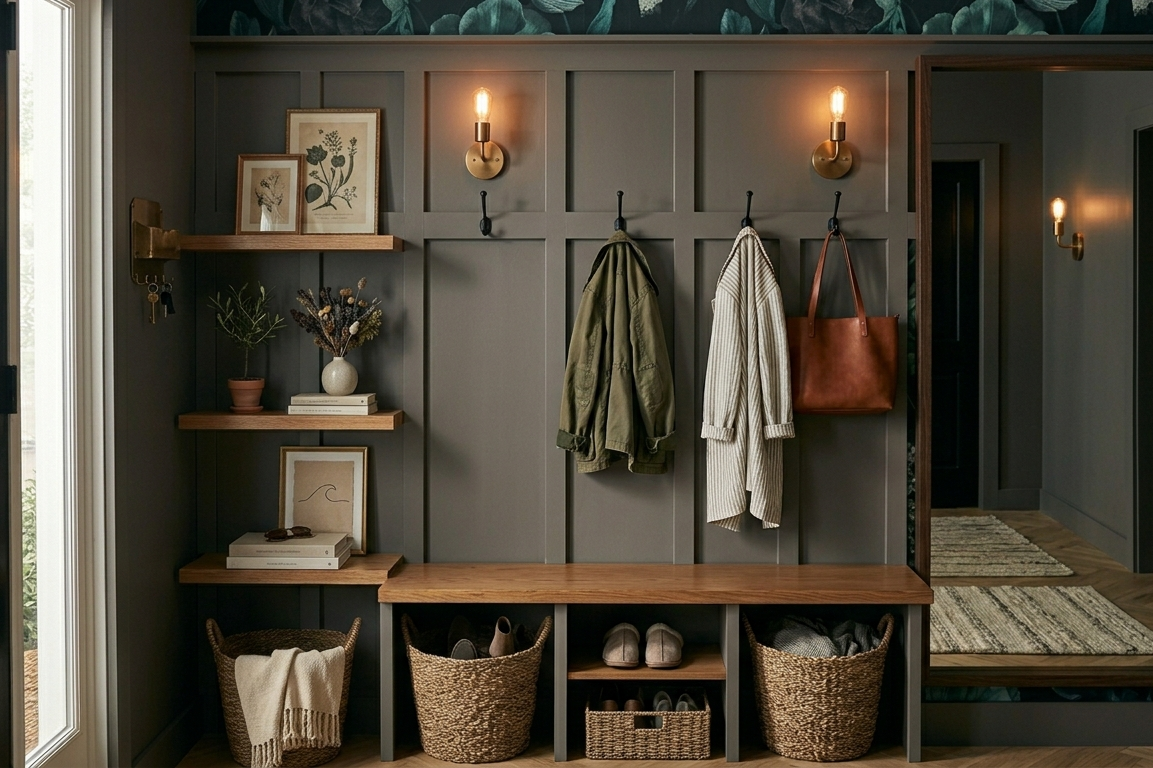
When floor space is limited, your walls are prime real estate. Aesthetic small entryway ideas must utilize verticality. This is where you move beyond just art and into functional architecture.
The Board and Batten/Hook System
One of the most transformative DIY projects is adding board and batten paneling combined with a row of hooks. This helps define a space and create a first impression worth talking about. This adds architectural interest while providing a home for coats and bags.
- Shoe Cubbies: Integrate small cubbies at the base of your vertical storage unit. A shoe shelf beneath hooks keeps footwear off the floor and organized.
- Floating Shelves: Install staggered floating shelves to display books, art, or folded blankets. This draws the eye up, making the ceiling feel higher.
The Built-in Look
If you are handy, shallow built-ins (roughly 12-14 inches deep) that go from floor to ceiling offer the most storage. They can hide seasonal gear behind closed doors on top while keeping daily essentials accessible below.
5. The Dual-Purpose Bench: Sit and Store
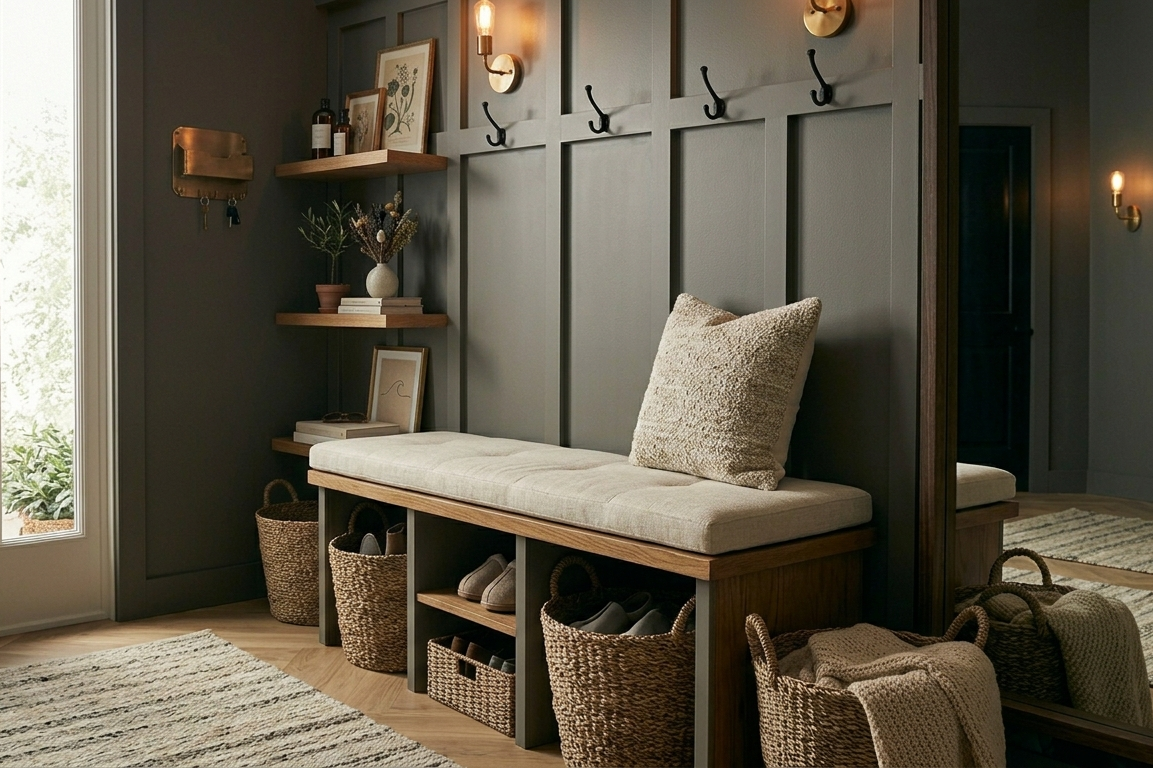
An entryway should be functional. You need a place to sit down to tie your shoes or set down a heavy bag. An aesthetic storage bench solves both problems, adding softness and utility to a tight space.
Choosing the Right Style
- Sculptural Benches: For a high-end look, a white sculptural bench adds texture and acts as art. The bench will serve many functions from giving you a place to put your shoes on to temporary storage for incoming groceries.
- Upholstered Comfort: An upholstered bench with hidden storage underneath is ideal for family homes. Look for durable, washable fabrics that can withstand denim and muddy shoes. According to designers, adding a washable cushion extends the life of the piece.
Placement Tips
Place the bench perpendicular to the door or along the longest wall. If space is too tight for a bench, consider a small folding stool or a compact ottoman that can be tucked under a console table when not in use.
6. Lighting: The Grand Statement
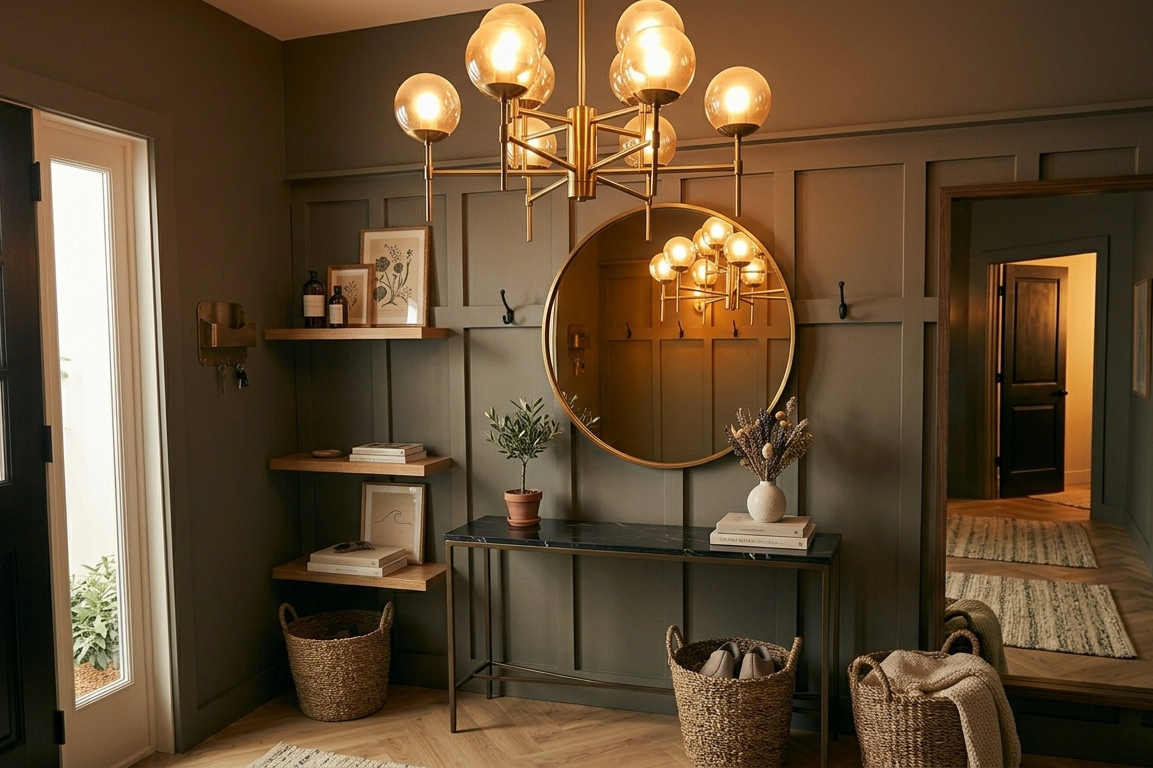
One of the biggest mistakes in small entryway design is relying solely on a recessed “boob” light or a generic flush mount. Lighting is jewelry for the room. A statement light fixture creates a focal point that draws the eye up and adds personality.
Scale Up
Do not be afraid to go big with your light fixture. A medium-to-large pendant light or a small chandelier adds drama. The space may be small, but the lighting can be grand. Swapping an outdated fixture for something with personality instantly elevates the entire space.
Layered Lighting
Relying on one overhead source creates shadows. Aim for layered lighting:
- Ambient: The overhead fixture.
- Accent: A table lamp on the console. This adds a warm, residential glow that overhead lights cannot achieve.
- Sconces: Wall sconces flanking a mirror add symmetry and eliminate the need for floor or table space. Mount them at about 60 to 66 inches from the floor.
7. Runners and Rugs: Defining the Path
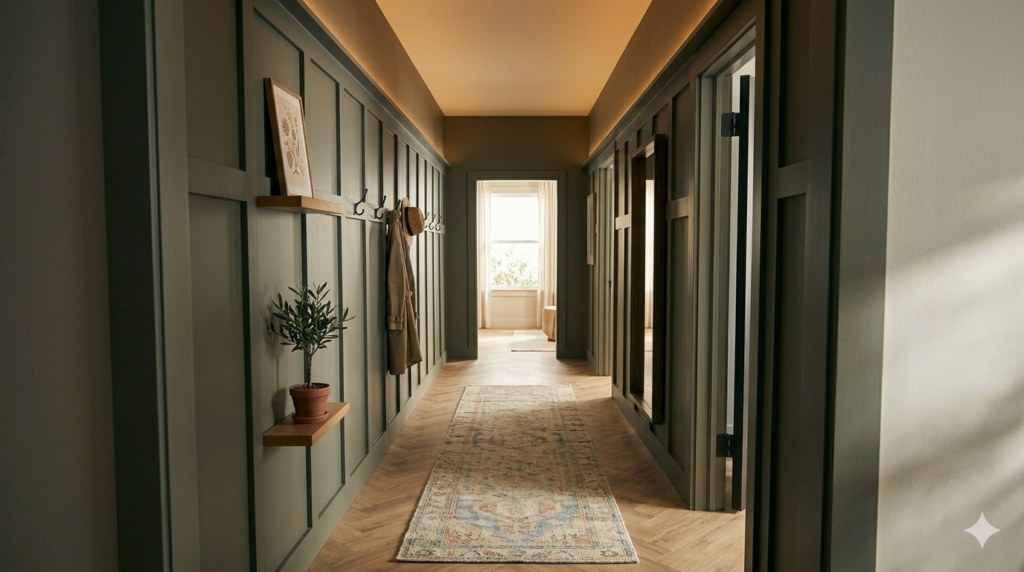
In an open-plan home, the entryway often bleeds into the living room. To make a small entryway feel like a distinct “room,” you need to define its boundaries. A runner rug is the most effective tool for this.
Creating Flow
A long, textured runner defines the pathway, adding both comfort and visual rhythm. A runner draws the eye forward, elongating the hallway while softening the hard lines of the floor.
- Size Matters: Ensure the rug is wide enough to stand on when the door opens, but leave at least a few inches of floor visible on the sides to avoid a wall-to-wall carpet look.
- Durability: The entryway sees the most dirt. Choose low-pile, flat-weave rugs or those made from indoor or outdoor materials that are easy to clean and resist staining.
8. Texture and Natural Elements
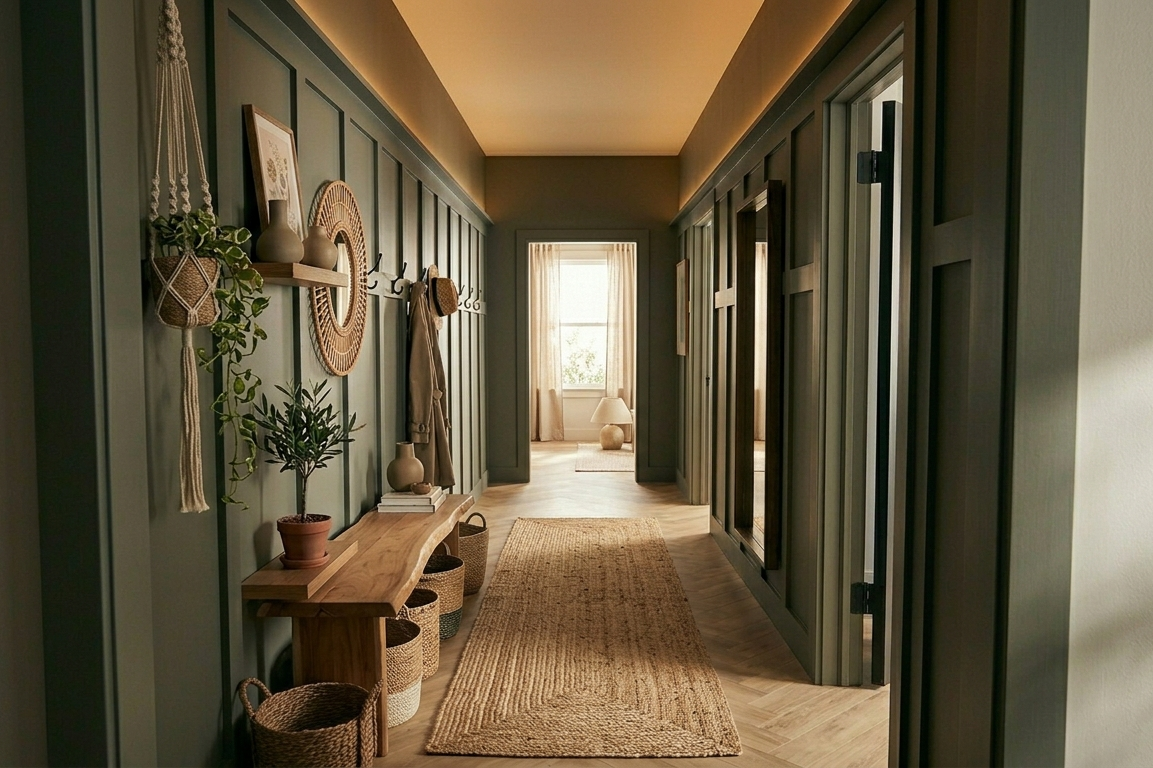
An all-white, flat-painted box can feel sterile. Aesthetic entryways rely on texture to feel warm and inviting. This is where you introduce organic shapes and materials that contrast with the hard lines of the walls.
Mixing Materials
Compact spaces feel alive when filled with detail and character. Mix wood tones, metal finishes, and soft textiles. A woven basket for umbrellas, a jute rug, or a ceramic bowl on the table adds tactile interest.
- The Natural Look: Since entryways connect to the outdoors, bring the outside in. Incorporate driftwood, stone, or plants. Entryways have a direct line to the great outdoors.
- Greenery: A tall snake plant or a trailing pothos adds life to a dark corner. If you have no natural light, high-quality faux plants have become incredibly realistic.
9. The Art of the “Drop Zone”
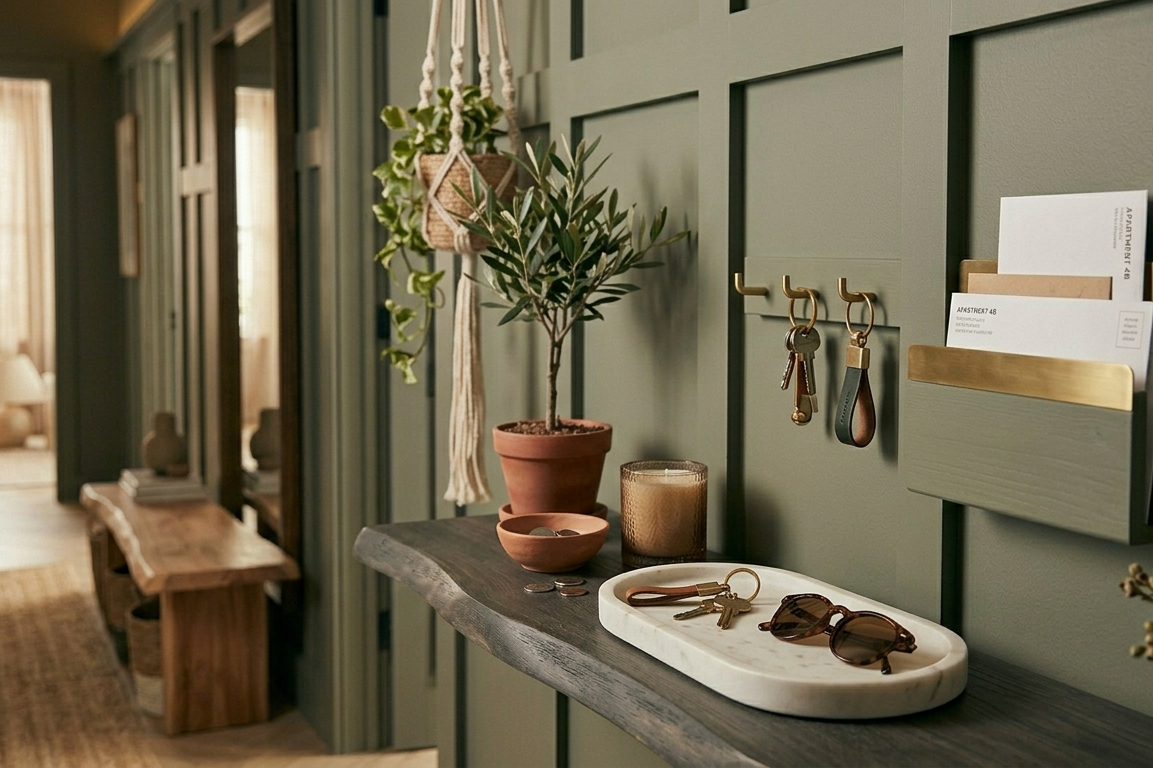
Clutter is the enemy of the aesthetic small entryway. Keys, mail, sunglasses, and masks need a designated home; otherwise, they spread across every surface. The solution is a styled drop zone.
The Catchall Tray
Use a beautiful tray (marble, wood, or leather) to contain the chaos. By corralling items on a tray, even a pile of keys looks intentional. Pair this with a small dish for loose change or rings.
- Wall-Mounted Key Holders: Free up surface space by hanging a magnetic strip or a decorative wooden key holder near the door. This eliminates the frantic search for keys.
- Mail Management: Install a small wall pocket or a vertical file holder to sort mail immediately upon entering. This prevents paper piles from ruining your aesthetic.
10. Curated Art and Personalization
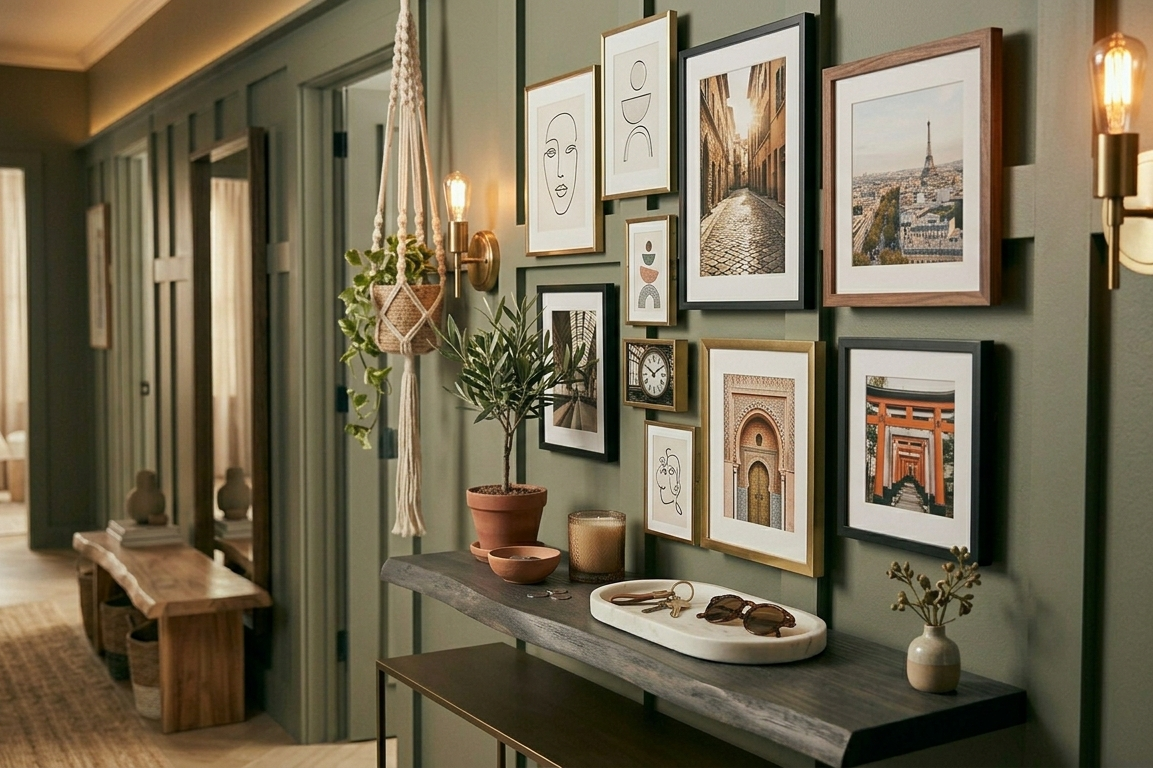
Finally, an aesthetic entryway must tell a story. It is the thesis statement of your home. While mass-produced art is fine, true style comes from personality.
The Gallery Wall
In a narrow space, a gallery wall creates a stunning visual journey. Instead of one large piece, hang a collection of small frames, mirrors, and objects.
- Cohesion: To keep it from looking messy, stick to a cohesive color palette for the frames (all black, all wood, or mixed metals) and keep the spacing between frames tight (2 to 3 inches) to create a single “block” of art.
- The “Focal Point” Trio: If a gallery wall feels like too much work, use the “Trio” method: one large mirror flanked by two matching sconces or two small pieces of art.
What to Display
Avoid generic quotes. Instead, use vintage finds, family photos, or art collected from travels. Entryways are a first impression, so make sure they show your personality and put a smile on your guests’ faces.
Before-and-After: Making It All Work
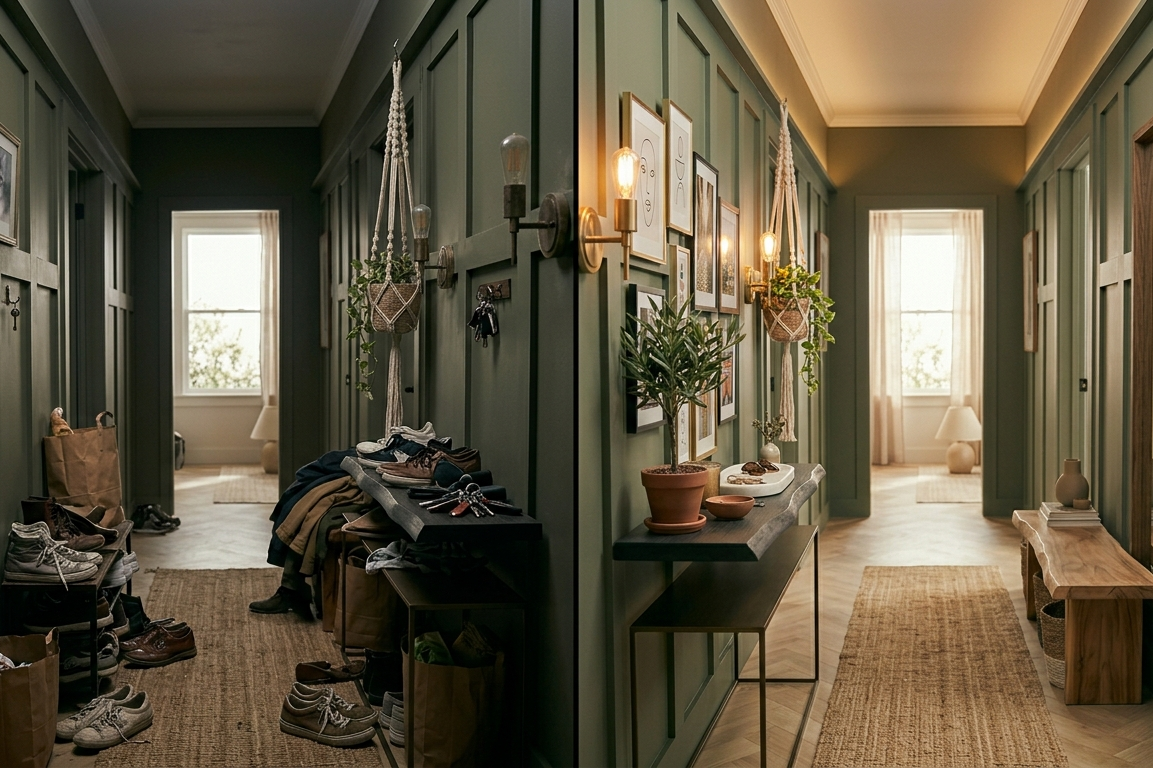
To truly appreciate these tips, look at the sum of their parts. An average small entryway usually features a bare bulb, a cluttered floor of shoes, and a blank wall.
An aesthetic small entryway layers these ten ideas:
- The Structure: Board and batten paneling painted in a moody hue.
- The Furniture: A slim 10-inch deep wooden console with a rounded mirror above.
- The Extras: A textured runner, a sculptural bench, a hanging plant, and a brass lamp.
According to design experts, you can achieve a high-end look on a budget by focusing on just two of these elements: Lighting (swap the fixture) and Paint (add a pop of color or wallpaper). These two changes offer the highest return on investment for transforming the feel of the space.
The Future of Small Entryway Design
Looking forward, the trend is moving away from “storage walls” that look like locker rooms and toward “furniture moments.” Designers predict that as open floor plans continue to dominate, the entryway will become even more defined as a buffer zone between the public outdoors and the private sanctuary of the home.
We are seeing a rise in biophilic design (integrating nature) and Japandi influences (minimalist, warm wood tones). The focus is no longer on cramming as much storage as possible into the entry but on leaving negative space (empty wall space, clear floor space) to allow the home to breathe.
According to interior design thinking, narrow isn’t a curse. It is just a design challenge begging for your creativity. Every object must earn its keep. If it doesn’t serve a function or bring you joy, it shouldn’t crowd your foyer.
Conclusion
Creating an aesthetic small entryway is not about square footage; it is about intention. It is the strategic placement of a mirror to catch the morning light, the bold choice of a wallpaper that makes you smile, and the practical addition of a bench that holds the day’s clutter.
Start small. Pick one or two of these ideas, perhaps the lighting upgrade and a fresh coat of paint, and see how drastically the mood shifts. Your home deserves a grand welcome, no matter the size of the door it comes in. By focusing on scale, texture, and multi-functional furniture, you can turn that cramped corridor into the most stylish room in the house.