You look outside at your postage-stamp-sized yard. You see a patch of grass, maybe a scraggly bush, and a whole lot of untapped potential. Meanwhile, your kids see a boring void. If you have a small backyard, you might feel like you have to choose between having a stylish adult retreat and a fun-filled child’s wonderland. Good news: you don’t.
According to parenting and landscaping experts, small backyards are actually the best backyards for kids. Why? Because they are easier to fill, easier to supervise, and they encourage more connected, imaginative play than a sprawling field does. You don’t need an acre of land to build a space that sparks joy, creativity, and physical activity.
This guide dives into 10 professional, small backyard ideas for kids that prioritize “play value” over square footage. Whether you want to build a DIY obstacle course, a sensory garden, or just a cool hangout spot, these ideas will help you maximize every inch of your outdoor space.
The Golden Rule of Small Backyard Design: Zones Are Your Best Friend
Before we start digging and building, we need to talk about strategy. In a tiny yard, the biggest mistake is throwing a plastic slide in the middle of the lawn and calling it a day. That eats up all your space and looks messy.
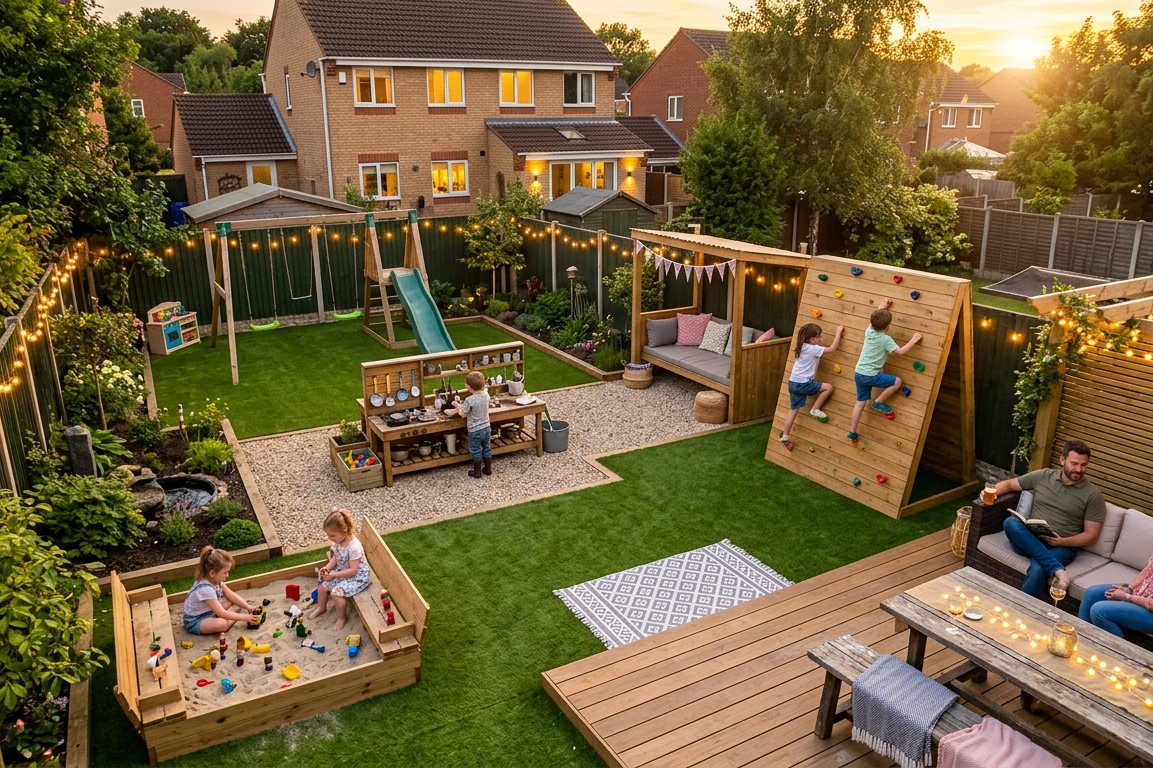
Instead, think like a professional landscape designer. Experts suggest using Landscape Zoning. You don’t need fences; you just need visual cues. Use different ground covers to signal different activities.
- The Active Zone: Use rubber mulch or artificial turf (safe for falls).
- The Messy Zone: Use pea gravel or wood chips (perfect for mud kitchens or sandboxes).
- The Chill Zone: Use decking or pavers (for reading nooks or movie nights).
By establishing “rooms” in your yard, you make the space feel bigger and more organized. Now, let’s fill those rooms with magic.
1. The Vertical Climbing Wall (High Action, Low Footprint)
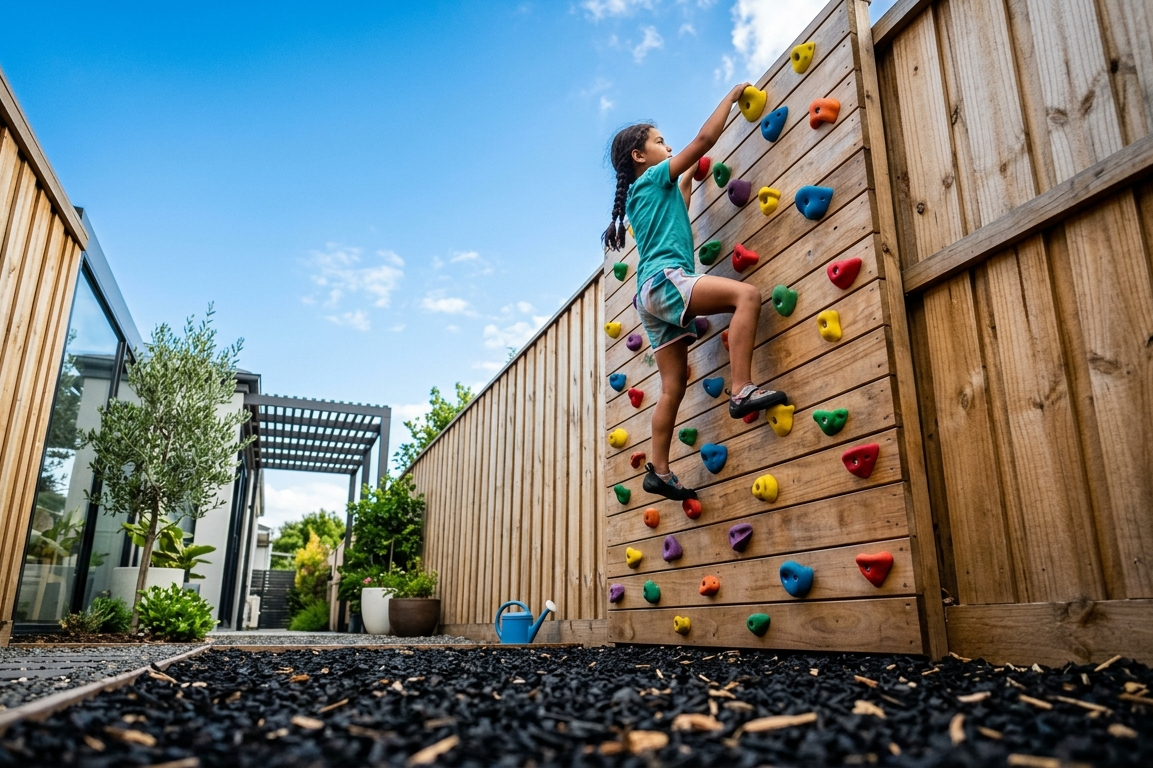
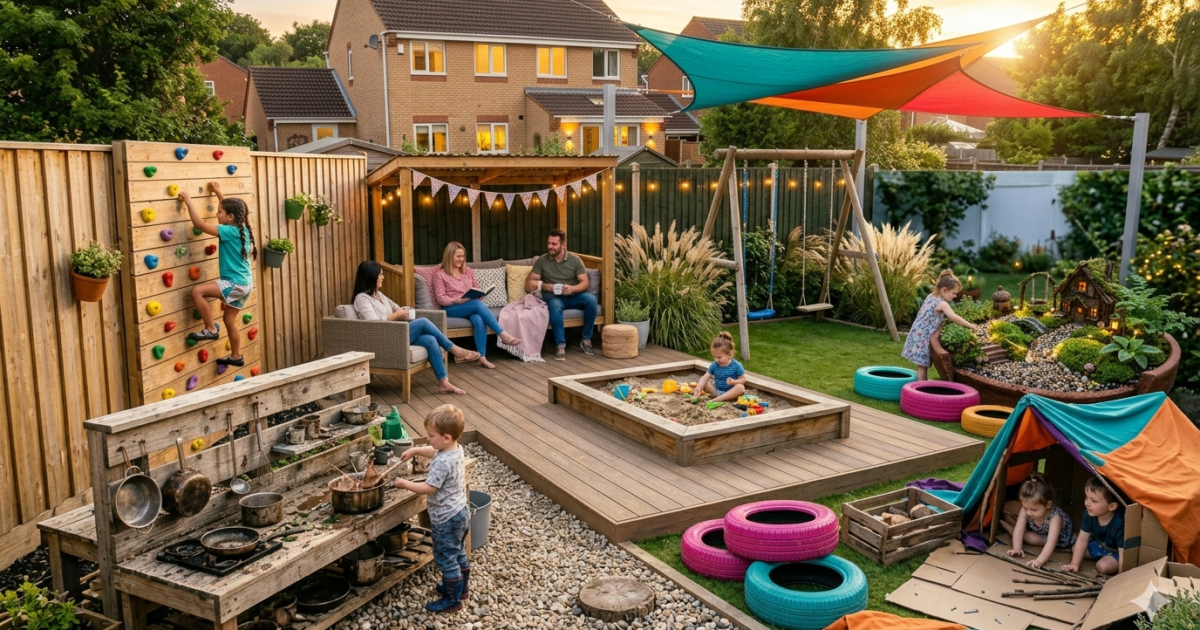
When you can’t build out, you must build up. A climbing wall is arguably the best investment for a small backyard because it uses vertical fence or shed space.
You don’t need a massive structure. Sources suggest mounting a simple plywood board to a sturdy frame or directly onto an exterior wall. Add colorful climbing holds (you can buy these in bulk online) arranged in “easy” and “medium” routes.
Why it works: It burns energy. Climbing builds strength, coordination, and confidence. Plus, it looks like a cool piece of art when not in use. Safety tip: Always place a soft landing zone (rubber mulch or a crash mat) underneath.
2. The DIY Mud Kitchen (The Messier, The Better)
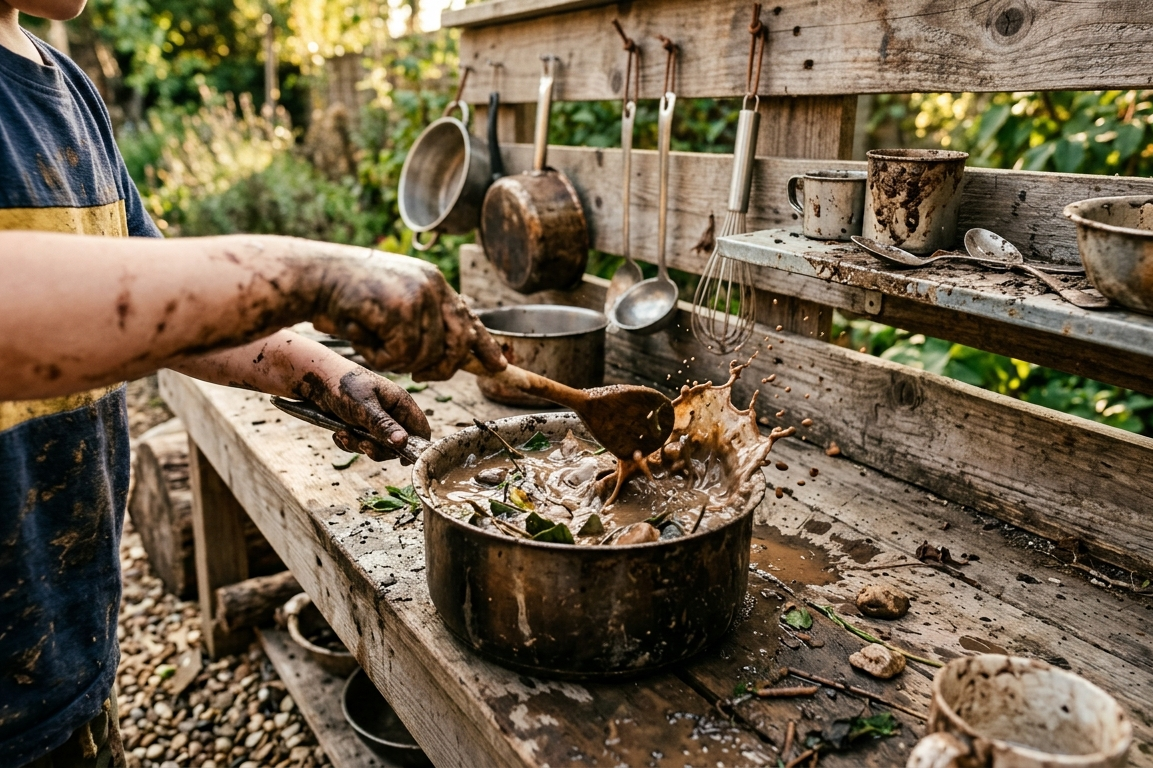
Plastic kitchens are expensive and take up indoor space. Move the party outside with a DIY mud kitchen. This is a staple in small backyard ideas for kids because it turns the dirtiest part of your yard into the most used part.
You can build one using old pallets, a repurposed nightstand, or even just a plastic tub on legs. Add old pots, pans, spoons, and a small water source.
The Sensory Payoff: Mud kitchens are sensory powerhouses. They encourage tactile exploration, creativity, and problem-solving. Real homeowners say their kids use these daily. You get hours of imaginative, sensory play without buying a single fancy toy.
Pro Tip: Place this in the “messy zone” on top of pea gravel or wood chips so it drains well and you don’t end up with a mud pit in your lawn.
3. The “Secret Hideaway” Courtyard
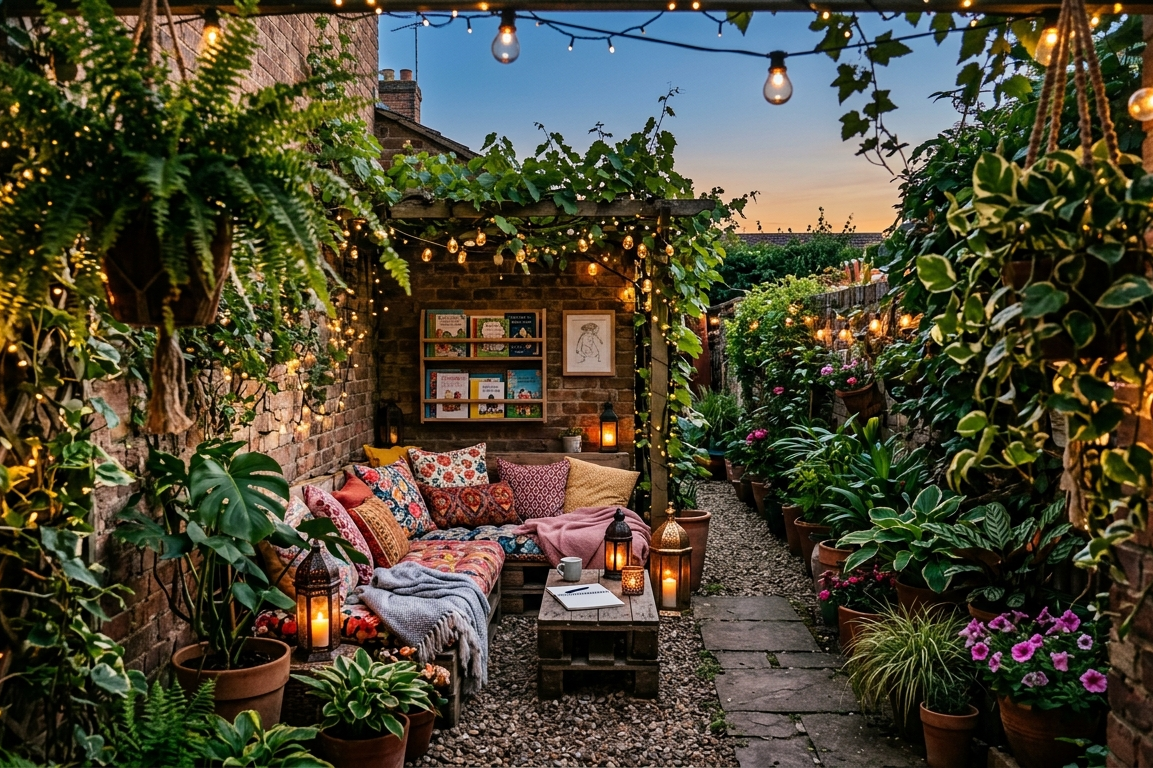
Every kid craves a secret fort. In a small yard, you likely have an awkward side yard or an odd corner behind the garage. Don’t ignore it. Convert it.
Turn that “dead zone” into a private kids’ courtyard. This can be as simple as hanging string lights and adding a small bench, or as complex as building a mini shade sail over a pallet platform.
The Aesthetic: Use a mix of potted plants (like ferns or lavender) to create a living wall for privacy. Add a small bookshelf or a few outdoor pillows. This gives kids a sense of ownership and a quiet place to read, which is rare in active households.
4. The Enchanted Fairy Garden (Nature Meets Imagination)
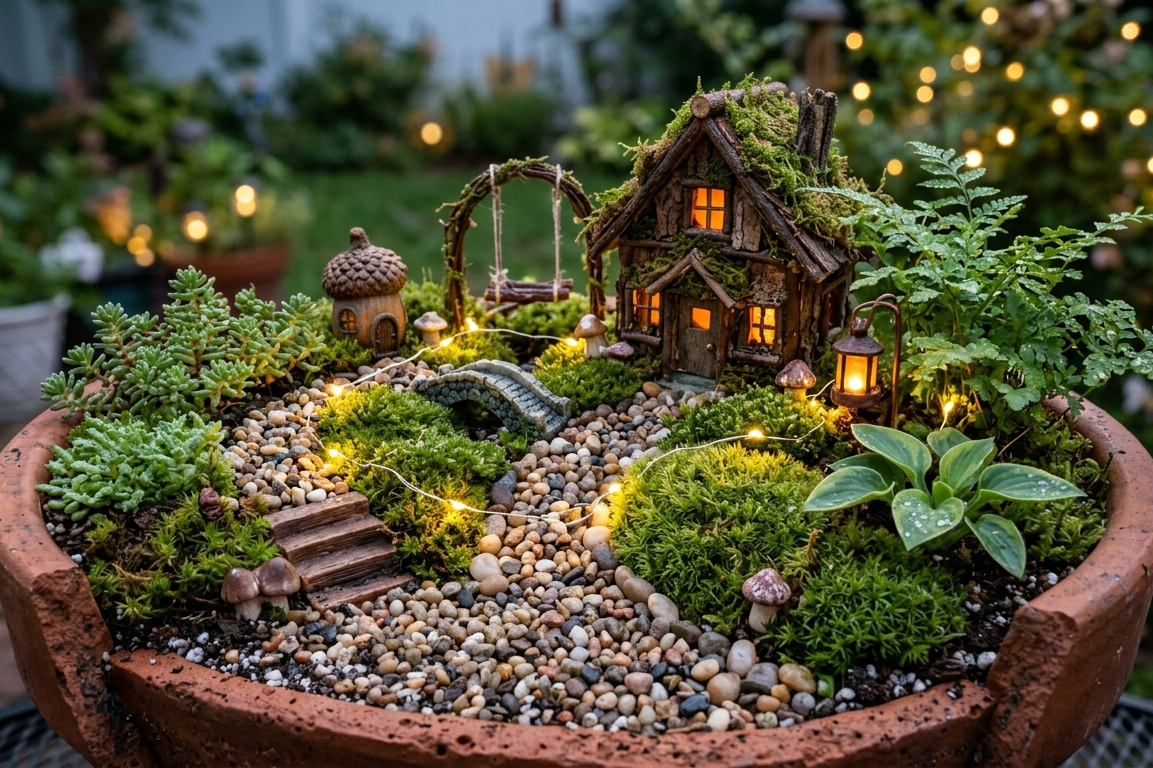
You don’t need a huge plot for gardening; you just need a container. Transform a corner of the yard or an old sandbox into a Fairy Garden.
Using moss, pebbles, small branches, and miniature figurines, you can create a tiny world. This is a subtle way to introduce small backyard ideas for kids that is low-cost but high on whimsy.
How to execute: Use a large terra cotta pot or an old birdbath as the base. Add miniature houses, “fairy paths” made of pebbles, and tiny plants (like miniature ivy). Sources note that adding a glowing element, like solar-powered fairy lights or glow pebbles, makes it magical at night.
5. The Patio Sandbox Combo
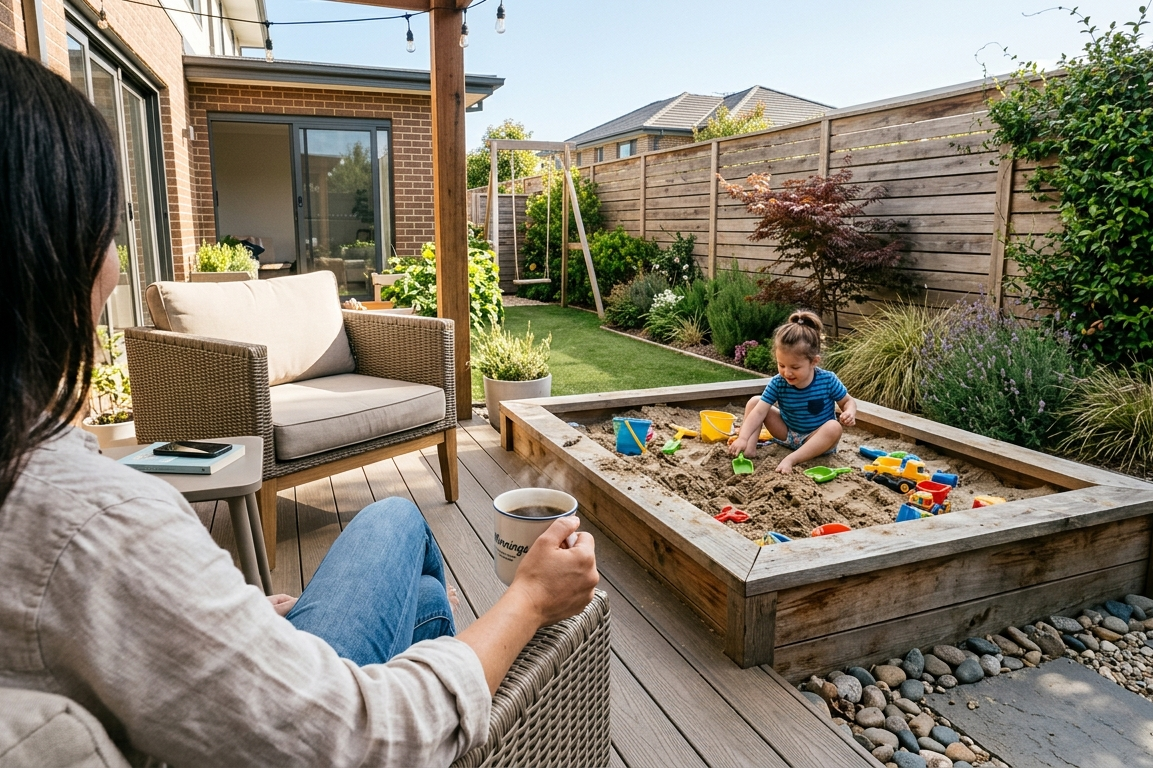
Sandboxes are classic, but they often require a dedicated 6×6 space that a small yard just doesn’t have. The solution? The Deck and Sandbox Combo.
Instead of placing the sandbox in the grass, build it into the structure of your patio or deck. You can create a low wooden frame that sits right next to your seating area. This allows parents to sip coffee on the patio while kids dig right next to them.
Maintenance: Keep it clean by using a cover (a simple tarp with bungee cords works). This prevents neighborhood cats from using it as a litter box. Use clean, play-safe sand and mix in a bit of cinnamon. It smells good and bugs hate it.
6. The DIY Water Wall

Forget expensive store-bought water tables. A DIY Water Wall provides hours of STEM learning and sensory play.
Find an old wooden pallet or a pegboard. Attach funnels, PVC pipes, old gutters, and plastic tubing to it using zip ties. Place a couple of buckets at the bottom. Kids pour water at the top and watch it travel through the maze.
Why it works for small yards: It is vertical. It leans against the fence and takes up almost zero ground space. It’s also a huge hit on hot summer days when the splash pad isn’t running.
7. The Swing set Landscaping Upgrade (Ditching the Plastic)
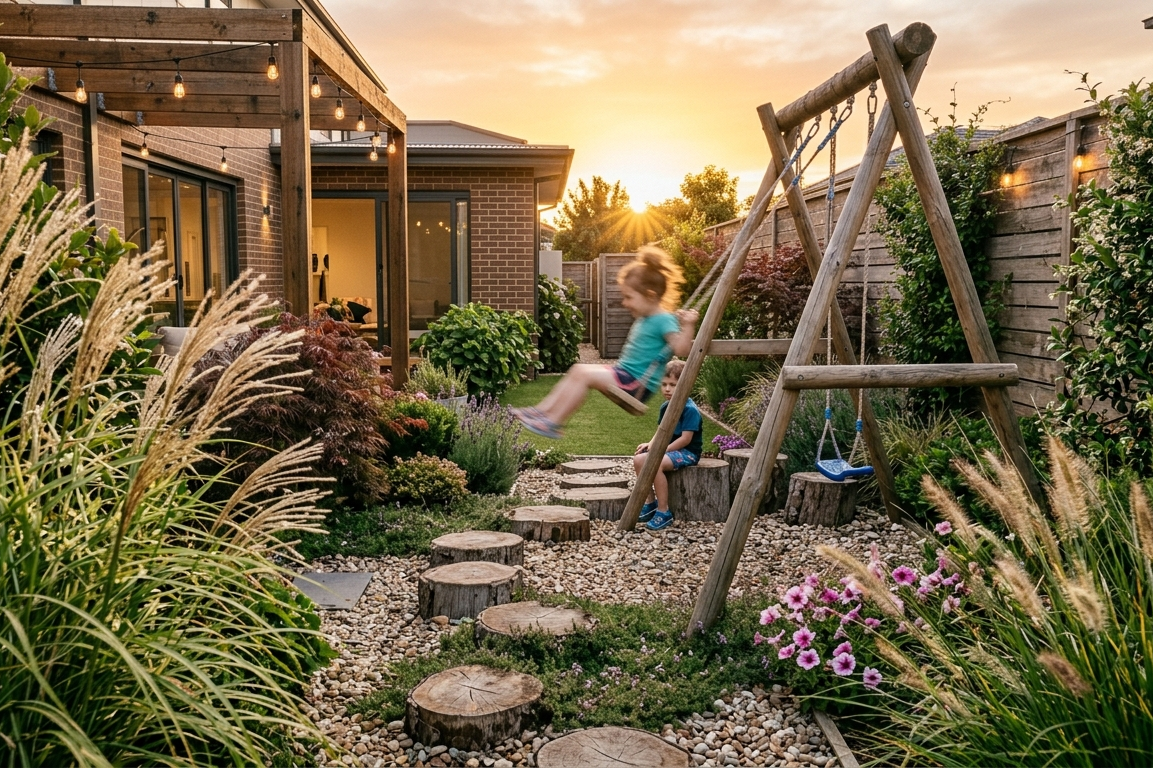
A traditional metal A-frame swing set is the enemy of the small yard. They are bulky and ugly. Instead, look for a natural wood A-frame or, even better, a single heavy-timber beam suspended from two posts (or a sturdy tree branch).
According to swingset landscaping experts, the key is to blend the play equipment into the garden. Instead of putting it in the middle of the lawn, edge it with natural materials.
The Upgrade: Use tree stumps for stepping paths leading to the swing. Plant tall ornamental grasses (like Karl Foerster grass) behind the swing set to hide the fence and create a “savanna” feel. This hides the “playground look” and makes the whole yard look like an adventure.
8. The Shade Sail (The Unsung Hero)
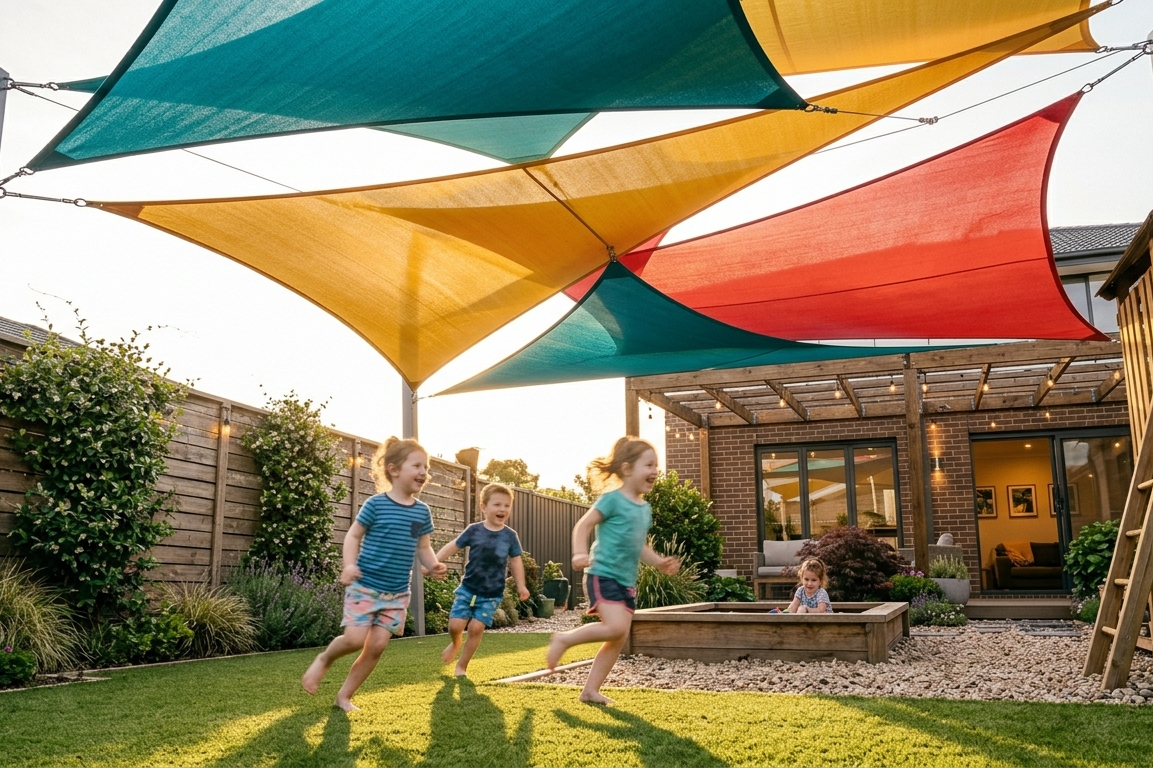
Here is a fact: kids won’t play in a yard that feels like an oven. If your small yard is a sun trap, you absolutely need shade.
While trees are lovely, they take decades to grow. A Shade Sail (a triangular piece of UV-protective fabric) is the perfect solution. You anchor the corners to your house, a fence post, or a tall pole.
The Effect: A bright orange or yellow sail adds a pop of color and instantly defines a “play zone.” It lowers the temperature of the ground beneath it by 20+ degrees, making it safe for barefoot running.
9. The Repurposed Tire Zone (Budget Eco-Warrior)
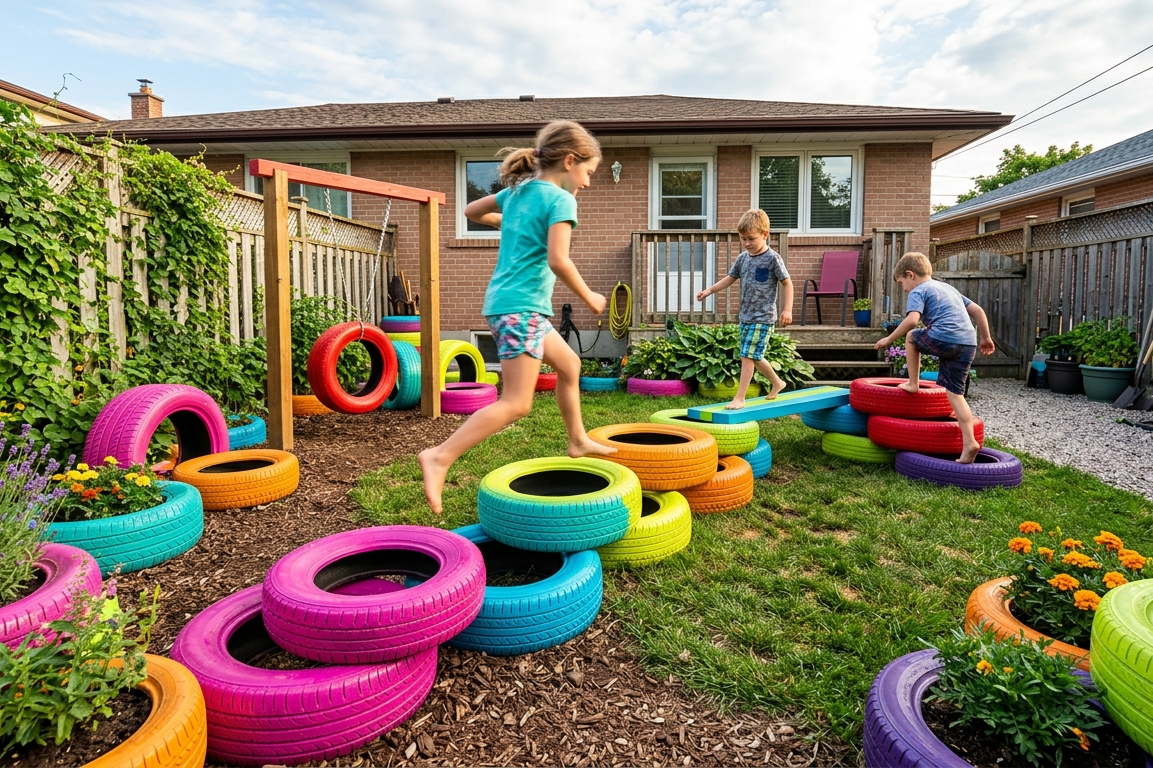
You can build almost anything out of an old car tire, and doing so is a fantastic lesson in recycling for kids.
- Tire Swing: The classic. Hang it horizontally (like a bucket) or vertically (like a surfer swing).
- Tire Climber: Bury half of several tires in a row or a pyramid shape to create a mini climbing structure.
- Tire Planter: Paint old tires bright colors (neon pink, bright blue) and stack them to create a vertical garden for strawberries or flowers.
Sources confirm that with a coat of weatherproof paint, recycled tires look like intentional design choices rather than trash.
10. The Loose Parts Play Station (The Zero-Cost Miracle)
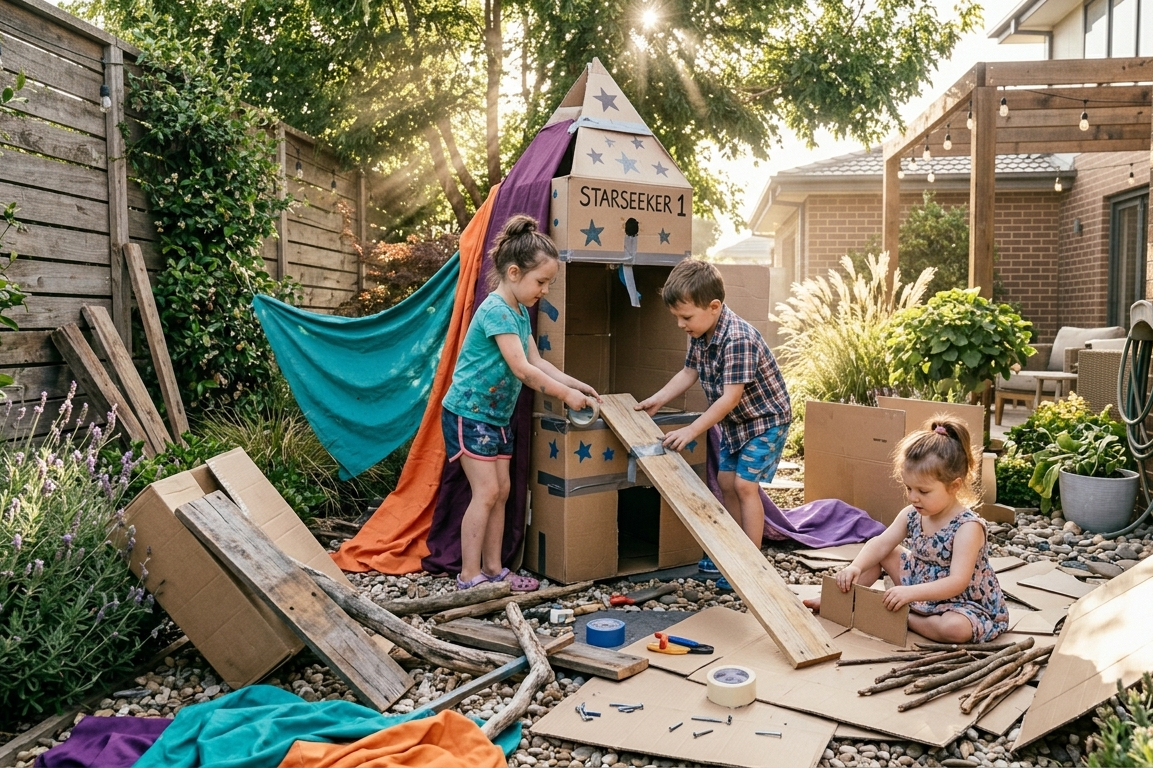
You don’t need to buy anything for this one. “Loose parts” are simply open-ended materials that kids can move, combine, and redesign.
Collect a large bin or a designated corner for:
- Pinecones and sticks
- Smooth river rocks
- Old fabric scraps or sheets (for forts)
- Cardboard boxes
- Wooden planks (for balance beams)
The Philosophy: When kids have loose parts, they don’t just “use” the backyard; they build the backyard. One day it is a market, the next day it is a rocket ship. This is the ultimate solution for small yards because the “toy” changes form every day without taking up permanent space.
Making It Safe and Sustainable (Maintenance Tips)
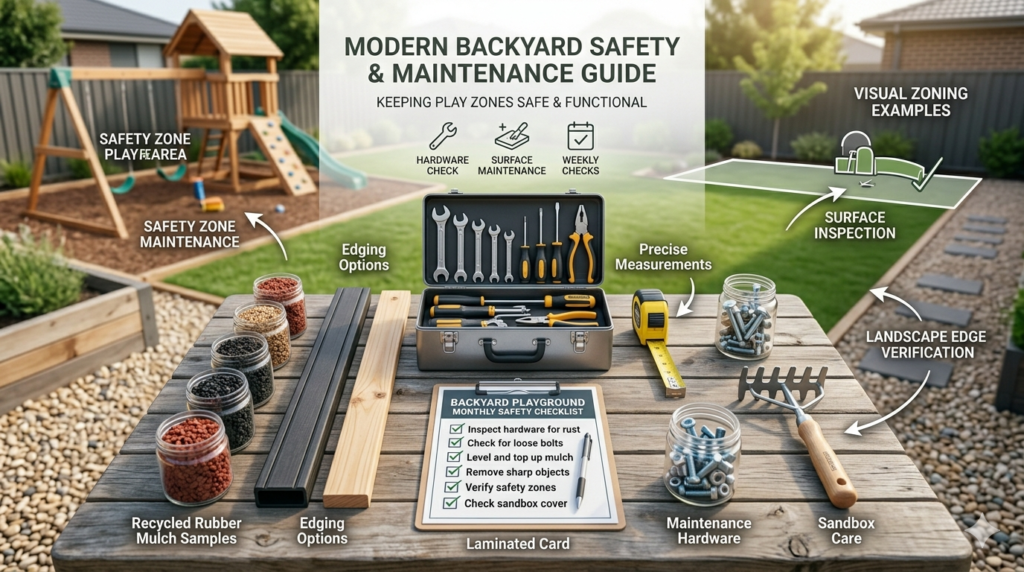
Transforming your yard is half the battle; keeping it safe is the other half.
1. Soft Landings
According to safety guidelines, you need a soft surface under any climbing equipment. Rubber mulch is the gold standard. It doesn’t decompose, it doesn’t stain clothes, and it cushions falls. Wood chips are a cheaper alternative but need to be topped up yearly.
2. Defined Boundaries
If you have a flower bed near the play area, you need to protect it. Use flexible no-dig landscape edging to separate the grass (or rubber) from the flowers. This stops mulch from spilling into the play zone and prevents tripping hazards.
3. Regular Audits
Once a month, check for sharp edges on the climbing wall, loose bolts on the swing, and smooth out the sandbox to remove any hidden rocks or debris.
Conclusion: Small Yard, Big Adventures
You don’t need a landscape architect or a construction crew to implement these small backyard ideas for kids. Start small. Maybe this weekend you just build the mud kitchen. Next month, you add the climbing holds to the fence.
The goal isn’t to create a perfect, Pinterest-worthy photo. The goal is to open the back door and hear “Wow!” instead of “I’m bored.” A small space forces you to be intentional, and intentionality leads to better play.
By zoning your space, going vertical, and embracing a little bit of mess (mud kitchens and water walls, we’re looking at you), your tiny yard will become the most popular hangout on the block. So, put down your phone, grab a hammer, and start building the backyard of your kids’ dreams. They’re only young once. Make every square foot count.