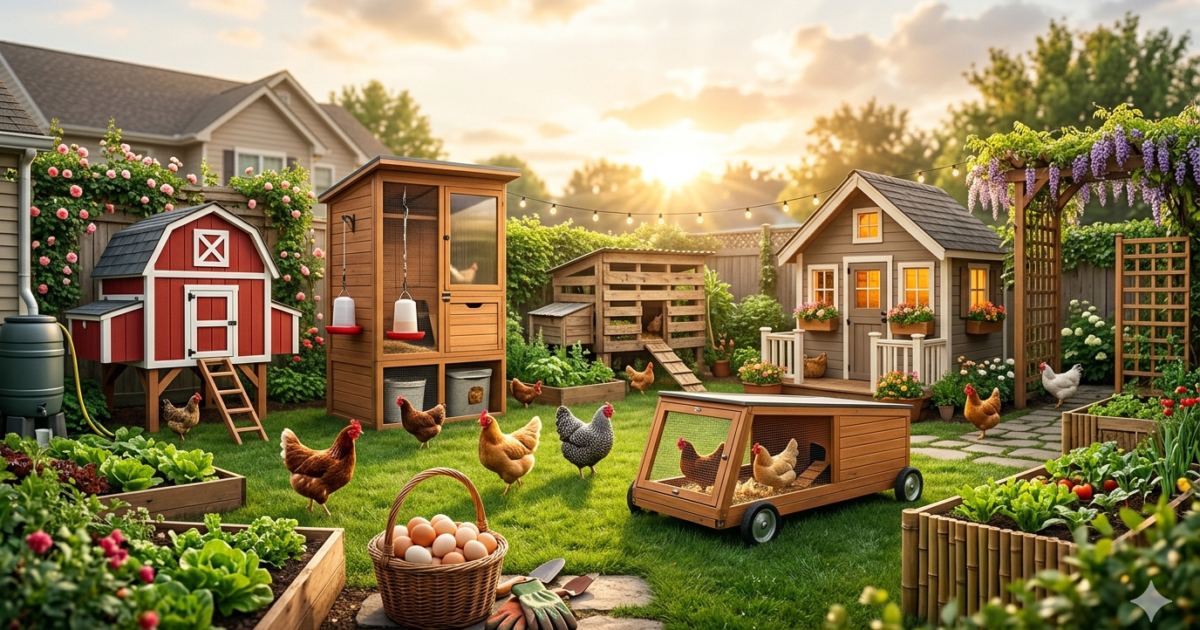
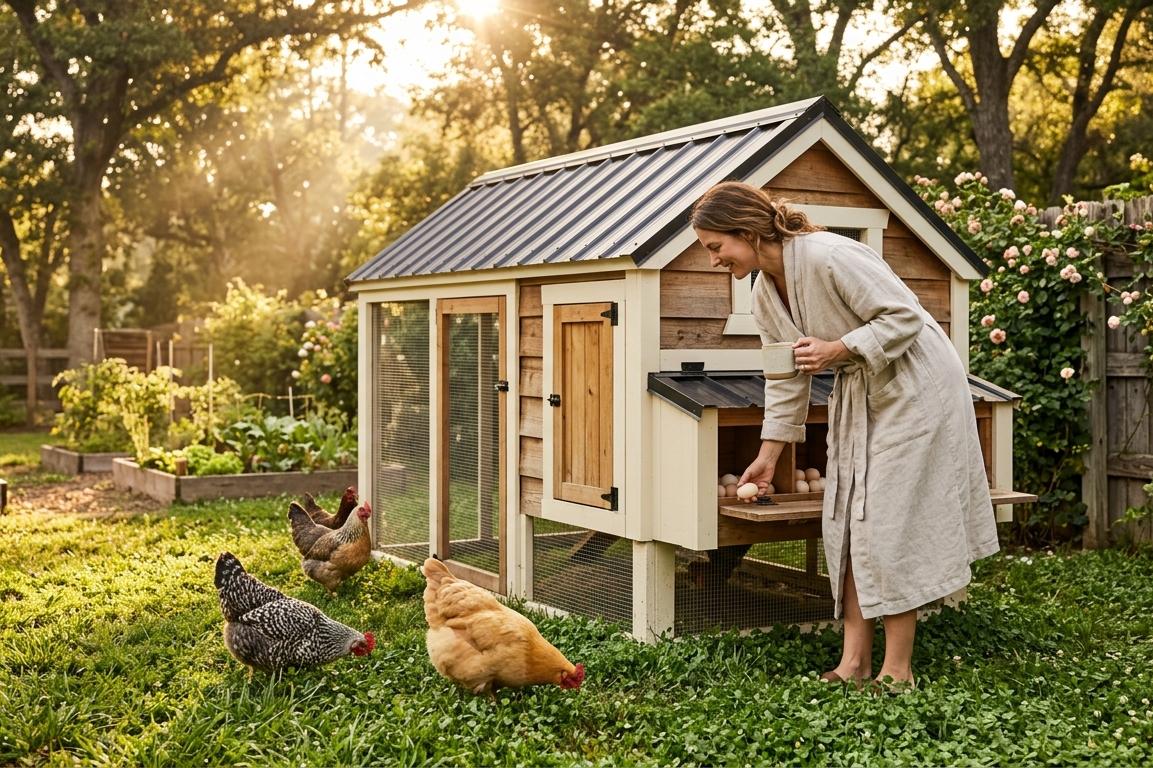
There is something quietly revolutionary about walking outside in your bathrobe, morning coffee in hand, and collecting warm eggs from your own backyard. It does not matter if your “backyard” is a postage stamp sized city lot or a modest suburban patch of grass. Keeping a small flock of chickens is far more accessible than most people realize.
The biggest misconception? You need acres of land. According to experienced homesteaders, a well designed mini coop with a 4 foot by 4 foot sheltered area is perfectly adequate for three or four hens. That is roughly the same footprint as a large dining table. That compact space, combined with a small attached run or daily free ranging time, is enough to keep a small flock happy, healthy, and productive.
Whether you are handy with a saw or looking for a simple kit to assemble over a weekend, the following ten small backyard chicken coop ideas prove that limited square footage does not mean compromising on style, chicken welfare, or your own sanity.
Essential Design Principles for Small Space Coops
Before diving into specific ideas, it is worth understanding what makes a small coop successful. Size is only part of the equation. The real challenge lies in maximizing functionality while maintaining a clean, safe environment for your birds.
The golden rule for indoor coop space is approximately three square feet per standard hen. That means a coop measuring just 6 feet by 4 feet can comfortably house up to eight small bantams or four to five standard laying hens. Anything smaller requires careful attention to ventilation, roost placement, and cleaning frequency.
Ventilation is the silent killer of poorly designed small coops. Chickens produce an astonishing amount of moisture through respiration and droppings. Without adequate airflow, specifically adjustable windows positioned above roosting height to prevent drafts directly on the birds, ammonia builds up quickly. As one expert notes, poor airflow leads to respiratory issues. Chickens produce a surprising amount of moisture, and poor airflow means ammonia buildup, which quickly affects health.
Predator proofing cannot be an afterthought. Raccoons learn to open simple latches. Foxes dig. Hawks scan from above. Hardware cloth with half inch mesh is non negotiable for any opening, and buried apron fencing (wire extending outward underground) prevents digging predators from entering the run.
With those fundamentals in mind, let us explore ten specific designs that put these principles into practice.
1. The Portable Chicken Tractor: Pasture on Wheels
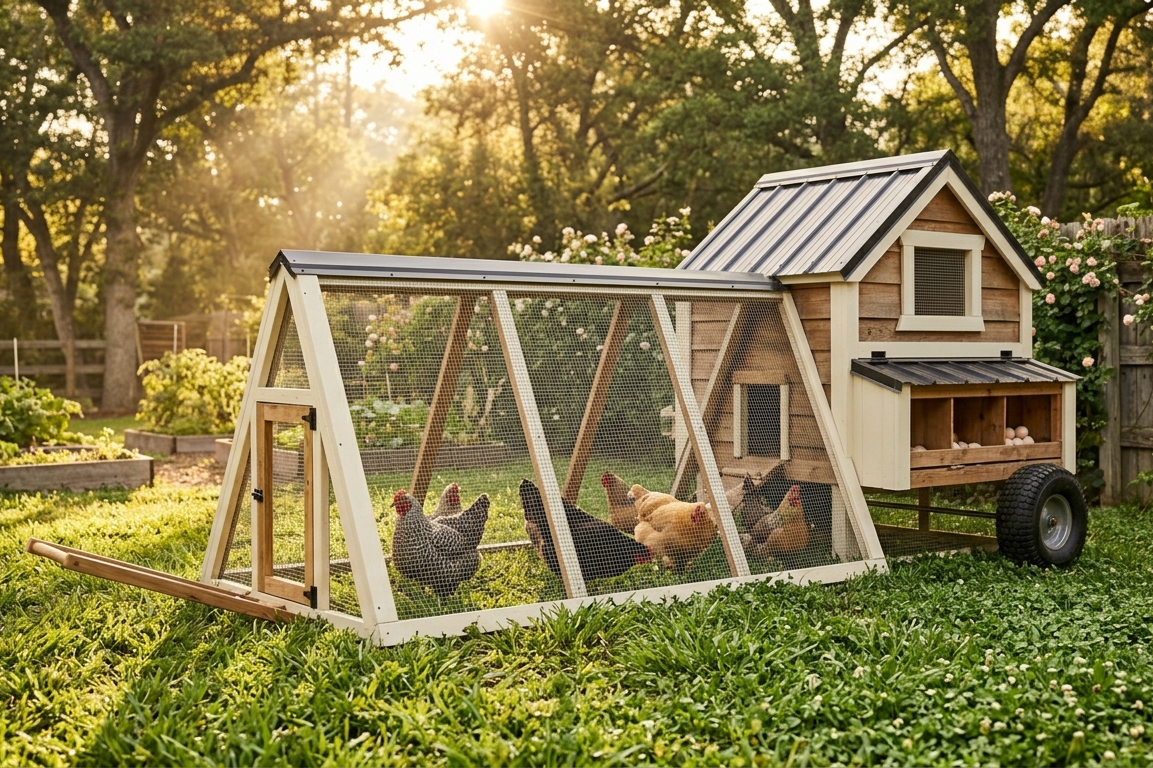
If you want the happiest chickens possible with the least amount of mess, a portable chicken tractor is difficult to beat. These lightweight, wheeled coops combine the shelter and the run into one movable unit. You place it on a patch of grass, the chickens spend the day eating bugs and greens while fertilizing the soil, and when the grass gets worn down, you simply drag the whole setup to a fresh spot.
Detailed plans for a mini chicken tractor are built around triangular trusses, creating a lightweight but sturdy structure. The sheltered coop area measures about 4 by 4 feet. That is a perfect bedroom for three or four hens, with an attached 4 by 5 foot chicken yard. The entire unit is light enough for one person to move and even fits in the back of a pickup truck for school demonstrations or seasonal relocation.
This design works exceptionally well for small backyards because it eliminates the need for a separate, permanent run. The tractor becomes the run. By rotating its position weekly, you naturally control parasites and prevent mud patches from forming.
Best for: Homeowners who want healthier birds, better lawn health, and the ability to reposition the coop for seasonal sun and shade.
2. The Raised Coop: Cleaner and Safer by Design
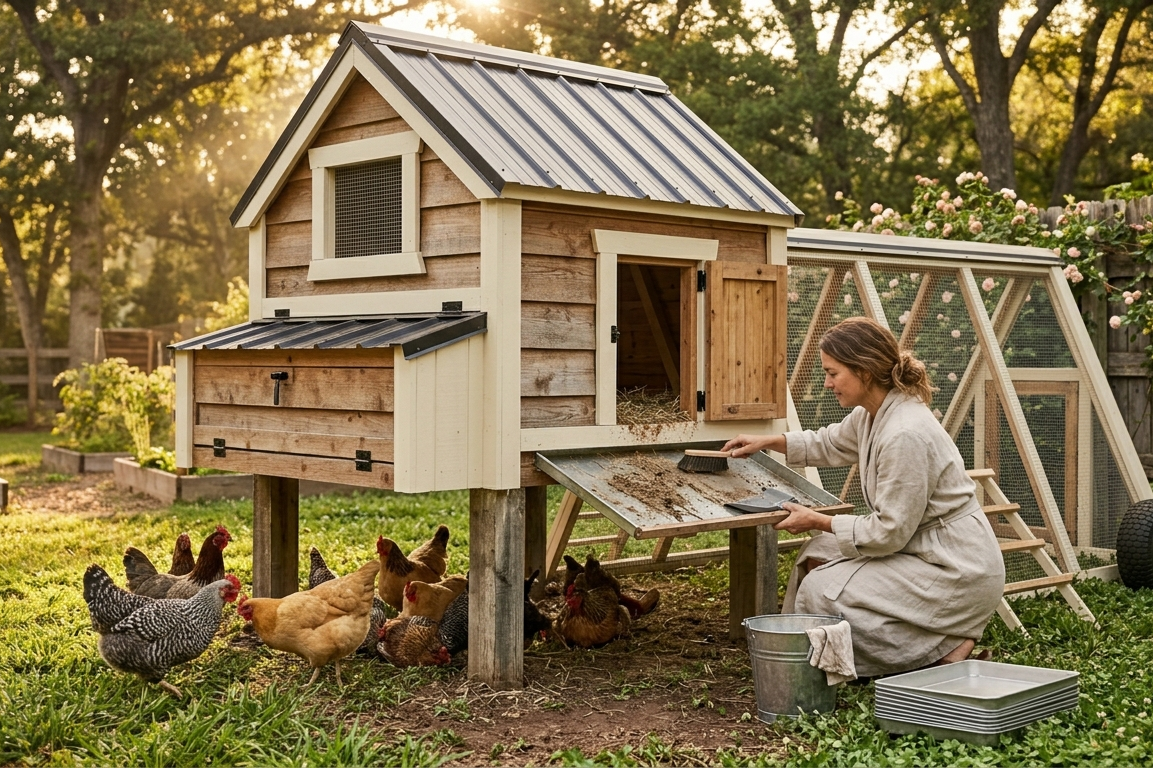
One of the simplest ways to make a small coop work harder is to elevate it. A raised coop sits on legs anywhere from 18 inches to 3 feet off the ground. This design serves multiple purposes simultaneously.
First, the elevation protects chickens from ground moisture, frost, and dampness during winter months. Second, it creates a shaded, protected run area underneath the coop, effectively doubling the usable space without increasing the coop’s footprint. Third, and perhaps most importantly for the keeper, a raised coop brings the nesting boxes and interior floor up to a comfortable working height.
As one source notes, the raised design provides better ventilation but also allows for easy access to the interior for cleaning. This feature reduces the strain of bending down and makes it simpler to keep the coop hygienic. Cleaning a small coop is already a weekly chore. Adding back pain to the equation is entirely unnecessary.
One popular design for very small flocks of one to two hens features an elevated structure with a slide out metal tray that makes cleaning almost effortless. For DIY builders, four sturdy legs and a plywood floor lifted on concrete blocks achieves the same effect.
Best for: Anyone who values their lower back and wants a self shaded run area built into the design.
3. The Vertical Coop: Going Up When You Cannot Go Out
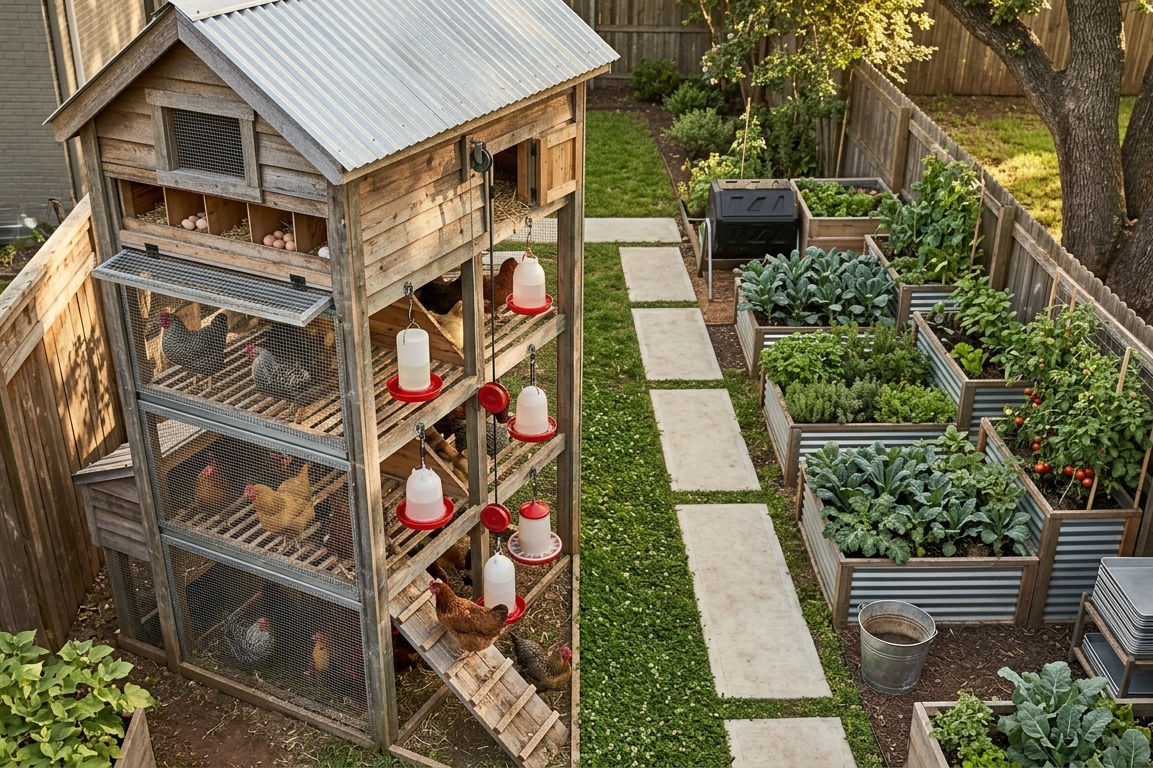
Urban chicken keepers face a unique constraint. Horizontal space is precious, but vertical space is often underutilized. The vertical coop solves this problem by stacking functions. Nesting boxes sit above roosting bars. The run wraps around the base. Storage for feed and bedding tucks into unused corners.
A vertical coop maximizes vertical space and provides a comfortable living area for your chickens, with multiple tiers allowing for better airflow and sunlight exposure while simplifying cleaning and egg collection. Think of it as a chicken high rise apartment rather than a ranch house.
Some creative designs incorporate hanging feeders and waterers to keep the floor clear, while others use a narrow footprint (perhaps 3 feet by 4 feet) but stretch 6 or 7 feet tall. The key is ensuring that roosting bars are positioned above nesting boxes so chickens do not foul their own laying areas.
For extreme space savers, foldable or compact coop designs that use hinges and folding panels are available. When not in use for free ranging, the run can fold against the coop body, reclaiming precious yard space.
Best for: Urban homesteaders with tiny patios or narrow side yards where every square foot matters.
4. The Upcycled Pallet Coop: Sustainability on a Shoestring
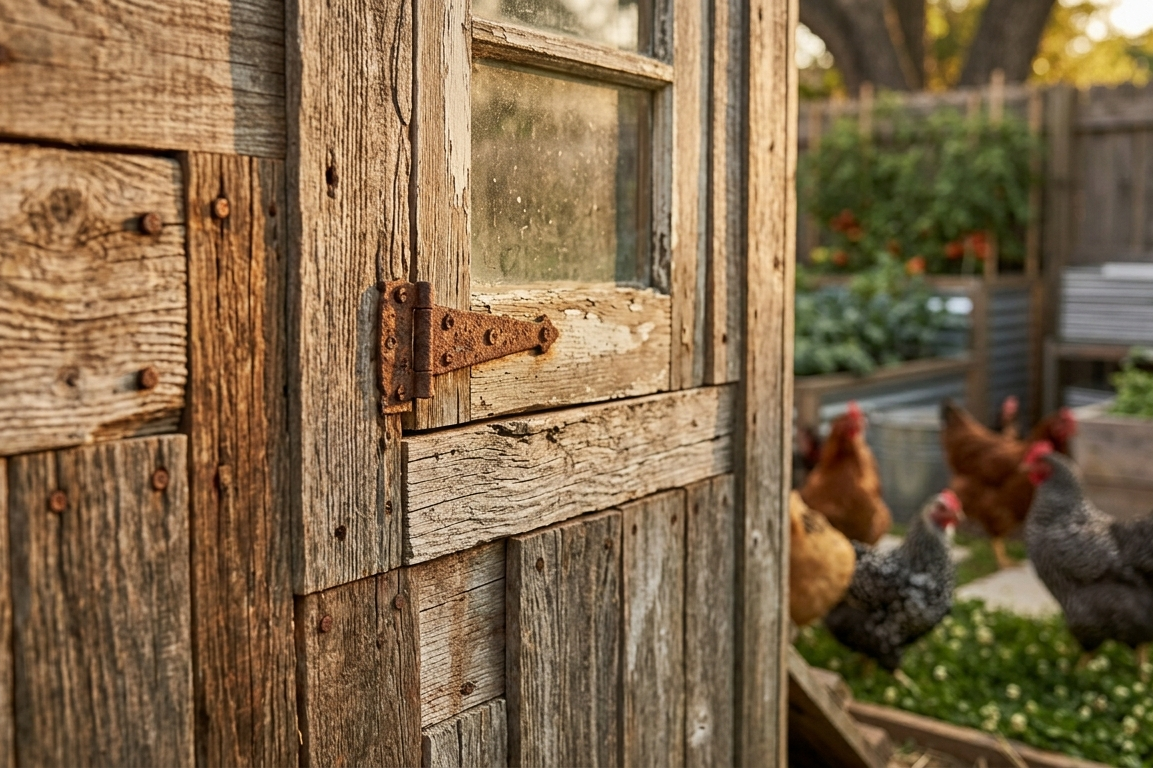
Building a new coop from lumber can easily cost several hundred dollars. The upcycled pallet coop slashes that budget dramatically, often to near zero, while keeping perfectly good wood out of landfills. Wooden pallets are readily available from local businesses that are often happy to give them away.
A recycled pallet coop is an eco friendly and cost effective solution for housing chickens while promoting sustainability. The rustic aesthetic of weathered pallet wood actually adds charm rather than looking cheap. With minimal construction, including disassembling pallets, removing nails, and reassembling into walls, you can create a surprisingly sturdy structure.
A few caveats are worth noting. Only use heat treated pallets stamped with “HT.” Chemically treated pallets (stamped “MB” for methyl bromide) are toxic and unsafe for animals. Also, pallet wood varies in quality. Inspect each board for rot, large knots, or embedded debris before building.
One excellent budget friendly approach is a minimalist A frame coop constructed from pallets and wire mesh. According to one resource, you need only a few tools, and the costs are low, often under $50 for this design. Combined with a salvaged window or reclaimed roofing tin, the finished product looks intentional rather than improvised.
Best for: DIY enthusiasts on a tight budget who enjoy scavenging and repurposing materials.
5. The Bamboo Coop: Rapidly Renewable and Naturally Beautiful
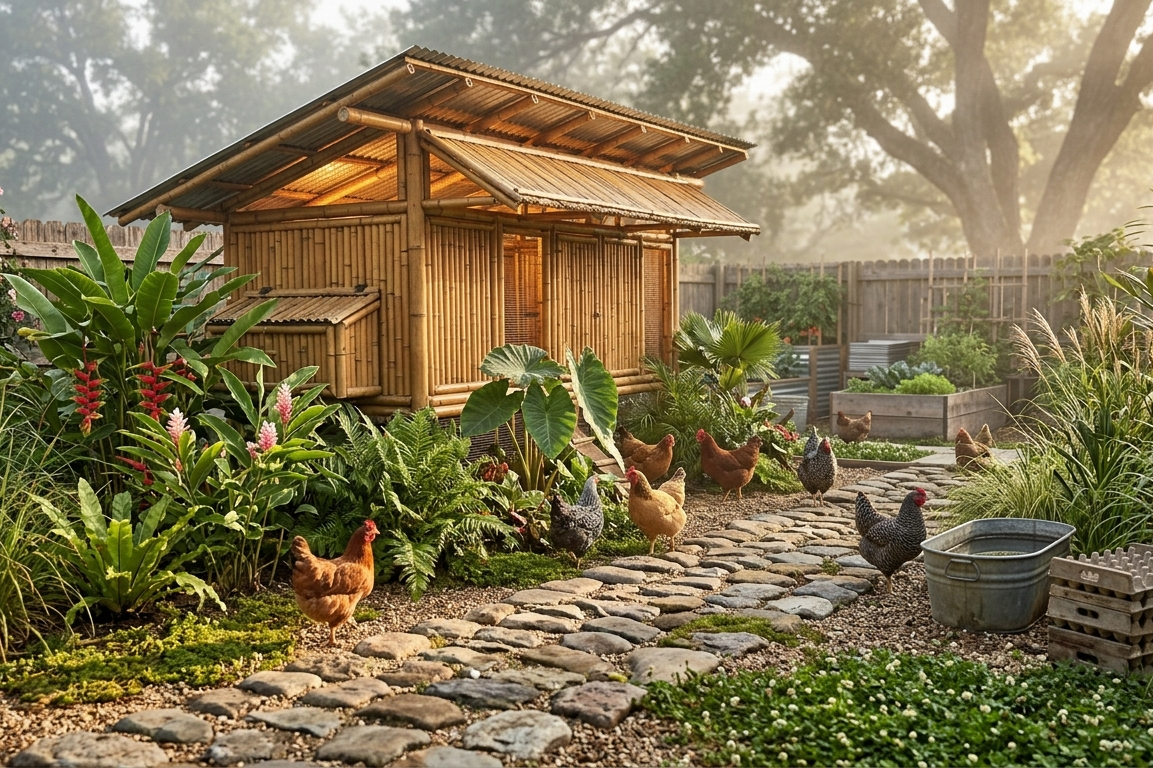
Bamboo occupies a unique niche in coop construction. It is technically a grass, not a wood, but it offers a remarkable strength to weight ratio and grows so quickly that harvesting it is genuinely sustainable. A bamboo chicken coop provides excellent insulation, ensuring your chickens are comfortable in varying weather conditions, according to sustainable building sources.
The lightweight nature of bamboo makes it ideal for mobile coop designs. A bamboo tractor is noticeably easier to drag across the yard than one built from pressure treated pine. The natural hollow structure of bamboo also creates built in air channels that can enhance ventilation when the material is used strategically.
Aesthetically, bamboo coops blend seamlessly into gardens with tropical or Asian inspired landscaping. The warm, golden tones weather to a soft silver gray over time. The main challenge is joinery. Bamboo does not accept screws as readily as dimensional lumber. Traditional lashing techniques with weather resistant cord or metal strapping are often more effective than trying to drill and fasten.
Best for: Eco conscious builders who prioritize renewable materials and appreciate a distinctive, organic aesthetic.
6. The Compost Integrated Coop: Closing the Loop
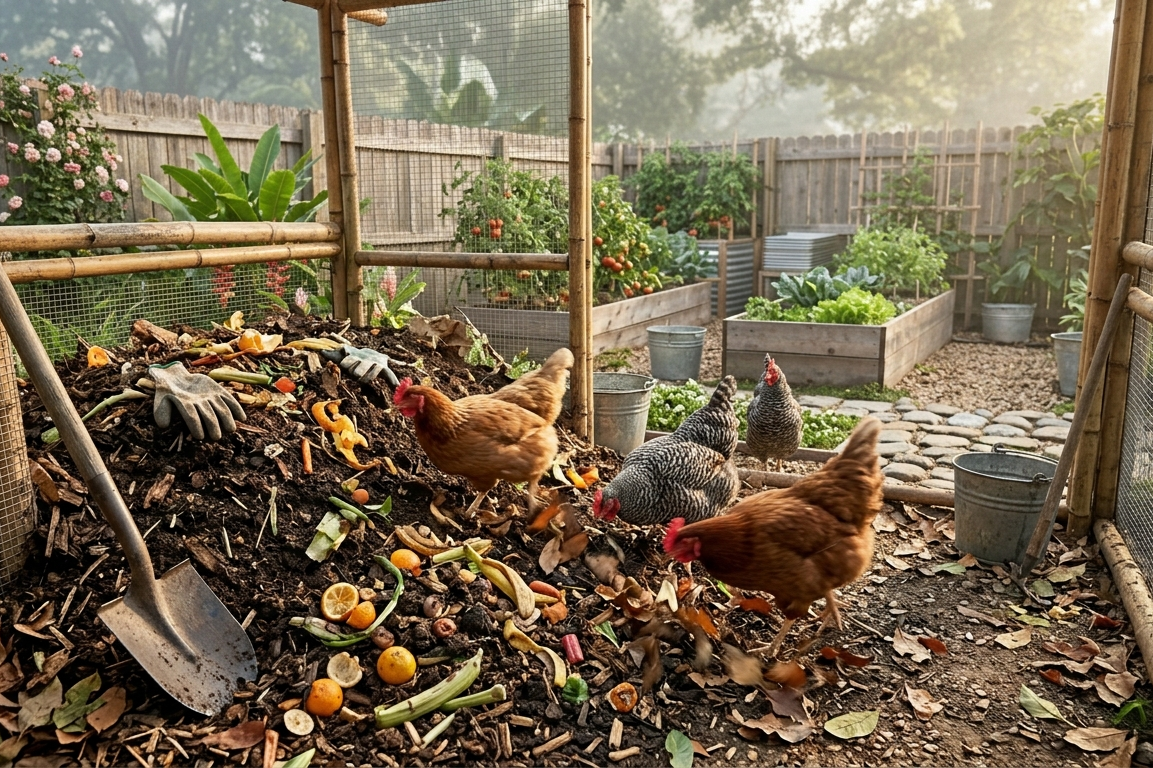
This design represents permaculture thinking at its most elegant. Instead of treating the chicken coop as an isolated structure, the compost integrated coop builds a dedicated composting system directly into the run. Chickens scratch through kitchen scraps and yard waste, accelerating decomposition while feeding on insects and larvae that would otherwise become pests.
A compost bin integrated chicken run is a sustainable solution for backyard poultry enthusiasts, combining waste management and animal care in one efficient setup. The chickens do the heavy lifting. They turn the pile, eat problematic organisms, and deposit their own nitrogen rich manure directly into the composting material.
The design typically involves a designated corner of the run with removable front panels. You toss vegetable scraps, leaves, and grass clippings into this zone. The chickens spread it, scratch it, and mix it. Every few months, you shovel out finished compost for the garden and restart the process.
This approach dramatically reduces household waste sent to landfills while producing free, high quality soil amendments for vegetable beds. The chickens get constant entertainment and supplemental nutrition. It is difficult to imagine a more efficient small space system.
Best for: Gardeners who want to close the nutrient loop between kitchen, chickens, and vegetable beds.
7. The Rainwater Harvesting Coop: Every Drop Counts
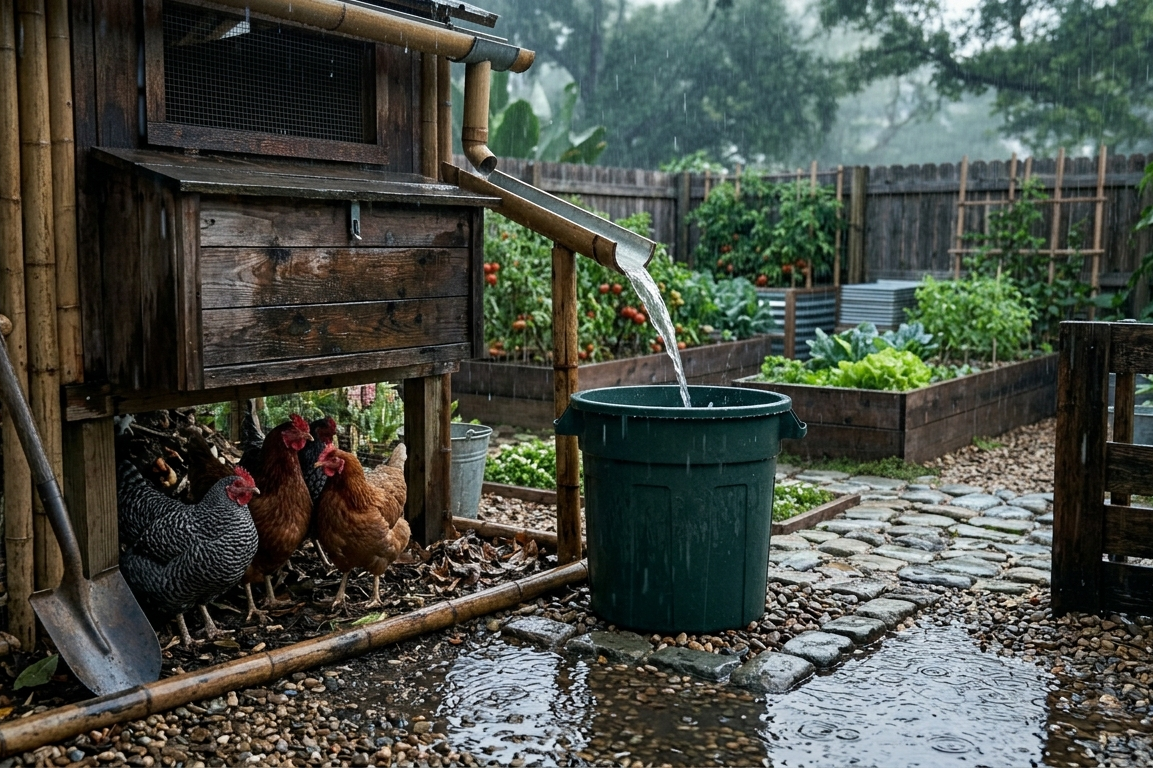
Chickens require constant access to fresh, clean water. Hauling buckets from the house gets old quickly, especially in winter. A rainwater harvesting coop solves this problem by collecting what falls naturally on the roof.
By installing a simple gutter system that channels rain from the coop roof into a storage tank, you can provide a sustainable water source for your chickens. The setup is straightforward. Gutters go on the low side of the roof, then a downspout, then a food grade barrel or tank positioned at ground level.
For small coops, a 15 to 30 gallon barrel is usually sufficient for a small flock, particularly if you add a float valve connected to a backup hose supply. The elevation of a raised coop works perfectly here. The storage tank can sit underneath, protected from sunlight (which prevents algae growth) while gravity feeds a watering cup or nipple drinker.
Some chicken keepers take this further by installing green roofs planted with native sedums or drought resistant plants. A green roof coop adorned with native plants offers a sustainable and eco friendly option that provides natural insulation, attracts pollinators, and manages rainwater runoff.
Best for: Water conscious keepers in rainy climates or anyone tired of lugging water buckets.
8. The Barn Style Miniature: Charm Without the Farm
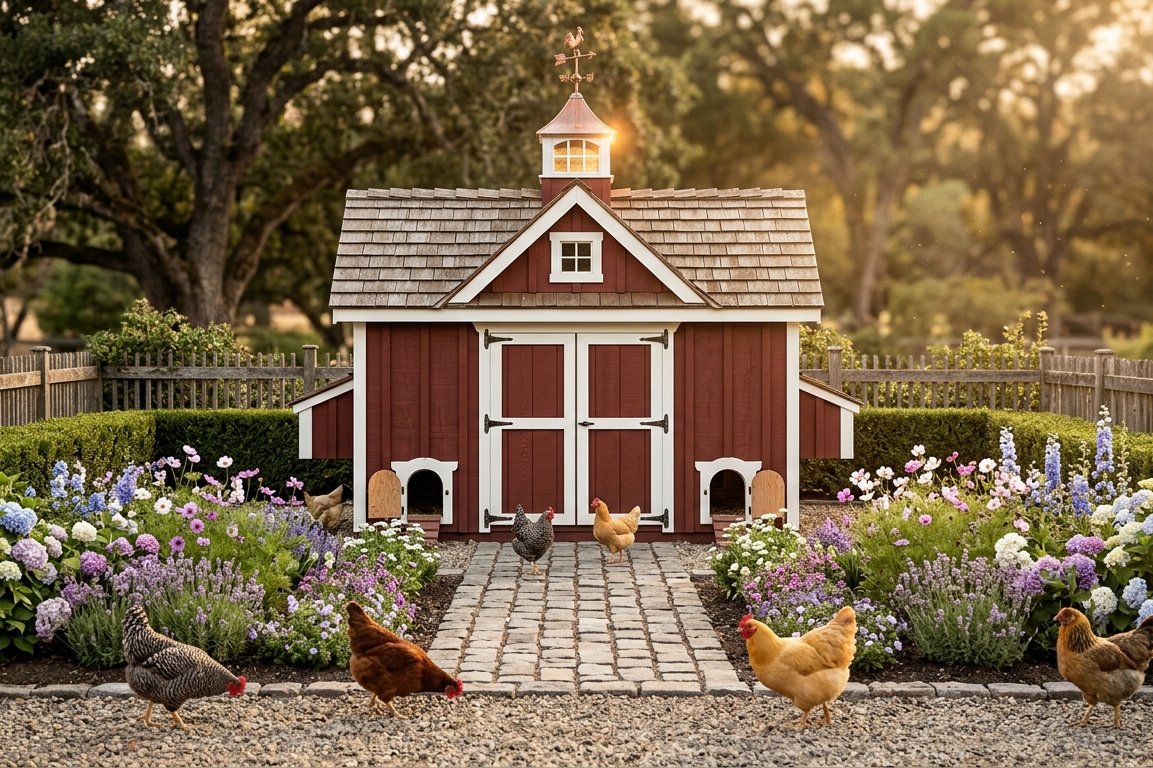
A small backyard should not look like an industrial poultry operation. The barn style miniature coop brings classic farm aesthetics down to a manageable scale while maintaining excellent functionality. Think white or red painted wood, a cupola (even a decorative one), and a pitched roof that sheds rain and snow effectively.
The aesthetic barn style coop adds a rustic charm to any garden, seamlessly blending functionality with beauty. Weathered wood and classic colors enhance the landscape rather than detracting from it. For homeowners in neighborhoods with design covenants or for those who simply care about curb appeal, this approach makes chickens far more neighbor friendly.
The practical advantages are real, too. The pitched roof creates attic space that acts as a thermal buffer in summer and winter. The larger overhangs keep rain off the ventilation openings. And the visual appeal often helps when having the necessary conversations with neighbors or homeowners associations.
Best for: Neighborhood situations where aesthetics matter as much as functionality.
9. The A Frame Hoop Coop: Simplicity Engineering
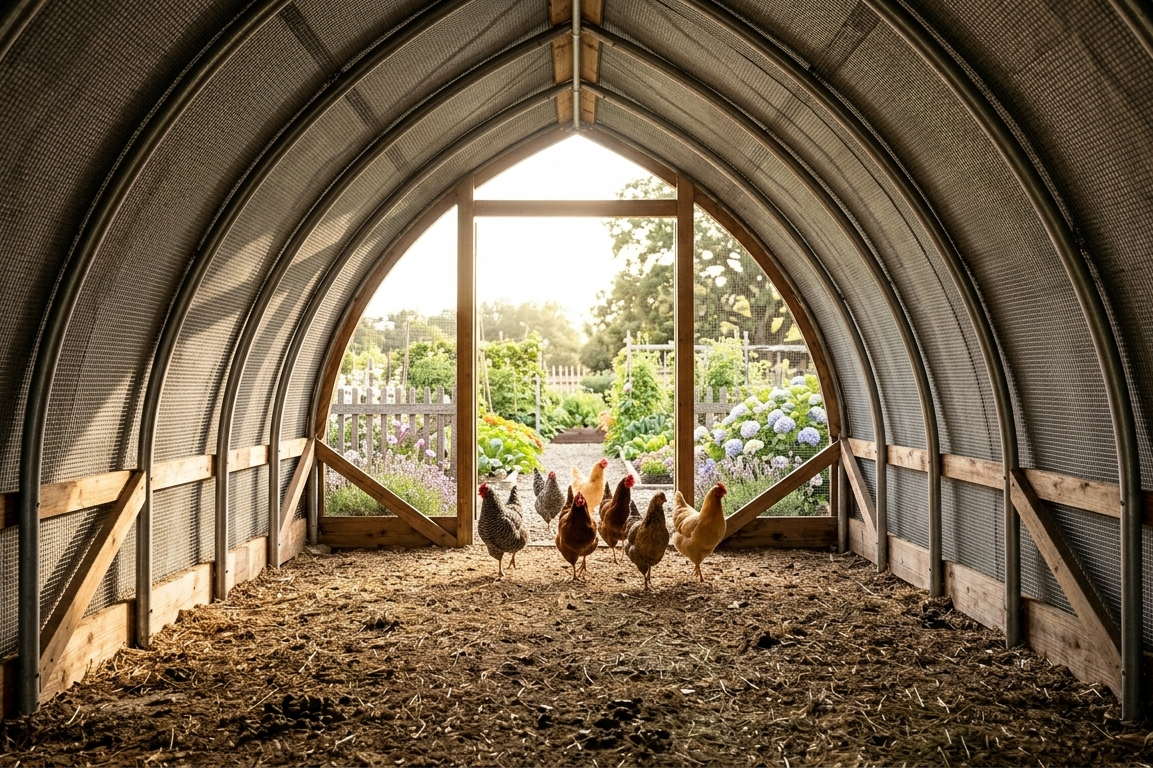
For builders who want to minimize materials and construction time, the A frame hoop coop is hard to beat. The structure uses cattle panels or heavy gauge wire fencing bent into an arch, then covered with tarps, greenhouse plastic, or hardware cloth. The ends are framed with wood. The whole thing sits on a rectangular base.
According to experienced keepers, a hoop coop guide master materials list includes cattle panels, hardware cloth, fencing staples, and dimensional lumber for the base frame. That is a surprisingly short list. These structures are lightweight, surprisingly strong, and can be built in a single weekend by one person.
The curved shape sheds wind effectively and creates more usable interior volume than a rectangular coop of the same footprint. For small flocks, a hoop coop measuring 4 feet wide by 8 feet long provides ample space while remaining highly portable if you skip the wheels and simply drag the skids.
Predator protection requires careful attention with hoop coops. The wire mesh must be buried or extended outward along the ground perimeter to prevent digging. But for a budget conscious builder with basic tools, the A frame hoop coop represents perhaps the best value proposition available.
Best for: First time builders, budget projects, and anyone wanting maximum interior space from minimal materials.
10. The Converted Shed or Playhouse: Instant Character
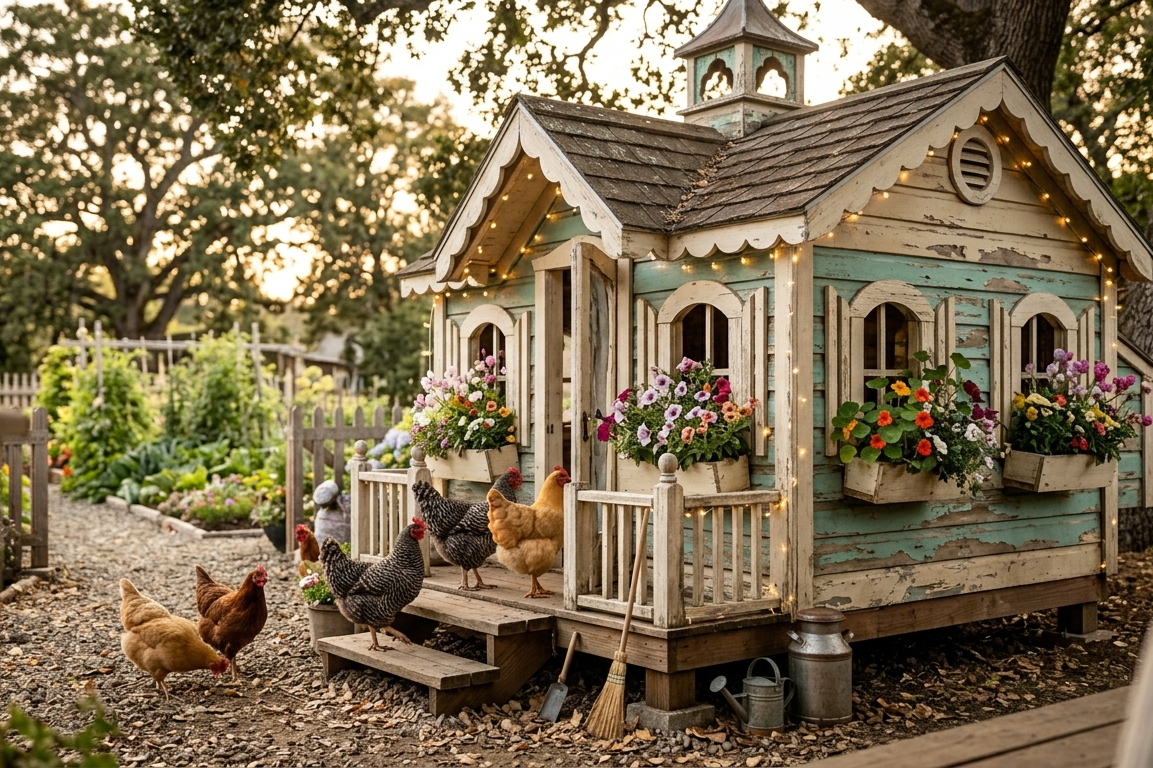
Why build from scratch when someone already built the walls? Converting an existing small structure into a chicken coop saves enormous time and often money. Old garden sheds, child sized playhouses, and even large dog houses can become perfectly serviceable coops with a few modifications.
An upcycled shed can be a perfect solution for creating an eco friendly chicken coop, blending sustainability with functionality. By repurposing an old structure, you not only reduce waste but also give your chickens a cozy, secure home. The conversion process typically involves adding ventilation openings (covered with hardware cloth), installing roosting bars, building or placing nesting boxes, and predator proofing the door and any windows.
One source specifically recommends converting an old playhouse. Remove any carpet, add ventilation, and install nesting boxes where the toy shelves used to be. Paint it fresh white with barn red trim or go all out with a dark forest green and brass hardware for a fancy chicken coop finish.
The charm factor of these conversions is off the charts. A child sized cottage with window boxes and a little porch becomes an unforgettable chicken coop. Neighbors will ask for tours rather than filing complaints.
Best for: Anyone who already owns a suitable shed or playhouse, or who scouts Craigslist and Facebook Marketplace for cheap structures to repurpose.
Small Coop Planning Checklist
Before building or buying any coop, run through this checklist to avoid common mistakes.
Sizing and capacity:
- 3 square feet per standard hen inside the coop
- 8 to 10 square feet per hen in the run (if always confined)
- Roosting bars: 8 to 12 inches per bird
Ventilation requirements:
- Openings above roosting height to prevent drafts
- Adjustable covers for winter
- 1 square foot of ventilation per 10 square feet of floor space (minimum)
Cleaning and access:
- Human sized door for walk in coops or removable roof panels for small coops
- Slide out droppings tray or droppings boards under roosts
- Nesting boxes accessible from outside the coop or with a lift up lid
Predator protection:
- Half inch hardware cloth, never chicken wire (which raccoons tear through)
- Buried apron (wire extending 12 inches outward and buried) or concrete footer
- Secure locks that raccoons cannot manipulate
Budget Considerations for Small Coops
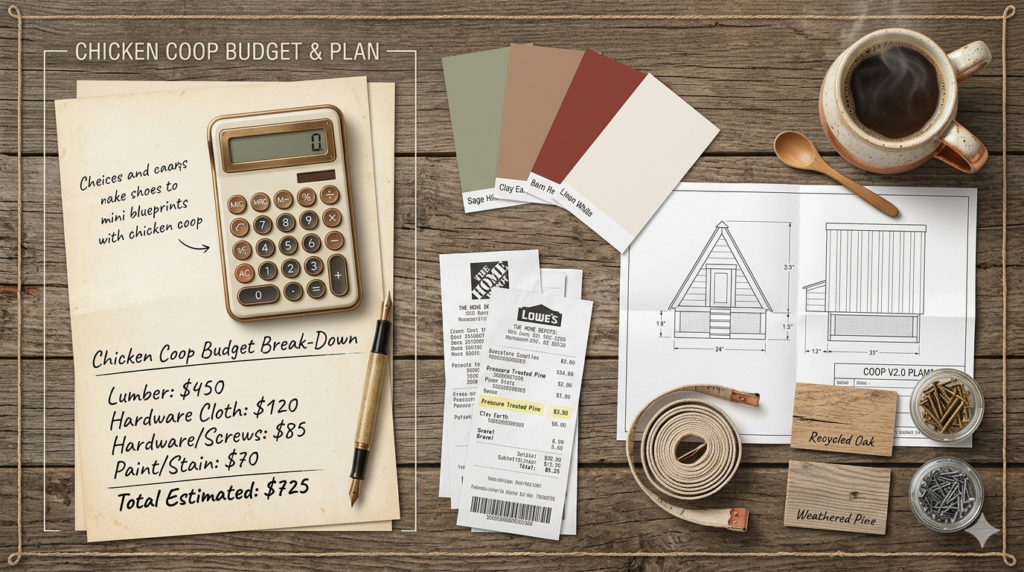
Cost varies wildly depending on materials, size, and whether you build or buy. Here is a realistic breakdown.
Absolute bare bones DIY (reclaimed materials only): Under $50. This assumes free pallets, scrap wire, salvaged hinges, and a lot of sweat equity. The A frame pallet coop falls into this category.
Basic DIY using new lumber: 150to300. This buys plywood, 2×4 lumber, hardware cloth, roofing felt, and basic hardware. For a 4×4 coop with a small run, this budget works.
Mid range kit coop: 300to800. Brands like Producer’s Pride and PawHut offer assembled kits in this range. According to forum discussions, wood kits will rot away fairly quick compared to more durable options, so consider climate and expected lifespan.
Premium small coop (Omlet, high end wooden kits): 800to2,000. These feature better materials, smarter designs, and easier cleaning features. Omlet is frequently mentioned for its clean, compact design, but the price is definitely up there.
One experienced keeper wisely notes: “Don’t wear yourself out trying to find the right house. That’s an item you will more than likely upgrade. Get a small cheap wood one, so you’ll know more about what fits your needs on the next one.” For first timers, starting simple and learning through experience is sound advice.
Putting It All Together
The perfect small backyard chicken coop is the one that actually gets built and used. Analysis paralysis stops more aspiring chicken keepers than lack of space or budget ever will.
Start with the non negotiables. Predator proof construction, adequate ventilation, and sufficient space for the number of birds you intend to keep. Everything else, the paint color, the fancy cupola, the automatic door, is a nice to have that can come later.
For most small backyards, a raised coop measuring 4 feet by 6 feet with an attached run of similar size will comfortably house three to four hens. If you are willing to move a chicken tractor every few days, you can keep the same number of birds with an even smaller footprint since they will always have fresh ground.
The common thread across all ten of these designs is intentionality. A small coop works when every element serves a purpose. The roof collects water. The elevation creates shade. The compost bin feeds the garden. The wheels allow rotation.
Chickens do not need a palace. They need safety, cleanliness, fresh air, and enough space to be chickens. Give them those basics in a well designed small coop, and they will reward you with eggs, entertainment, and the quiet satisfaction of a more self sufficient lifestyle.
The morning eggs taste better when they come from a coop you built yourself, one that fits your yard, your budget, and your life. Pick one idea from this list and start planning. Your future flock is waiting.